 |
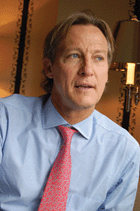
“These markets… do not move in sync. To access cross-border opportunities you need to be there” Lou Gerken, Gerken Capital Advisors |
In any case, it is hard to find managers that have sufficient knowledge of individual countries to be able to take full advantage of the opportunities that lie in them.
Lou Gerken is one manager that evangelizes the value that hedge funds focusing on single emerging countries can create. He founded and is president of Gerken Capital Advisors (GCA), an alternative investment company started in 1989. Since its inception, GCA and its principals have managed and advised $4.7 billion in assets under management, and now run two hedge funds – an India fund and a Greater China fund. A Latin American fund and a Greater Russia fund will be launched soon.
“Investors are aware of the returns that investing in emerging markets can create,” says Gerken. Emerging market growth is three times the rate of G7 GDP growth, and there is less capital competing for investment in these markets. “But opportunities to invest in such markets tend to be through hedge funds or funds of hedge funds that invest in emerging markets as a whole,” Gerken says.
By choosing either of these strategies rather than investing in dedicated regional or country-specific funds, investors could be missing out on alpha, Gerken says.
It’s simply a case of casting the net too wide, he believes. “You need to be dedicated to a country or region, and research has to be there on the ground to identify and capitalize on the opportunities available, rather than accessing these markets from London or New York,” he says. GCA does this through long-term joint ventures with domestic financial services companies. The Greater China hedge fund, for example, which launched last December, is run in conjunction with the Polaris Group. Polaris’s equity derivatives group is Taiwan’s largest, operating in the third-largest equity derivatives market in the world.
Polaris is responsible for alpha generation, making bottom-up fundamental and technical investment recommendations, particularly in the Greater China mid-cap space – not only the fastest-growing sector but accountable for the majority of GDP growth. “In the case of China, it is important to look at Hong Kong, Taiwan and China together,” says Gerken. “These markets, while fuelled by the China growth engine, do not move in sync, like most would think. Companies may be headquartered in Taiwan, with products manufactured in China, and listed and marketed out of Hong Kong. To access cross-border opportunities you need to be there.” GCA has a portfolio manager sitting with the Polaris investment team and reporting back to GCA in San Francisco. Out of San Francisco, GCA is responsible for constructing the top-down trading strategy and is in charge of the fund’s operations.
Establishing a relationship with an emerging market specialist and creating a suitable product can take time. Despite a relationship between GCA and Polaris going back more than a decade, it took almost two years to put together GCA’s Greater China fund. Gerken has been able to use his long-standing experience to forge relationships. He has been investing in emerging markets since the mid-1970s, having started his career as an analyst and portfolio manager with emerging markets pioneer GT Capital Management.
GCA looks for sub-advisers that are regional powerhouses, have extensive experience, non-competing hedge fund activity, and will be committed to building a $1 billion hedge fund with GCA in three to five years. The sub-advisers are also required to have “skin in the game”. The joint venture that GCA established with Polaris is structured so that the underlying managers are directly motivated. Managers own 100% of the management company, and operational economics are shared 50:50.
For domestic financial services companies with no hedge fund marketing experience, or indeed no previous standalone hedge funds, a tie-up with GCA is obviously appealing.
GCA markets the funds to European and US investors. So far performance has been impressive. The Greater China fund was up 19.5% net at the end of April with volatility not exceeding the targeted 15%.
To encourage nervous investors, GCA has set up its country funds with an offshore master share structure. This is designed to offer offshore flexibility. “Investors can buy into share classes as they see fit, shifting money from the China fund to the other BRIC classes, and with no fund of funds fees”, Gerken says.
Gerken comments that “to many outside observers the fast pace and crankiness of the Hong Kong stock market, apparent craziness of the China capital markets and continually threatened overtones of Taiwan politics”, can still be offputting to investors and managers. But to knowledgeable investors it is these very factors in the region that are creating attractive trading opportunities.




