By Patrick GIll
ASSET MANAGERS in Russia are not yet widely used by institutional investors such as pension funds and insurance firms. However, sales of mutual funds through retail networks and a solid base of high net-worth individuals mean that the industry is growing fast.
Although Russians are traditionally sceptical about savings and investment schemes, fund managers say retail investors are becoming increasingly sophisticated as they look to beat bank interest rates and hedge against inflation.
Legislative changes are expected gradually to attract institutional money, and inflows from pension reform might also help sustain the sector.
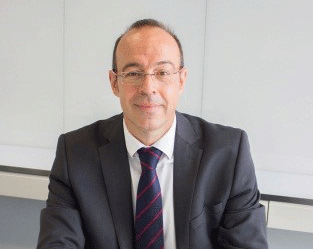
Vladimir Kirillov, CEO of KIT Finance Asset Management, says the growth in the number of market players in the past couple of years indicates increasing interest in asset management vehicles. KIT estimates that there are 250 asset management companies on the Russian market, with 460 funds in operation. Half of the asset management firms have appeared since 2003, according to Kirillov. Meanwhile the total of 220,000 investment accounts in Russia is 50% up on the end of 2005, he says. KIT’s assets under management have grown from R8 billion to R12 billion ($448 million) in the period, and its accounts number has shot up to 25,000 from 16,000.
Kirillov says a large part of the growth results from a change in perception among the agent banks through which many mutual funds are sold. “When we asked agents to sell our funds back in 2003 they didn’t understand us and didn’t believe in them,” he says. “They thought [the funds] would act as competition for their deposit accounts but this has changed. Now it’s easier to talk to them and persuade them. Some even come to us.”
Retail investors are becoming better educated and more interested in new kinds of investments, Kirillov adds. New types of vehicles such as indexed funds, venture investment funds and real estate funds have appeared since 2003 and are being sold to retail clients. “In 2003 we sold units with a minimum initial investment of $100 but in late 2005 raised this to $1,500,” he says. “This shows more trust toward mutual funds.”
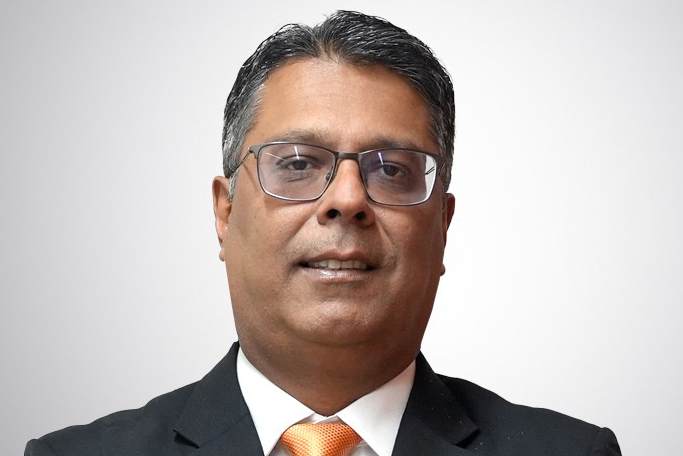
Bernie Sucher, CEO of Alfa Capital, which has $400 million under management in public equity and debt, says asset management in Russia has made huge progress in a short time. “It’s wonderful being in an industry where the wind is not only at your back but blowing at gale force and likely to get support for many years to come,” he enthuses. “A few years ago asset management totalled $2 billion, and most of that was Gazprom. Now the industry picture is one where it is multiples of that and the sources of growth are various.”
|
“The fact that the state is committed to pension reform, however imperfectly it has been executed, is important” Bernie Sucher, Alfa Capital |
 |
Sucher says continuing pension reform will be a key factor in developing asset management further, and that he sees signs that progress in this area is at last under way. “The fact that the state is committed to pension reform, however imperfectly it has been executed, is important,” he says. “It’s hard to find an asset management industry anywhere in the world that works well without pension funds. They give you the big money.” Sucher says the pension reforms originally undertaken by the government in 2002 are slowly coming to life, with $7 billion now in the state pension fund. “That’s had a knock-on effect, stimulating the non-state marketplace to clean up its act, with $7.4 billion now in the non-state area.”
In the first half of 2006, inflows into Russian mutual funds amounted to $2 billion, according to Sucher. About half of this is “tax optimization” money going into closed-end funds built on real estate, he says, but the other $1 billion is “real” – a huge increase on previous years. Alfa says the largest inflows in the first six months of the year were from equity-focused mutual funds, and that this suggested a significant reduction of cash savings held under the mattress. Mutual funds attracted double the inflow of the whole of 2005 in the first four months of this year, Alfa estimates.
KIT Finance’s Kirillov says further growth will come from both institutions and the retail business, and foresees the current 220,000 accounts rising to 1 million by 2010. Although few institutions and non-state pension funds buy mutual funds, legislative changes are expected later this year that could encourage them to do so. Insurance companies are also likely to invest more as they become more client-oriented, according to Kirillov.
Andrei Movchan, CEO of Renaissance Capital Investment Management, also sees the need for legislative changes to support the development of asset management, but says vehicles such as mutual funds are not a priority for the regulatory authorities since they are focused on developing IPOs and other capital market instruments.
Invest at home
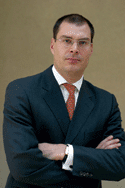
The broadening of interest in asset management from high-net-worth individuals to the mass market of retail investors is becoming another opportunity to increase sales. Florian Fenner, the head of UFG Invest, says a wider cross-section of people with growing disposable incomes is investing more. The total of Russian mutual fund holders of less than a quarter of a million (from a population of 147 million) means that there is enormous scope for development, he says.
“The general trend in the last two years is asset management growing very strongly coming from a low base,” says Fenner, who has $800 million under management. “Growth in the economy is trickling through to more areas of the population, but this is under-appreciated.” Fenner says Russians are increasingly keen to invest in Russia, rather than stashing their money away offshore.
UFG’s strategy is based around offering simple investment products based on equities and fixed income. Fenner says other asset classes such as real estate are not under consideration. “The products we offer are unsophisticated, and that won’t change,” he says. “The market is not stratified enough to offer different products.”
UFG’s client base includes a combination of high net-worth individuals, non-state pension funds and insurance companies. The asset management part of the firm’s business was established in 1996 and runs two mutual funds dedicated to retail investors: the Pyotr Stolypin fund and the Russian Bonds fund. UFG Invest has about 5.7% of the total market of open-ended mutual funds in Russia. The group’s two mutual funds’ assets under management amount to more than $124 million. The open-ended Russian mutual fund, Pyotr Stolypin, specializing in equities, manages assets of $85 million, and rose 82% in the year to July 2006. The open-ended Russian Bonds fund, investing in fixed income, has assets of more than $39 million, up 10% on the year to July.
Other asset managers have started investing in more exotic asset classes, including real estate. Troika Dialog Asset Management, which manages about $2.7 billion, has over the past year boosted its Commercial Real Estate Fund with the acquisition of Moscow and regional property, which is then leased back to the original owners. This mechanism aims to provide a stable, long-term income for the fund’s investors.
 |
“The products we offer are unsophisticated, and that won’t change. The market is not stratified enough to offer different products” Florian Fenner, UFG Invest |
Renaissance Capital has one of Russia’s largest asset management businesses, with $2.4 billion under management, and has to date focused on high net-worth individuals and corporate clients. Renaissance’s Andrei Movchan says the hitherto neglected retail business will now form the core of the firm’s development, although 85% of Renaissance’s clients are still high net-worth individuals. “Even two years ago the retail business was almost non-existent,” Movchan says. “Net inflows [into mutual funds] have been greater in 2006 than in the previous few years together, despite the correction.” Movchan predicts more firms will gradually turn to the retail market for growth. However, he remains unconvinced that the pension and insurance business can be relied upon for significant inflows. “Insurance companies don’t like working through investment managers,” he says. “The return on insurance is high, so they don’t need to invest, as they’re already profitable.”
Renaissance Capital Investment Management has two business lines: asset and fund management and wealth management. In providing wealth management to high net-worth individuals, the company targets the top segment of the market and has a minimum investment size of $1 million. The firm says the average account size is more than $6 million, however, and the largest single account is just above $100 million. Movchan says that despite the potential for further development, asset management could become a harder sell than in the past few years.
Expectations too high
“The impression for the last few years was that emerging markets and Russia were a sure bet, so people considered equity portfolios as high return and low risk,” he says. “Now many of them understand this is not the case any more – not only because of the [recent market] correction, but because valuations are still high.” And the growing number of asset management firms will gradually thin out, he says, as the industry matures and the weaker funds go out of business.
KIT Finance’s Kirillov says the market sell-off that started in May doubtless dissuaded potential new investors from buying into funds but that existing investors generally left their money in. KIT sold more in the second quarter than the first, he notes. Of KIT’s 10 funds, two grew by more than 100% over the year to July 2006 and three rose by more than 50%.
UFG’s Fenner agrees with Movchan that a measure of caution is required following the high standards of recent years. “Clients have been spoilt by returns,” he says. “In the last few years returns have been phenomenal, so the expectations are high, as is the risk of disappointment.”