Anything that has had an impact on one asset class or market will rapidly cross over to others if it has perceived benefits. Perhaps the most obvious example is electronic trading itself, which has changed the way trading is done in market after market; other innovations to cross over into foreign exchange more recently include programme and algorithmic trading. The last two have had a profound impact on the US equity market in particular and are often cited as the main reason why the average ticket size declined substantially.
With computerized trading on the increase in FX, it is noticeable that ticket sizes are also falling. As a result, it was perhaps inevitable that a solution to the problem of trading large amounts, or blocks, would arrive from another market, and again it is the US equity market that might offer an answer.
The average trade size in US equities is now believed to be about 300 to 400 shares, or, in value terms, just $20,000. This poses problems to investors, such as asset managers, that want to or need to trade in larger amounts. The development of electronic block trading functionality by such companies as FlexTrade, Lava and Pipeline Trading Systems, among many others, has provided a solution. Pipeline claims that a typical equity transaction on its platform is for about 42,000 shares, a huge increase on the average transaction taking place on the exchanges.
Of course, block trading has long been a feature of most markets, FX included. But doing it anonymously on electronic platforms is a new take on an old theme. Some might question whether it is required in the FX market, which is clearly far more liquid and arguably far more efficient than the equity markets. But both FlexTrade and LavaFX believe there is a need for it, and they are poised to launch competing systems imminently.
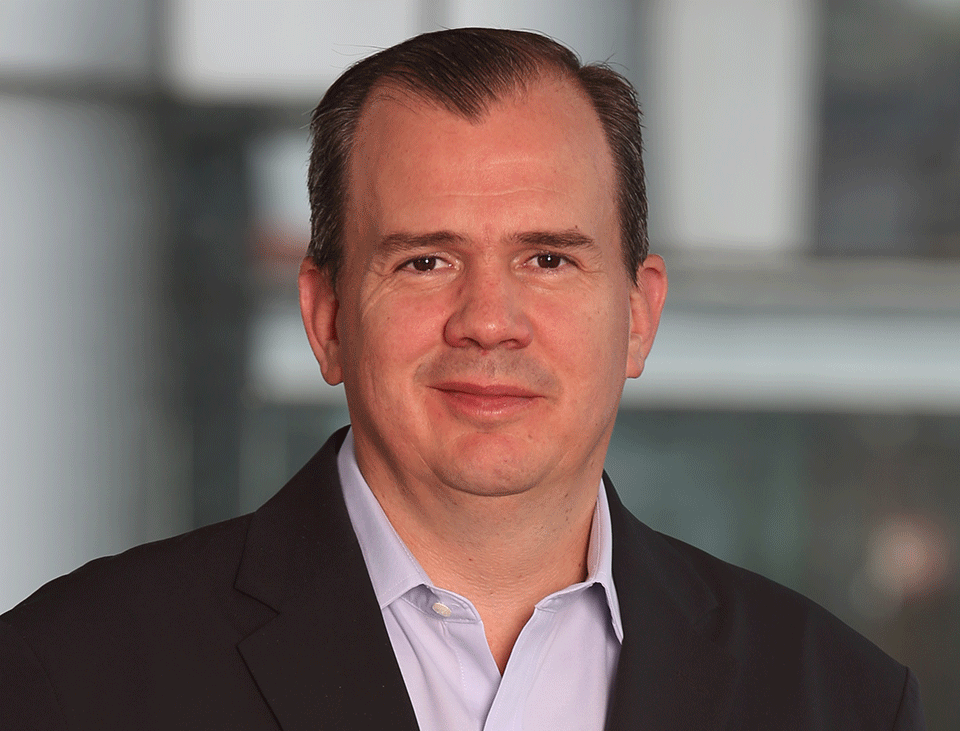
FlexTrade looks as if it will get first-mover advantage with its MilanFX block trading platform due to be launched as Euromoney went to press. According to Vijay Kedia, president and founder of FlexTrade, the site is already in beta testing.
“MilanFX is different [to potential rivals] in a number of ways,” Kedia says. “We’re giving equal access to the buy and sell sides, and it is limited to large blocks. It brings in the concept of a dark order book, which makes it anonymous and impact-free. It’s also very leak-proof.”
Kedia adds: “Users of MilanFX will place their order into the system, which can be a limit order or pegged to the mid-point of the prevailing rate in the market with or without a limit price. The order is not displayed, but other users get an alert without any knowledge of order side, order size or price.”
MilanFX has clearly defined minimum deal sizes. For euro/dollar, the minimum trade will be for €100 million. Cynics, of which the FX market has its fair share, might well ask why there is a need for such functionality. Existing trading platforms, such as FlexTrade’s own FlexFX, pull in sufficient liquidity and are sufficiently transparent to know, most of the time, the rate at which a large trade will get executed.
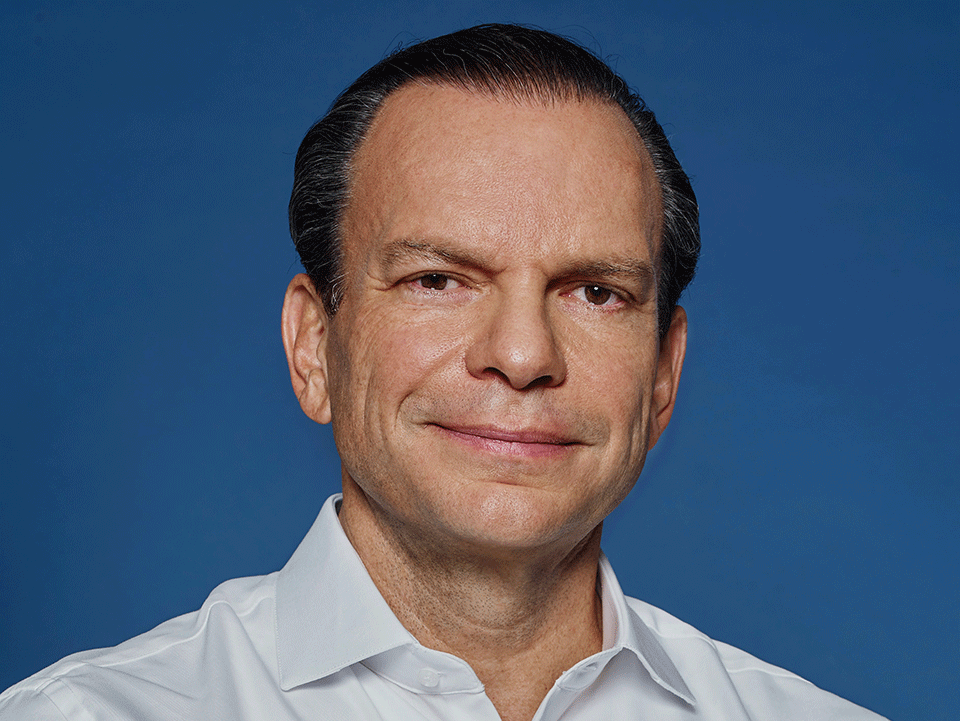
David Ogg, chief executive of LavaFX, which will launch its block trading platform, likely to be called Dark Room, says that the main benefit of block trading is that it has less market impact than sweeping even the most liquid platforms for bids and offers. Dark Room should see the light of day by the end of December or early in January. The company has yet to detail all of its functionality. Ogg, however, makes a point of saying that it was custom created for the FX market, rather than being a tweaking of what has worked in US equities.
FlexTrade, which claims to have built the first broker-neutral US equity trading platform, says it was natural to draw on company experience gained in the equity market. But Kedia admits that the FX market might need some education to get used to the system. Given the belief of many traders that even putting a bid into EBS will result in the market moving up against them, this could well be another contender for understatement of the year.
However, Kedia adds: “It took a decade for the buy side to get used to algorithmic trading in equities, but that has been rapidly compressed in FX to about just 18 months. Algorithms have had an impact in FX far quicker than they did in equities and I believe the same thing will happen with block trading.”
Ultimately, whether trades are done as blocks, where a bid or an offer is entered and other participants are invited to join the dark side, might depend on how the market is trading. Asset managers might like the concept of getting a trade done without impact. However, if the market is moving, they might well still find that getting a price, pulling the trigger and getting the deal done at any price is more efficient.