 |
|
Panama’s president has received praise from the IMF for his fiscal austerity drive but workers are wary of his plans to reform social security |
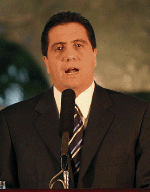
Panama’s president, Martin Torrijos, came in for a nasty surprise when he took over the helm of central America’s biggest debtor late last year. He inherited a hefty fiscal deficit of 5.2% of GDP that the outgoing government had maintained was half as big, and was met with street riots among workers suspicious that the new administration planned to privatize the state-run social security system. Panamanian debt sank sharply at the start of 2005 amid fears that the young government would not be up to the challenge of reforming the dollar-denominated economy, once seen as a safe haven credit in volatile Latin America. Panama’s global 27 bond sold off almost 2.5% at the start of January and the paper fell to its support level of 105.00.
Since then, Torrijos, the son of 1970s strongman president Omar Torrijos, has surprised the markets with an aggressive reform agenda, quickly pushing a contentious package of tax increases and spending cuts through congress. Lawmakers approved the measures in February only three months after they were proposed, agreeing to give the government the power to cut Panama’s budget by half its 2004 level of $700 million by 2006.
Torrijos plans to slash the number of workers on the government payroll and to levy a new 2% tax on corporate revenues, although he has kept the tax-exempt ceiling for those who earn less than $800 a month.
At the start of the year, Torrijos also raised $600 million in the New York market to bridge the budget deficit with a 10-year bond priced to yield 7.35%. His government has set a deficit target of 3.6% of GDP for this year. “The government is putting its house in order,” Torrijos said of his policies in a recent speech.
Social justice
But reducing the country’s $8.8 billion public foreign debt, which accounts for 70% of GDP, might not be so easy to achieve despite Torrijos’s recent gains.
The market-friendly president’s success depends on his ability to bring the country’s social security system under control – it is currently haemorrhaging money but is cherished by workers who see it as a rare pillar of social justice in one of the world’s most unequal nations.
Torrijos is eager to convince voters of the need for reform and is proposing a pensions bill for April that would raise the age of retirement, increase pension contributions and reduce benefits, but would not offer private accounts. The government also plans to crack down on businesses that fail to make contributions for their workers.
The plan would probably increase the life of the near-bankrupt system by another 25 years, but workers and universities have vowed to march and picket against the changes.
“We expect the government to pass a moderate reform, which will adjust the parameters of the pension system, though not the system itself,” says Jan Dehn, an economist at Credit Suisse First Boston.
Such a law is crucial if Panama is to improve its credit rating and lower the cost of issuing and servicing its debt. Standard & Poor’s rates Panama two notches below investment grade with a negative outlook, and Moody’s puts it one level below investment grade with a stable outlook. But the legislation will be unpopular with businesses, which say the corporate tax will hurt the economy in the longer term by putting up a barrier to investment, pushing small businesses onto the black market.
Torrijos is undeterred, however, and is banking on economic growth of 3.6% this year after 5% last year, dampened slightly by the fiscal austerity drive. He has also won the support of the IMF, which “commended the authorities for the emphasis on strengthening public finances and improving fiscal transparency” in a recent visit, although Panama does not plan to ask for a stand-by loan programme.
An expected $8 billion expansion of the Panama Canal to enable the world’s largest ships to transit the 80km waterway and a free-trade deal with the US also bode well for the country’s $14 billion economy.
The canal, which carries about 4% of world trade, is reaching capacity and fears it will lose its traffic from Asia if it does not make way for giant container ships and tankers.


