Saudi Arabia: Sadafco issue opens new market

Attention now turns to more complex Al Marai transaction

The Saudi Arabian equity market has taken a significant step towards maturity with the successful launch of the first underwritten IPO in the kingdom. The SR507 million ($135 million) issue for 30% of dairy company Sadafco, which was more than 6.5 times oversubscribed, is also the kingdom’s first corporate flotation since the capital market listing regulations were announced earlier this year.

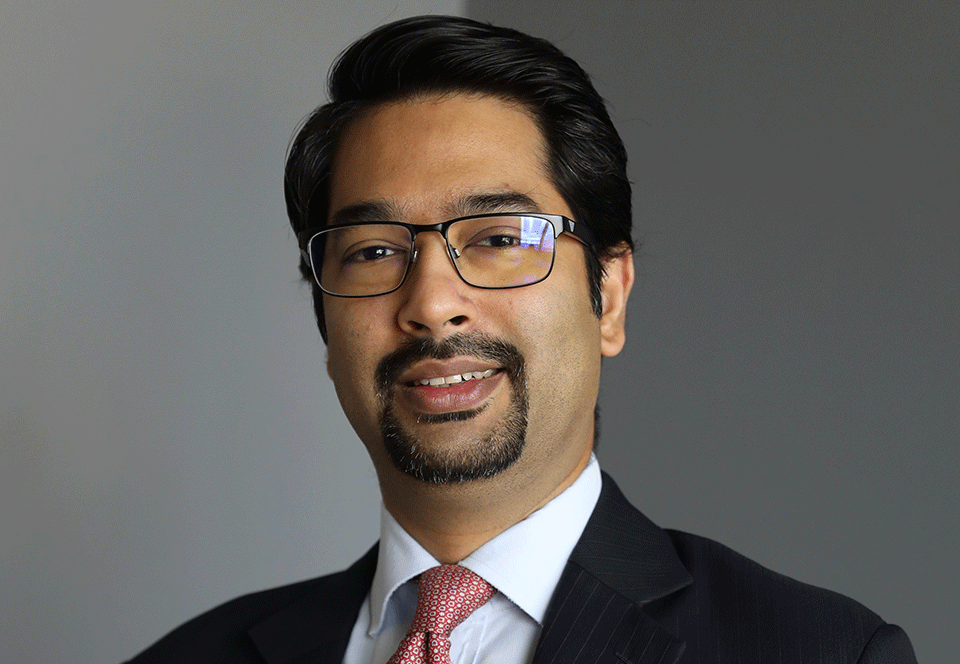
“It has broken new ground because it was the first equity offering to be distributed to both retail and institutional investors through a bidding and book building process,” says Oscar Silva, head of corporate and structured finance at the lead manager, Jeddah’s National Commercial Bank. The bank has taken the full underwriting on its own books.

The deal could herald a series of underwritten issues, with the $500 million to $600 million offering for another dairy company, Al Marai, lead managed by HSBC,  expected in the next few weeks.

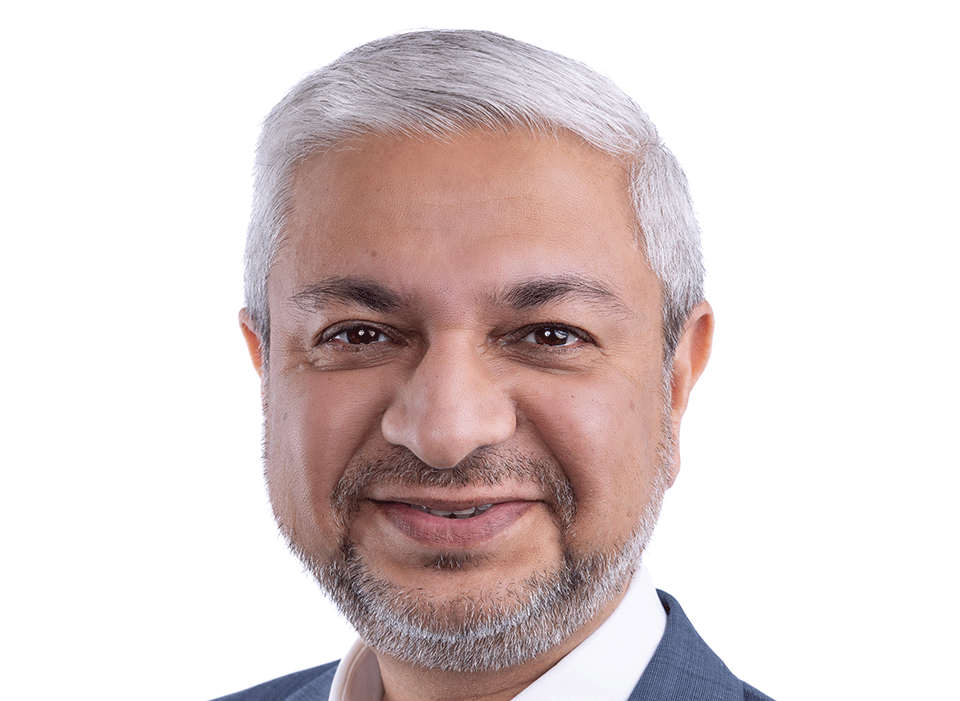
“We also have four more deals in the pipeline,” says Timothy Gray, HSBC’s managing director and head of investment banking for Saudi Arabia.

Underwriting is a new development for the Saudi Arabian Stock Exchange, which is by far the largest market in the region. Until the listing regulations were changed in 2005 this was not a requirement.

The present rules are complex. Flotations deemed by the government to be privatizations do not need underwriting, nor do companies established by royal decree. This category includes insurance company NCCI, new mobile operator Mobily and new Islamic bank Al Bilad, all of which have been floated successfully in the past nine months.

But, the Capital Markets Authority, which has impressed bankers with a rigorous yet flexible regime still in its first year of operation, insists that private companies – seen as a higher risk – must provide investors with the additional comfort of underwriters.

The key challenge now is the speed with which Al Marai – a more complex transaction than that for Sadafco – comes to market. This transaction has taken longer than expected to complete. But Gray points out that “this is the first time that a company is converting from being a limited liability operation to a joint stock one at the same time as floating on the market.” This is significant because most of the private sector companies planning flotations in the next year are limited liability companies. “The Al Marai issue will be the template for many of those to come, so everyone involved is determined to get this one right,” says Gray

HSBC is expected to take much of the underwriting on its own books – probably through Saudi British Bank, in which it has a 40% stake – and the rest will be underwritten by Saudi banks.

The question for future corporate flotations is the extent to which local banks have the capacity to act as main underwriters for large corporate issues – their ability to do so will determine whether they are able to win mandates.

According to Adel Al-Sayed, vice-president business development at Gulf Investment Corporation: “The big international banks will go for the major business like privatizations. The major Saudi regional banks such as ourselves, Samba and NCB are likely to win the main share of this corporate business.”