 |
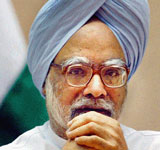
Life is proving tough for Manmohan Singh. At home, India’s prime minister is coming under increasing pressure from left-wing elements in the governing coalition over the government’s privatization strategy. Abroad, he was virtually ignored by US journalists during a recent press conference with president George W Bush in Washington. The media were more interested in White House aide Karl Rove’s alleged role in leaking the name of a CIA agent than in India-US relations. This was not how it was meant to be for Singh. A quiet intellectual and technocrat, he was asked to become prime minister by Congress party president Sonia Gandhi, following her victory in last year’s election. Singh was the consensus choice; the man who had overseen India’s first reform era when he was finance minister in the early 1990s. The hope was that he would usher in the next stage of reform that would see India properly challenge for a seat at the big boys’ table.
That hope, though, is beginning to fade. A row over the sale of a state-controlled group is threatening to undermine his position and his relationship with Gandhi. The Communist members of the governing coalition are upset about a potential 10% stake sale of BHEL, an electrical equipment group. But instead of airing their grievances to Singh, they took their complaint straight to Gandhi. That move appears to have paid dividends, though no-one is quite sure what will happen next to BHEL.
What the incident does reveal, however, is that India continues to suffer from fractional politics, in which the whims of small, albeit influential, groups hold too much sway. It might also reveal what Singh’s critics suspected when he became prime minister: that the genial Sikh is not a tough enough politician to be a good leader.
To be fair to Singh he is in an unenviable position. He did not win the general election, he is not the leader of his party and he is not the head of the governing coalition. Yet he is expected to meet some ambitious goals, including wiping out the fiscal deficit and regenerating the country’s poorer areas, especially in rural regions.
Singh needs to reassert his authority quickly. He needs to lay out his government’s agenda again. And, most important, he needs to stick to it. Or else he faces a long time as a lame-duck prime minister.




