Awards for Excellence 2005
Lehman Brothers The US firm has added excellence in equities and M&A to its hugely profitable fixed-income franchise
 |
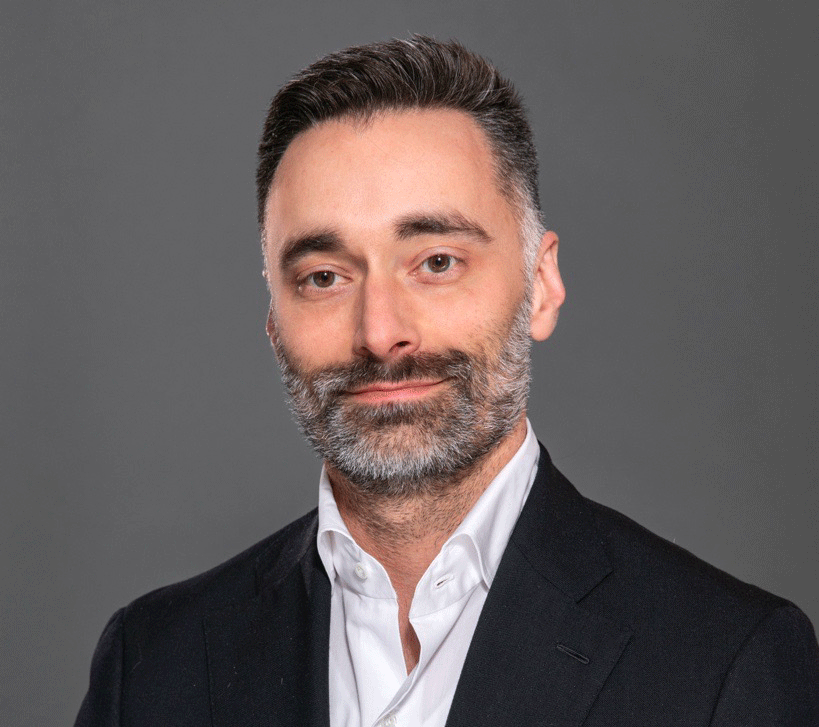
| Richard Fuld |
It might not be the biggest investment bank. It might not push its traders to find a few extra cents per share by ramping up its proprietary risk-taking appetite. And it might not be the most visible player in China, the market most of its competitors seem to be chasing after.
But in the past 18 months Lehman Brothers has cemented its position as a top-tier full-service investment bank, one that is as confident as an equity house and M&A adviser as it has been in fixed income, the business for which it is best known.
It’s a process that has taken 11 years, ever since splitting up with parent American Express, a process that Euromoney recognized in 2001 when we named Lehman most improved investment bank.
CEO Richard Fuld attributes his firm’s success to the culture he and his executive committee members have instilled in employees. “I do not want our bankers simply being in the soup sniffing around for a trade,” he says. “I want us to build and maintain relationships with clients over a long period of time. And when we target clients, we’d better be delivering the whole firm to them.”
The difference between 2001 and now is one of scale. An increasing proportion of its revenues now come from outside the US – almost 40% in its most recent quarterly earnings – and its equity and M&A franchises are now much more established and consistently bringing in high-profile mandates.
Last year Lehman was underwriter on the largest IPO in France, PagesJaunes’ A1.4 billion deal, and on the largest equity deal in Germany, HVB’s A3 billion rights issue. In the US Lehman was sole bookrunner on a number of the major convertible deals of the year. Among these was the $750 million deal for General Mills, part of a $2.3 billion equity monetization for Diageo to sell a large chunk of its stake in General Mills. The convertible was actually issued by Lehman, part of a complex arrangement for General Mills to retain certain tax benefits when buying back stock from Diageo. In the straight equity markets Lehman has found itself getting lead manager mandates on deals that even three years ago might have passed it by, such as last month’s $3.9 billion public offering for Hudson City Bancorp.
M&A mandates have included advising ABN Amro on its A6.3 billion offer for Banco Antonveneta, ChevronTexaco on its $18.9 billion offer for Unocal, and Sprint’s $46.5 billion acquisition of Nextel.
In both equity underwriting and M&A Lehman can point to a steady increase in business in the past few years, proving that it is possible to build a top-tier investment bank in all major products, a feat that several would-be competitors have only partially achieved. Nowhere is this more evident than in Lehman’s success in building an equity trading and research capability that has impressed many and helped capture underwriting mandates. Lehman has been the top sell-side research house in Institutional Investor’s US rankings for two years running, and in the magazine’s survey of the top 350 buy-side traders last year Lehman ranked top for New York Stock Exchange stocks, a major achievement for a firm that just a few years ago was little more than an also-ran.
All the while Lehman has not dropped the ball in fixed income. It has one of the most diversified businesses on the Street, which is in part what has enabled the firm to produce quarterly results that beat its peers. Its high-grade business has long been the largest and best of the investment banks. In structured credit the firm has built a solid platform that concentrates more on the benefits of the deals than on doing structured deals for their own sake. And its asset-back securities platform narrowly missed out to Citigroup on winning this year’s award. Mortgages have especially helped, a business Lehman has dominated in the US along with Bear Stearns and UBS. And the firm has been investing, buying several mortgage origination platforms in the US and UK that allow it to eliminate the risk of warehousing loans before securitizing them – although also losing the carry – and to cut the cost of issuing MBS by about 80%.
Combined, this has made Lehman the envy of its peers. Whether grudgingly or with grace, Lehman’s competitors, from equity syndicate heads to CEOs, acknowledge that it has become one of its most formidable and feared competitors. And there are some banks and investment banks that must be envious of its ability to deliver impressive earnings even after the turmoil of April and May that left Goldman Sachs, JPMorgan and Morgan Stanley’s trading desks reeling. Lehman has not been as aggressive in proprietary trading, nor as aggressive in pitching some of the more exotic structures, as these and other peers. It’s all part of that culture Fuld has created: “I expect every single one of my employees to be risk managers,” he says.