 |
|
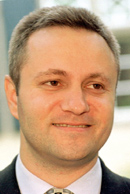
Mladjan Dinkic Minister of finance of Serbia |
Mladjan Dinkic, Serbia’s 40-year-old minister of finance, says governing a country when you don’t know where its borders are can be challenging. ?This is the biggest problem for us,? he says. ?It’s the biggest problem for us joining the EU too.?
Serbia is held up in its progress towards EU accession by not knowing in what form it will join ? as Serbia on its own, or together with the province of Kosovo, or with Macedonia as well.
The EU is keen that Serbia join together with Macedonia, though Dinkic says the countries’ economic systems are so different it would be much better for Serbia if it could join separately. As for Kosovo, Dinkic thinks it is unlikely to join at the same time as Serbia. ?We were working on a double track accession process, with Macedonia,? he says. ?I think it will be triple track now, with Kosovo acceding separately too.?
The EU has yet to work out whether it considers Kosovo a state or a Serbian province. This will be the year when it makes its decisions. At the moment, Kosovo is in a strange limbo, run by the UN but without any clear political status.
Dinkic thinks EU accession could ease territorial tensions between Balkan provinces and countries. ?It will make it easier when you ease border controls,? he says. ?One of the main problems now is how difficult it is to visit other countries. For example, we have a significant Serbian minority in Hungary, so Serbians have to go through an arduous visa process just to visit relatives.? He thinks it is unlikely that serious ethnic or nationalist violence will erupt again in Serbia in the foreseeable future. ?The main investors in Serbia are now Americans,? he says. ?I don’t think they would let it happen.?
The Radical challenge
Some foreign investors have been concerned by the strong showing of the nationalist Radical Party in Serbian polls. If the present minority government fell apart this year, the Radical party could stand a good chance of winning a new election.
How damaging would that be? Dinkic says: ?We should not exaggerate the danger from them, if they did win. I think they would change their policies completely if they did come to power.? He believes that if they won they would support EU accession. But he says: ?The issue of war criminals is delicate, because their leader is being held for war crimes at The Hague.?
If the Radicals are to be prevented from winning, Dinkic says it is important that elections are held in 2006 rather than this year, when the EU’s decision on the status of Kosovo is likely to mean that nationalist tensions are running high.
Also critical to the victory of the Democratic coalition is for the pro-democratic and free-market parties to stop feuding.
It has not been an easy year for Dinkic. The popularity of his G17 party has halved since he took office. He blames his introduction of new taxes. ?And of course, I have a lot of enemies.?
But he says his policies are beginning to bear fruit. ?At the beginning of the year we had poor growth prospects, but we managed to finish the year with 8.5% GDP growth. We then managed to reduce our deficit by over 1%, without any significant problems. And we rescheduled our London Club debt and secured a single B plus credit rating for the country.?
Dinkic took part in Serbia’s popular overthrow of the Milosevic regime in 2000. He was at the time a professor of economics at the University of Belgrade, as well as a founder of the G17 opposition think-tank, which later became a political party.
Some observers have suggested that the US government has played an important role in all of the recent outbursts of popular revolt in eastern Europe. Dinkic says: ?There was US assistance in Serbia, but it wasn’t as crucial as western media claim. Milosevic simply went on too long, and was too bad, so the most people wanted something new.?
He warns the new post-revolutionary countries in eastern Europe that populations can often feel let down by the slow pace of government after the optimism of revolutions. ?Some people in Serbia were disappointed after the revolution because they had big expectations, and we couldn’t do anything overnight,? he says. ?Now we have a more normal situation, and people’s expectations are smaller.?
For Serbia, a key part of rebuilding the country after the lost decade of the 1990s is rebuilding its foreign image. Dinkic says this is a priority now. ?For the last two years we have been concerned with internal affairs, such as the fight against organized crime. Now, we can focus on improving our external image.?
An important part of that will be the European Bank for Reconstruction and Development’s annual conference, to be held this year in Belgrade, Serbia’s capital.
Dinkic says: ?The normal opinion of people, particularly in northern Europe, is that Serbia is still a war-torn country.
But whoever comes to Belgrade for the meeting will see the results of the last few years.?