 |
|
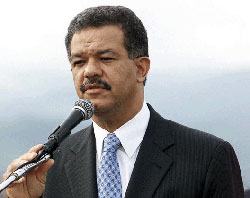
Fernández: faced with the thankless task of rebuilding what the previous president’s administration shattered |
Leonel Fernández, the Dominican Republic’s new president, is a man with a thankless task. After overhauling the Caribbean nation’s economy during his first presidency in the late 1990s and laying the groundwork for rapid growth from 2000 onwards, he watched as his work was undone by his successor, Hipolito Mejía, who led the country into economic collapse and default in 2003.
Now Fernández is back to rebuild what Mejía’s administration shattered, but despite a new $670 million IMF loan the going is tough. The republic has slipped into default on its commercial debt this year and Fernández is struggling to complete a restructuring on its $1.1 billion sovereign debt as it picks up the pieces left by Mejía’s bail-out of the crisis-hit banking sector. Fernández’s government has warned that it might not be able to make its debt payments on time until it restructures its 2006 and 2013 global bonds to avoid a payments’ pile-up this year.
But Fernández’s credibility is growing and he has had several successes since taking office last August. Inflation halved in 2004 from almost 30% in 2003 and is expected to fall again in 2005. The peso has stabilized after a long free fall and the key tourism sector is growing again. That should lift the economy by up to 3% this year and by 5% in 2006. Still, Fernández is weak politically and lacks a majority in congress, while legislative elections are a year away. Mejía’s Dominican Revolutionary Party (PRD), the main opposition group in parliament, has delayed efforts to get debt restructuring negotiations under way, first calling on the government to withdraw its threats to prosecute Mejía-era officials for corruption. Opposition legislators have even threatened to try to impeach Fernández, alleging that he has violated the constitution.
A restructuring lifeline
The senate, however, has handed Fernández a lifeline by approving the debt restructuring plans. That will allow the government to negotiate with bondholders to save several hundred million dollars in debt-servicing costs this year, although economists believe the government is unlikely to carry it out before the 30-day grace period on its April 27 2006 coupon ends. “We believe a deal can by done by May,” says Carl Ross, head of Latin American sovereign research at Bear Stearns. “I think the restructuring will be market-friendly,” he says, pointing to the widely held view that longer maturities will lock in the bond’s high yields as compensation for investors.
The government says it will push for an extension until 2011 on its 2006 globals and until 2018 on its 2013 paper, although analysts say it might win up to just three years on each bond. Investors are keen to see the Dominican Republic make a success of its restructuring despite initial fears it would be made on unattractive terms. Holders of the debt booked a 27% return in 2004 after a 12% loss in 2003 and the bonds have been some of Latin America’s best performers so far this year. The restructuring should also cut the country’s risk of defaulting. “The spread on the bonds should narrow substantially once the restructuring is out of the way,” says Beat Siegenthaler, an analyst at Commerzbank.
Even with the debt deal behind him, Fernández has the challenge of bringing the economy back to sustained growth, ending power blackouts and improving the lot of ordinary Dominicans to avoid greater political hostility. Under the IMF agreement, he has also agreed to narrow the public sector deficit to 1.8% in 2006 from almost 7% in 2004 and to cut public sector debt to 48.3% of GDP next year from its current level of more than 50%. An October tax reform that increased fuel and value-added levies should help the government, and it has also pledged to end subsidies on gas and electricity, while slashing the government payroll. But it is still left with a financing gap of about $330 million this year, despite the IMF loan, $260 million in multilateral financing and a credit from Venezuela to cover oil imports.


