| Shakarchi: new Qatar-focused fund |
National Commercial Bank has become only the second Saudi Arabian financial services provider to launch a Shariah-compliant mutual fund that will invest in the countries in the Gulf Cooperation Council. The Al-Ahli GCC Trading Equity Fund is an open-ended fund denominated in Saudi riyals with a minimum subscription of SR5,000 ($1,333) and a 1.85% a year management fee.
According to the bank, the fund’s objective is: “To generate long-term capital growth through investing in GCC companies listed in various GCC stock exchanges and which comply with the Shariah criteria for investment.”
It will also invest in murabaha (a contract of sale in which the seller declares his profit and cost) transactions and murabaha funds, all of which must be approved by NCB’s Shariah board.
At a press conference marking the fund’s launch, Haithem Al-Mubarak, head of portfolio management at National Commercial Bank, said: “The [fund] will leverage the strong economic growth in the region for a longer term based on [our] positive and pragmatic overview of the macroeconomic performance of the GCC markets.”
Although noting the particular risks of investing in emerging markets, Mubarak stressed “the importance of diversification in the selection of the assets in this fund across the six GCC countries”. The fund will be actively managed to diversify the selection of stocks across a range of sectors and markets. He added that the 2% subscription fee was partly aimed at reducing the use of a market-timing strategy by clients looking to use the fund as a trading tool rather than as a long-term investment.
Four other GCC-wide funds operate in Saudi Arabia, but three are denominated in dollars and are not Shariah-compliant.
Reflecting on the growth of Islamic funds, Omar Kamal, head of the Islamic financial services group at Ernst & Young (Bahrain), notes: “Generally, the number of conventional mutual funds is greater than Islamic funds.” This is primarily because the Shariah restricts the nature and type of assets permitted in the fund.
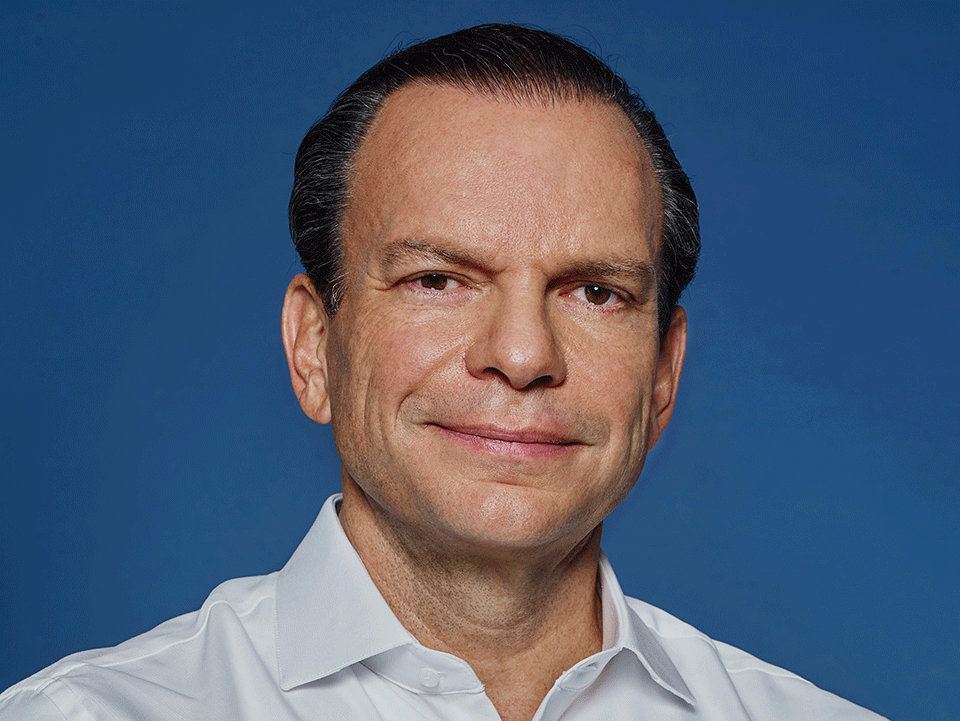
On the same day as the NCB’s fund was launched in Jeddah, in Doha Qatar National Bank (QNB) launched the country’s first Qatar-focused mutual funds. Initial subscriptions in the open-ended Al-Watani Fund I and Al-Watani Fund II closed on October 31. According to Mazin Shakarchi, assistant general manager for investment at QNB, the former is for Qatari nationals, while the latter is for foreigners. However, he stresses that “the funds will be managed in parallel”, and both will invest in the 32 equities listed on the Doha Stock Market (DSM).
Shakarchi says that the legal cap on foreign ownership of DSM-listed companies – currently set at 25% – led to the creation of separate funds. However, the ceiling has only been reached “one or two times”, and he adds that, “at this stage, we don’t see [this regulation] as an impediment.” QNB’s wealth management business, Ansbacher & Co, will manage the funds.