 |
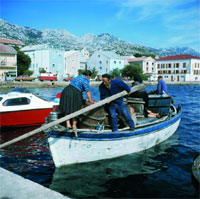
| The prospect of EU accession has proved to be an incentive for Croatia’s government to push through painful rerorms. |
THE EUROPEAN UNION formally accepted Croatia as a candidate country in June and accession negotiations are slated to start in the spring. If all goes well Croatia could join the EU as early as 2008. But its qualification for membership is threatened by the small Balkan republic’s large public debt. As the end of 2004 approached, the government resolved to begin tackling this problem. Croatia is one of three applicants for the next round of EU accession, along with Bulgaria and Romania, and follows Slovenia, which, as one of the May 2004 accession countries, was the first Balkan state to be admitted.
Slovenia boasts a sparkling investment climate and has been a model of reform, but it is geographically and culturally at the edge of the region. Croatia has sparked more interest since it is located at the heart of the largely untouched Balkans and is the natural jumping-off point for companies considering expansion in the region.
“Croatia is a small country and so more manageable in terms of infrastructure development, the ease of implementing reform and the cost of running [the administration],” says Salvatore Candido, the European Bank for Reconstruction and Development’s banker responsible for the country. “The economy is already as strong as many of those countries that joined in May. The problems it faces are with politics.”
Despite the end of open hostilities, tensions in the war-ravaged region are still high. Worries that fighting could flare up againhave held back large-scale investment. And Croatia has also not yet succeeded in putting its own human rights problems behind it. The EU assessors looked hard at the economics of central European candidate countries but in Croatia’s case the establishment of a stable political environment will be at least as important.
At the end of November the EU made the link explicit after Carla del Ponte, the prosecutor of the International Criminal Tribunal for the Former Yugoslavia, told the UN Security Council that Croatia had not done enough to seek out and hand over war criminals.
Del Ponte said there were strong indications that former general Ante Gotovina, on the run from an indictment for alleged war crimes and The Hague tribunal’s third-most-wanted man, was protected by a support network that included backing “within state structures”.
But the EU is also keen to help Croatia find a way over the obstacles as a way of aiding the development of the whole region. The prospect of EU accession has already proved to be a significant incentive for governments in the former socialist bloc to push through painful reforms.
Last year’s EBRD transition report found that in the run-up to accession governments in all the candidate countries bit the bullet and faced down their populations to bring their economies in line with the other member countries. However, the report talked about “reform fatigue” once membership was handed out in May. For the three candidates still in the queue the prospect of membership has encouraged them to buckle down to the business of making change.
Conviction politics
“All the political parties, across the spectrum, support the idea of EU accession. What other choice do they have?” says Candido. “They have the political endorsement, but when they go to the population they need to demonstrate the benefits in a convincing way as the start of the process always brings pain.”
Croatia goes into the last mile with significant advantages over Bulgaria and Romania. Marshal Tito, the founder of post World War II Yugoslavia and its leader until his death in 1980, came a lot closer to building a workers’ paradise in the Balkans than the Soviets did in their eastern European satellites.
Infrastructure is decent and has been improved by recent government spending. And as Yugoslavia was never entirely closed to the west, even in communist times, its mainstay tourism industry has flourished. Croatia enjoyed a bumper tourism season last summer, with about 8 million holidaymakers spending more than $8.5 billion on holidays along its Dalmatian coast.
However, Croatia’s large external debt is a cloud hanging over the country’s EU accession bid. Banks and government have been on a borrowing binge in recent years in the hopes of giving the economy a Keynesian kick-start.
The economy has been growing at a healthy 4% to 5% a year, but growth slowed in the second half of 2004 as the weight of the debt began to tell. Growth dropped from a better than expected 4.2% over the first quarter year on year to 3.8% by the end of the second quarter, although locals believe that the slowdown was temporary.
“We will see the stable macroeconomic situation continuing,” says Milivoj Goldstajn, member of the management board of Zagrebacka Banka, the country’s biggest bank. “Croatia’s GDP growth is projected to be between 3.5% and 4% [at the end of 2004], which is modest, but adequate.”
Nerve-wracking debt
Over the first seven months of 2004 Croatia’s external debt grew by $2.2 billion to reach a cumulative total of $25.7 billion by August. The IMF was becoming distinctly nervous and warned that the economy was not growing fast enough to be able to sustain this level of borrowing.
“The country’s real weakness is the external debt, which is now about 80% of GDP,” says Candido. “The IMF estimates the largest sustainable external debt is about 77% of GDP so the government has run out of room to manoeuvre and has to take measures.”
Local banks borrowing abroad have accumulated much of the debt. Over the first seven months of 2004 Croatian banks raised about $900 million of loans, which accounted for two-fifths of the overall foreign debt.
The state has been the second biggest borrower and tapped international capital markets for another $700 million over the same period, or a third of the total. Most of the rest – about $500 million – was borrowing by the leading domestic companies.
“Public borrowing wasn’t being driven by the government’s borrowing but by the banks. The authorities were giving guarantees for everything,” says Marina Vaglias, the economist responsible for monitoring Croatia at the EBRD.
The government has also been unsuccessful in attracting much foreign direct investment or privatizing the economy, both of which strategies would relieve the debt pressure and bring the debt as a proportion of GDP ratio down.
FDI inflows even slowed in the second half of 2004. The country’s leading pharmaceutical company, Pliva, is a rare exception in being a successful Croatian company that has been growing and investing abroad.
At the same time the tourism and burgeoning service sector has driven up per capita incomes, making it difficult for Croatia to compete with the other accession candidates in eastern Europe as a low-wage economy.
The average monthly salary in September was €434, a 12% increase on the year before, but the wage gap is growing quickly. Banking is the best-paid sector but, indicative of the lack of privatization, public-sector wages are higher than those in the private sector.
Public servants enjoyed a faster-than-average wage increase last year. The worst-paid workers in Croatia are fishermen, who earn an average of €262 a month.
FDI has also been stymied by Croatia’s size: with a population of only 4.5 million it cannot boast an attractive domestic consumer market. But the EBRD’s Candido argues that the domestic market is not what investors should be primarily interested in. “It is not what the country is about,” he says. “Stability and access to the region [is] – the package needs to include good infrastructure if it is to attract investment. Croatia has to be seen as a key building block in the region as its neighbours recover.”
An IMF mission arrived in Zagreb at the start of December to assess the republic’s progress and was pleased by what it found.
The mission focused on the government’s 2005 budget plans and sought to ensure that the state was curtailing its borrowing from abroad. The government had approved the 2005 budget proposal the week before, which set spending at K90.9 billion ($15.46 billion) and cut the deficit cut to 3.7% of GDP, down from the 4.5% target in 2004.
External borrowing reached a peak in August, but was starting to slow by the end of 2004. The slowdown had encouraged the government and the Croatia National Bank (CNB) to turn to the increasingly flush domestic market to raise money.
“If you’d asked me about the debt six months ago I would have been very worried, but talking to the government and the CNB in November it seems that they have not only realized the danger but are doing something about it,” says the EBRD’s Vaglias. “We are much encouraged and the economy is much more balanced.”
Exchange rate good fortune
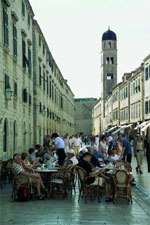 |
| Summer in Dubrovnik: 8 million visitors spent more than $8.5 billion in the 2004 tourist season on the Dalmatian coast |
Croatia’s government has also had a bit of luck. Just as both the government and private enterprise need to turn inwards to find capital, the domestic financial system has begun to blossom. The sickly dollar has added to the impetus. External debt reached another record high in September of $26.3 billion (79% of GDP) but the growth of debt decelerated sharply. And thanks to a weakening dollar the debt denominated in euros actually fell by 0.8% month on month – some 70% of Croatia’s trade is with western Europe, with Austria, Italy and Germany being the most important partners.
The 2005 budget cuts social spending, state-backed investment and public sector wages – the major government outgoings – while unexpected strong increases in exports and the record tourist season mean that the government predicts revenues will be up by 5% this year.
Like many other CEE countries, Croatia decided that the easiest way to reform the wobbly financial system was to sell it off to foreign strategic investors, who now control 92% of total banking capital. The result has been rapid development that fed through to the domestic capital market last year. For example, Zagrebacka Banka organized the issue of the country’s first ever 15-year sovereign bond at the end of 2004 which raised €200 million at 125 basis points over European benchmark bonds of the same maturity.
“Something like this would have been unthinkable six months ago but the bond was six-times oversubscribed,” says Goldstajn. “The bond market used to be dominated by the local banks but most of the buyers of this bond were pension funds and insurance companies.”
Rising incomes and economic growth have created domestic resources that are being gathered up by the newly created pension and insurance sectors. Until recently banks accounted for about three-quarters of the assets of the financial market, but the pension and insurance industries are making rapid inroads and mobilizing the domestic resources at an opportune time for the government.
Croatians have been enjoying the credit boom that is sweeping central and eastern Europe and bank lending was up by over 10% in the first half of last year to reach about €16 billion, most of which is going to households, which in turn has created more resources on the domestic market.
Indeed by October the CNB was starting to issue bonds, not just to raise money but also in an effort to soak up excess liquidity. At the same time the central bank created more liquidity by reducing the obligatory reserve requirements on domestic banks, dropping the reserve requirement for foreign currency accounts from 19% to 18% of liabilities.
“There has been a strong shift in government policy to find budget financing using domestic means,” says Goldstajn. “Last year the government already raised more than e1 billion with domestic sovereign bonds and it will do the same in this year as there is still a lot of liquidity on the domestic market.”
Banks continue to lead the privatization drive that will underpin Croatia’s progress. At the start of December Nova Banka was sold to leading Hungarian retail bank OTP and represents the end of banking privatization.
Cooling consumers
Rising incomes have made retail banking a battleground among the market leaders and ballooning deposits have created a source of cheap capital that will fuel more growth.
Consumer credit growth was so strong in the first half of 2004 that the central bank slapped restrictions on lending and made use of administrative tools, such as increases in obligatory deposit levels, to try to cool the market.
However, the government has been much less committed to privatizing the other sectors of the economy; the Yugoslavian regime might have been more liberal than its Soviet counterpart but Croatia is still trying to shake off its socialist legacy.
“Privatization has produced mixed results,” says the EBRD’s Candido. “Some privatization is taking too long to achieve the targets, and infrastructure remains below EU standards, although progress has been made. Croatia has made reasonable progress in rebuilding highways and roads, although rail is less developed, but there is a lot of work to do at the municipal level with things like sewerage and water.”
Unlike the bigger countries to the north where a few large companies dominate the public sector, the Croatia government owns numerous small and medium-size enterprises, which it is has been propping up with subsidies and soft credits. Privatization carries the politically unpleasant prospect of a rapid and steep rise in unemployment.
“There are still a lot of problems to clear up,” says the EBRD’s Vaglias. “Questions of land ownership and the slow working pace of the judicial system are hampering privatization. It is just starting and the government didn’t want to totally relinquish control, but the prospect of EU accession is making a difference.”
Unusually for a European country, average wages in the public sector are 22.3% higher than those in the private sector. Just over a third of the economy is still state-owned, according to the EBRD, and a boost to private ownership would go a long way to solving the structural problems that have led to the ballooning external debt.
A need for good-neighbourliness
The government can certainly do more to reform the domestic economy, but because of the small population its future is tied to improvements in the rest of the Balkan region. Goldstajn admits that the investment climate in Croatia still suffers from an image of instability and more could be done to smooth prickly relations with its neighbours.
For example, in September a dozen Slovenian citizens, two of whom were members of parliament, were arrested on their way home at the Croatian border and accused of crossing the border illegally. They were later released, but the incident caused a diplomatic scandal.
Slovenia recalled its ambassador to Croatia for consultations and withdrew its unconditional support for Croatia’s EU entry. After Slovenian president Janez Drnovsek started making barbed comments about Croatia, EU external affairs commissioner Chris Patten intervened in an effort to sooth frayed tempers. The two countries were already at loggerheads over new Croatian rules on fishing rights in the Adriatic.
Warmer relations
Despite this tiff, governments in the region are starting to pull together. In October, Croatian prime minister Ivo Sanader met Serbian counterpart Vojislav Kostunica in Thessaloniki, Greece, and called for closer cooperation.
Croatia and Serbia are former enemies and took up arms when Croatia declared independence and broke away from Yugoslavia in 1991. They have been working on normalizing relations ever since.
“We are determined to settle outstanding issues, primarily humanitarian ones, bilaterally,” Sanader said, announcing that he would visit Belgrade officially for the first time in November. “The normalization of relations between Croatia and Serbia and Montenegro has no alternative. The wounds from the past definitely have to be healed but, without forgetting the past, we must focus on the future.”
In Belgrade, the two leaders discussed protecting minorities, unresolved border issues, refugee return and restitution of property, as well as economic cooperation. By the end of November the two former foes said they wanted to sign a security cooperation agreement to boost regional stability and put past animosities behind them.
“Countries in the region are no threat to each other any more,” Croatian defence minister Berislav Roncevic said after meeting his Serbian counterpart, Prvoslav Davinic, in the middle of November. “But we have to face international terrorism, organized crime, including human and drug trafficking, and proliferation of weapons of mass-destruction… and we have to do it together.”