 |
|
Thailand’s economic recovery is largely due to the policies of prime minister Thaksin Shinawatra |
THE GRACEFUL BEAM on the faces of people from the Land of Smiles is these days more often replaced with a broad grin. Good times are back in Thailand and unlike the last economic cycle,which ended so disastrously in 1997 with the devaluation of the baht, the recovery is relatively deep and widespread, thanks in large part to the policies of the Thai government led by prime minister Thaksin Shinawatra.
When Thaksin came to power in January 2000, he inherited 1999 GDP growth of 4.2%. In 2003 it reached 6.5%. This year 8% plus is spoken of, and perhaps 10% in 2005.
Thaksinomic job creation According to Daniel Lian, southeast Asian economist at Morgan Stanley, Thaksin’s economic policies, commonly dubbed Thaksinomics, have already created 5 million new jobs. There is little sign of inflation amid this growth and a strong current account. The government is running a fiscal surplus even after heavy investment.
All this has been reflected in the local stock market. The Stock Exchange of Thailand was comfortably Asia’s leading bourse in 2003, up 122% in US dollar terms.
Predictably, the return of the good times has raised the spectre of a re-run of the pre-1997 bubble. Construction cranes on the Bangkok skyline, idle for years, have started to move again, unlike the traffic, which has returned with a vengeance to the capital’s choked streets.
Speculation is evident in the property market. “Some sales in the high-end property market have started to change hands with no paperwork in half an hour,” says Kongkiat Opaswongkarn, founder and CEO of Asset Plus Securities Public Company, Thailand’s leading investment bank. “That’s a problem with the higher-end people. They probably made good money in the stock market last year,” he says.
Local investors are behind the bourse’s persistent rally. In late 2003, the government stepped in. “We’ve been quite vigilant at spotting these potential problems,” says Bandid Nijathaworn, deputy governor at the Bank of Thailand, “and we’ve taken action.”
A new sobriety Some financial market participants are still concerned. “A lot of people are starting to worry,” says Opaswongkarn. He says that an “8% average [GDP growth], even 7%, for the next five years is excellent. If you go to 10%, what comes next? I think stability is better than growth per se. The growth is there, efficiencies have been improved, taxes have become very effective.”
Although there are signs that the Thai markets are heating up, there are also indications of a new sobriety among policymakers and businessmen. Lessons have been learnt from 1997. “The economy will be expanding more or less at the same rate as last year,” says Nijathaworn. “The 8% target is a prime ministerial target, but the monetary policy committee is looking at a growth rate of 6.3% to 7.3%.”
Vijit Supinit, chairman of the Stock Exchange of Thailand and an adviser to the finance minister, agrees. He says that “8% is achievable, but I’d like to see 7% on average; 10% is too far. Although the PM may think growth of 8% to 10% [is the target], the finance minister is a career bureaucrat and he has a responsibility for stability. He’s been in the finance ministry for over 30 years.” By contrast, Vijit says, “the PM has said he has to set political targets”.
Setting targets is what Thaksin’s administration is all about and his clear ambitions for Thailand, tempered thus far by a light foot on the brake from bureaucrats, have proved a winner.
“I think the policies are very good, creative,” says Thiraphong Chansiri, president of Thai Union Frozen Products, one of the world’s leading producers of processed shrimp and tuna. “This government has managed with the style – speed, hard work, service – of the private sector. I never knew a government work as hard as this one. It’s a big change. They even work on weekends – they called a meeting [with me] on a Saturday – I couldn’t believe it!”
Thaksinomics is a combination of active economic and fiscal stimulants, whose principal purpose is to encourage genuine investment in all aspects of Thailand’s local economy, particularly the rural areas and in small and medium-size enterprises (SMEs).
Chief among these policies has been the Village Fund, a controversial scheme launched in 2001 under which the government has lent Bt1 million ($25,000) to each Thai village on a communal guarantee basis, to fund farmers’ investments. The Capital Creation scheme launched in 2002 has sought to convert micro-economy assets such as hawker stands, market stalls and street cafés into real assets that can be pledged as collateral for loans. This has helped bring some black and grey activities into the formal economy.
Other policy initiatives include low-cost housing projects, SME initiatives and a successful privatization scheme.
The latest initiative, the Vayupak Fund, launched last November, is a Bt100 billion mutual fund to be sold largely to Thai retail investors, which will invest in privatizations including Thai Airways, Krung Thai Bank and PTT.
 |
|
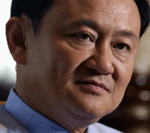
Thaksin: his emphasis on encouraging productive investment in all aspects of Thailand’s local economy is widely seen as a sensible alternative |
Generating domestic growth The thinking behind Thaksinomics is that the export-led growth model pursued by most east Asian economies has generated fast GDP growth but has not encouraged local investment in local economies. Rather, surplus liquidity has been invested speculatively, in stock markets and real estate, leading to boom-bust cycles.
“The consensus in Washington is ‘let’s build factories and move the poor people off the land’,” says Morgan Stanley’s Lian. “Thaksin’s view is very different. They’re trying to create local demand in the rural economy.”
Nick Cashmore, managing director and head of research for CLSA Securities (Thailand), agrees: “People say foreign direct investment has been weak in this economy. But Thaksin doesn’t even care. He wants Thais investing in Thailand. He’s not going to try to attract FDI just to bring in more capital. That’s what they tried to do pre-crisis with petrochemical plants and that didn’t really work. Thaksin has said that Thai exports are roughly equivalent to Australia’s, yet Australia’s GDP per capita is maybe 10 times Thailand’s. The difference is the domestic economy; you can’t just grow out of exports.”
Notwithstanding Thaksin’s apparent indifference to FDI, the strength of his domestic economic policies is attracting it. According to AT Kearney’s FDI Confidence Index published in September 2003, Thailand moved up to 16 from 20 in the world global FDI rankings in 2002.
Lian has studied Thaksinomics closely and believes it offers an alternative to what he describes as the West’s “cold turkey solution”. He argues that Asia’s excessive dependence on external demand and foreign capital-owned production capacity leads to skin-deep industrialization and a lack of pricing power. Lian says: “I’m a proponent – I’m a believer. You can say I’m biased but I’ve examined the thing structurally. I really think in the next 10 years I’ll be proved right.”
Cashmore agrees. He says: “I’m a believer in Thaksin. Last year we were looking for 6% GDP; others were looking at 3% to 4%.”
But such strong voices are countered by equally vociferous anti-Thaksin views. “There’s a very strong anti-Thaksin camp,” says Lian, “you’ll find a lot of scepticism in the IMF and World Bank. A lot of people want him to falter, due to his anti-Washington stance. The debate is whether this is structural or just a cyclical phenomenon propped up by state bank lending.”
Cashmore says: “A lot of criticism was saying he’s pump priming and accusing him of fiscal recklessness. But here we are with a fiscal surplus. A lot of people have eaten their words.”
While the debate rages between the two camps, Thaksin retains popular appeal. Elections are due in January 2005 and no-one seriously expects him to lose.
Thai identity A key element of Thaksin’s reforms is to turn Thailand into what some call a brand economy.”We are too OEM [original equipment manufacturer] oriented,” says Thai Union’s Thiraphong. We lack brands, we lack technology. Why? Because we have a small domestic market. To own a brand you have to have one large market.”
Asset Plus Securities’ Opaswongkarn believes the long shadow cast by China means Thailand has to differentiate itself. “I think China is the lowest cost base manufacturer in the world,” he says. “No one can compete. US, European, Japanese manufacturing have been put out of business [by China]. The Thai government is supporting [certain] industries to add value, such as in food, fashion, auto parts. How do you add value? By brand design, market penetration.”
He continues: “Last weekend I went to a fashion show hosted by the Queen in Chiang Mai. I was amazed to see so many beautiful women wearing beautiful clothes that looked like Ferragamo, or other western labels. But they were all designed by Thais,” he says proudly.
“They [the government] want to create unique products with a Thai identity,” says CLSA’s Cashmore, “anything from foods to fashion. Through the One Tambon [region] One Product initiative, they’re trying to create individual products that aren’t mass-produced. A bit like champagne in France, they’re promoting themselves as a quality producer. They’re moving away from mass-market. It makes sense. Look around – to the west is India; to the north, China.”
The Singapore model
Some are beginning to draw parallels to the approach taken by Singapore. “We’ve been trying to copy them for years,” admits Vijit Supinit. “But it wasn’t going in the right direction. Now, once an idea’s been discussed, the premier pushes it hardest. He’s a businessman – it’s why things are more possible now. Before, it was all political. I’m looking after the setting up of the [Vayupak] fund: investing in government entities using public funds. It’s like Singapore – you have to learn from someone. All my old friends are running GIC and Temasek.”
It is not just in the management of the economy that comparisons have been drawn with Singapore. Alongside greater economic and fiscal discipline has come a social order campaign that has sparked controversy and criticism outside Thailand but, in general, approbation within.
A zero-tolerance approach to cleaning up Thailand’s drugs problem in 2003 left some 2,500 people dead, amid accusations of extra-judicial executions by Thai police. Loan sharking, gambling, prostitution and even the more innocuous aspects of the entertainment industry have all had their collars felt by Thaksin’s heavy hand.
It is difficult to find too many complaints about Thaksin’s approach. “There’s still a lot of loan sharks,” says Asset Plus Securities’ Opaswongkarn. “Thaksin wants to get rid of them – they’re charging 20% [interest] a week. He’ll probably try to confiscate their assets. I think he’s right; he’s trying to move from the bottom of the pyramid to the top. Many others [before] looked after the top first. He’s trying to create more equality between rich and poor. He’s penalizing guys in the underground businesses – drugs, gambling, even corrupt politicians.”
“It may be a police state,” says Cashmore, “but the Thais love it. His drugs campaign was controversial sure, but in a survey last Christmas, Thais voted what government policies they most liked – it was the drugs campaign.”
With Thaksin’s approval rating at 70% plus, it is far from clear what checks and balances to his power exist any longer. For some, that is no bad thing. “He’s becoming too powerful,” says Opaswongkarn, “but I think it’s a good thing. A country like Thailand needs a strong man to lead it.”
One foreign banker says of Thaksin: “He certainly likes the admiration [afforded to] Mahathir or Lee Kuan Yew. Thaksin really admired those guys. He’s already taking over [from them], de facto. He’s the strongest leader in southeast Asia.”
Certainly, Thailand’s strong economic recovery has been accompanied by a new nationalist pride, exemplified by Thaksin’s own “Thai Rak Thai”(Thailand for Thais) political philosophy. “The reason we paid the IMF back two years early,” explains the stock exchange’s Vijit,”was to indicate to the public that the crisis mentality is over – it was a political move.”
It is unclear what Thailand’s new-found self-confidence might mean for others in the region if Thaksin wins a new and more powerful mandate. In an effort to steal Singapore’s crown the government is seeking to establish Thailand as a regional hub for aviation, education, healthcare and tourism, among other things.
Thaksin is increasingly trying to link the Thai economy to China’s and recently signed an open skies agreement that aims for a significant increase in Chinese tourists among Thailand’s targeted total of 20 million arrivals by the end of the decade.
“Hong Kong gets 8 million Chinese tourists a year,” says Cashmore, “we get 600,000. If this is the Spain of Asia, we’re going to get a lot more of them. The Chinese look upon the Thais as their little brothers – they’re very similar.”
Thailand already enjoys strong trade relations with China. “Thai exports to China grew 50% in 2003, against growth in exports to the US of 17%,” says Cashmore. “It’s mainly commodities, rubber, tin, rice. This sets up Thailand to catch the coat-tails of China’s growth without competing.”
Grand Indo-China ambitions
In addition to opening up aviation routes, Thaksin is building highways into China’s Yunnan province. One crosses Laos and is being funded jointly with China given Laos’s cash-strapped economy. It is a move that entails what may prove in the long run to be a highly controversial policy.
“He has great Indo-China ambitions,” says Cashmore. “His view is three countries and one economy. He wants to sign free trade agreements and use Cambodia, Laos and Burma to build low-cost factories.
That way he can stop people coming over the border looking for work. He’ll also create a population of 100 million against 60 million now. There’ll be his provinces.”
It is unclear what Cambodia, Laos and Burma might make of what, at best, appears to be a plan for economic colonization of the Indo-China region. With a powerful economic ally like China at Thailand’s side, however, the other Indo-Chinese nations may have little real say.
For now, with Thailand’s economic recovery continuing apace most observers remain irrepressibly upbeat.”Sure there are risks – chicken flu, the US economy going under,” says Opaswongkarn. “But all of the exporters face the same risk. I’m not so worried about risks this year – we’re still playing catch up.”
Lian of Morgan Stanley believes Thaksin has a real chance of pulling off his economic transformation. “I’ll give him a more than 50% chance that he’ll continue to create domestic demand,” Lian says. “A lot of critics say he’s doing it all through the state banks, but a lot of it is genuine business. [The capital’s] going into building businesses, it’s not just farmers borrowing money to buy motorcycles.”


