 |
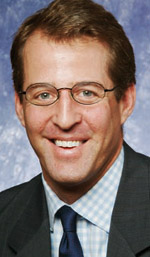
Josh Rosenberg’s hobbies, which include Ashtanga Yoga, skiing and cycling, are a good grounding for the often frenetic and fast-paced world of hedge funds.
He began at Chicago-based Hedge Fund Research (HFR) in January 2002 as managing director in charge of hedge fund research and became president in 2003. Over the past few years he has experienced a lot of change. ?I’ve seen huge growth in the number of assets in the industry since I’ve been at HFR,? he says. ?It has been very exciting.? Since he started at HFR, the firm estimates that hedge fund assets globally have grown from about $540 billion to $890 billion at the end of September 2004.
During that time, the estimated number of hedge funds and funds of hedge funds has grown from about 4,500 to 7,200.
Rosenberg’s career in hedge funds began in 1997 when he joined hedge fund and research firm Midtown Research Group. ?I was there for about two years to the end of 1999 as a research analyst,? he says. ?I was writing research reports on private companies in the IPO pipeline.?
After leaving Midtown in 1999, Rosenberg moved to Chicago. There he joined Citadel Investment Group as an equity research analyst and then moved to trading and researching deals on the merger arbitrage desk. After a few years with Citadel he moved on to HFR.
HFR has offered hedge fund data and research to clients for more than 10 years. The business is part of the HFR Group, which was founded in 1993 and also includes HFR Asset Management.
In November, HFR’s database hit an industry milestone. For the first time, a commercial hedge fund database has 4,000 funds reporting monthly performance figures and asset flows to it, a more than four-fold increase on the number of active funds reporting in 1998. There are 8,000 active and defunct funds in the database.
Rosenberg says HFR tracks 100% of the largest firms with 70% of all funds from these companies reporting to the database. ?There are approximately 650 funds operated by the largest firms in the industry and if you subscribe to HFR Database you will receive information on approximately 70% of those funds,? he says. ?Over time our expanding coverage means our need to estimate the aggregate size of the industry becomes less and less.?
Industry leader
HFR has become an industry leader in providing hedge fund performance figures and asset flow information. It announced its most recent quarterly performance figures and asset flow data at the end of October. Its composite index was up 0.9% in the third quarter compared with a 1% loss in the second, and estimated inflows for the third quarter were $16.9 billion.
HFR’s estimated asset flow figures and those from Tremont’s Tass Research have created a rift between the two database firms. In August, both firms released their estimates for second-quarter asset flows. HFR announced a total inflow figure of $7.5 billion for the second quarter on August 5 and Tass estimated total inflows of $38.2 billion, on August 16. This is one of the largest, if not the largest, discrepancies between the two firms’ figures since they have been in operation. Tass was founded in 1990 and HFR in 1993.
There is not quite as big a disparity between the third-quarter inflows but they still differ by more than $8 billion. ?In the third quarter, the Tass numbers ? released three weeks after HFR’s ? moved considerably more in line with HFR. We take this as an implicit recognition that our numbers are a more accurate respresentation of the industry,? says Rosenberg.
Tass reported on November 18 that net inflows were down from $38.2 billion in the second quarter to $25.1 billion in the third and HFR announced on October 27 that they were up from $7.5 billion in the second quarter to $16.9 billion in the third.
These contrasting numbers lend weight to the SEC’s concerns about the paucity of data about hedge funds and inadequate supervision. On October 26 it voted to require funds operating in the US to register. Robert Plaze, associate director of the division for investment management, told Euromoney just before the vote: ?One of the considerations is that we don’t even know how many hedge funds are operating here.?
Rosenberg does not believe the registration requirement will have a negative impact on HFR. ?The SEC would like to know how many funds are operating in the US. They are asking for names rather than monthly performance figures and asset flows. We provide information that is useful for active investors,? he says. And HFR reports on funds globally while the SEC is interested primarily in US funds.


