 |
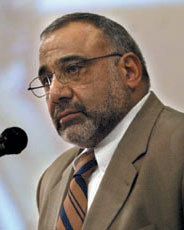
| Adil Abdul Mahdi |
Seeking forgiveness of Saddam-era debt
Litigation risk for years to come
Is any of Iraq’s sovereign debt odious debt that can or should be repudiated entirely?
Iraq’s need for very substantial debt relief derives from the economic realities facing a post-conflict country that has endured decades of financial corruption and mismanagement under the Saddam regime.
Principles of public international law such as the odious debt doctrine, whatever their legal vitality, are not the reason why Iraq is seeking this relief.
Is the interim government planning to restructure Iraq’s sovereign debt now that the UN Security Council has given you the express authority to do so?
Restructuring Iraq’s external debt is a very high priority of the interim government. UN Security Council Resolution No 1546 of June 8 2004 specifically encourages the interim government and Iraq’s creditors to get on with this task.
What percentage of Iraq’s oil revenues would be a reasonable amount to spend on foreign debt service in the future? Do you expect that number to increase over time?
Iraq must rebuild its civil infrastructure, including the oil sector, virtually from the ground up. This task will require the allocation of most of Iraq’s available resources for many years to come. We will also be seeking the continued support of the international community to help finance these costs and we hope that private-sector investors will eventually play a major role in this process as well. Under even the most optimistic scenarios, therefore, the resources available for debt service will be severely limited for many years to come.
What is a sustainable debt burden for Iraq?
Iraq will not be able both to service a significant debt stock going forward and to devote the resources it needs to carry out the civil reconstruction effort. Of these two possible uses for Iraq’s funds, the reconstruction effort is the obvious priority. We also know that fresh investment from private-sector sources cannot be expected while a massive and visibly unsustainable debt burden hangs over the country. That debt burden must therefore be convincingly reduced ? not merely stretched out ? if the private sector is to play the role in Iraq’s recovery that we hope it will.
Do you believe that Iraq should get more of a haircut on its debt than one might expect given its vast potential oil wealth, just because of its geopolitical importance? Or can traditional models of debt sustainability be applied to Iraq?
Whether approached using traditional debt sustainability models, or whether viewed in light of the need to undertake the economic reconstruction that will be so essential in stabilizing Iraq and the region generally, Iraq needs a very dramatic reduction in its existing stock of debt. Any significant diversion of resources to service Saddam-era debts, if it prevents or delays the reconstruction effort and perpetuates an environment of social and political instability, would be counterproductive.
Do you intend to treat all creditors equally? Should private creditors expect treatment commensurate with Paris Club creditors?
Iraq intends to pursue this debt restructuring with an eye on inter-creditor equity. We will, for example, resist any effort to impose harsher terms on commercial creditors than those that will be negotiated with bilateral creditors.
Might you consider issuing securities that could be swapped for outstanding debts?
The methodology to be used for the restructuring of the claims of different creditor groups may vary. A discounted debt-for-debt exchange involving reconciled claims of private-sector creditors may indeed be appropriate (we are studying this), while bilateral creditors may prefer a different approach.
Do you have the staff to be able to tackle such an enormous undertaking before the interim government ceases to exist?
The debt restructuring programme will be handled principally by the ministry of finance and the central bank. We have retained the services of Ernst & Young to act as debt reconciliation agents, and have engaged Cleary, Gottlieb, Steen & Hamilton as our legal advisers for this project. We are also considering adding a financial adviser to the team. The task is indeed formidable, but we will devote the human resources necessary to accomplish it.
Are you going to do a deal with the Paris Club before you restructure any of the rest of the debt?
We have focused our immediate debt reconciliation efforts on the Paris Club creditors in the expectation that we can meet with the Paris Club later this year. Reconciliation of non-Paris Club bilateral claims and commercial claims will take somewhat longer. That process will soon be under way and we hope to be able to conclude agreements with those creditors early in 2005.
What is more important: getting a deal done quickly or getting the greatest possible debt relief?
The status quo is obviously unsatisfactory both for Iraq and for its creditors. Saddam-era debts fell into arrears more than a decade ago. Iraq and its creditors both wish for a prompt resolution of the situation. But a resolution that continues to leave Iraq with an unsustainable debt burden is in no-one’s interest. We believe our creditors, whether bilateral or commercial, understand this.