?
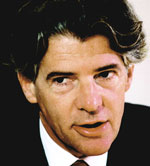 |
| Michael Green is to relinquish CEO role once Granada merger is approved |
Top executives at merging companies will be scrabbling to keep their jobs if the Carlton/Granada deal is anything to go by. It seems whoever misses the CEO spot and ends up as chairman is likely to be ousted by shareholders citing the Higgs Review into the role and effectiveness of non-executive directors.
Investor UK pitted itself against corporate UK last month and demanded that Carlton’s chief executive be prevented from becoming chairman of the merged ITV company. The campaign included Fidelity, UBS GAM, Isis Asset Management and Deutsche Asset Management. Michael Green will relinquish his role as chief executive at Carlton once the merger with Granada is approved by shareholders. It took investors less than two weeks from the Competition Commission’s approval of the merger on October 7 to force Green to opt out of the new role.
Investors are loth to admit that top executives set to become chairman of a merged company will always be forced out. However, they admit to a preference for independent non-executive chairmen. Simon Haslam, chief administrative officer at Fidelity, says: “In general we say, in a merger situation, the head should be properly independent.”
Fund managers that were not involved in forcing Green’s hand feel such an attack does not bode well for communications between shareholders and company boards. Those that were claim they had no choice. “Generally, we haven’t got the same tight window,” says Fidelity’s Haslam. “Because of Competition Commission issues through 2003 we were given a strong message that any shareholders asking questions during this process could be destabilizing.” He adds: “But once the commission announced clearance we had a tiny window before the die was cast.”


