|
Mladjan Dinkic, Serbia’s ousted central |
IN LATE JULY, Serbian prime minister Zoran Zivkovic completed a visit to Washington to present Serbia for the 21st century. He posed for the traditional handshake photo with secretary of state Colin Powell, and declared that relations between Serbia and the US were the best they had been for 50 years.
But while Zivkovic met with US firms such as Morgan Stanley and Bechtel to discuss the possibility of their investing in Serbia, the free-market reform project at home was starting to unravel with the resignation of a key figure behind Serbian reforms in the past three years.
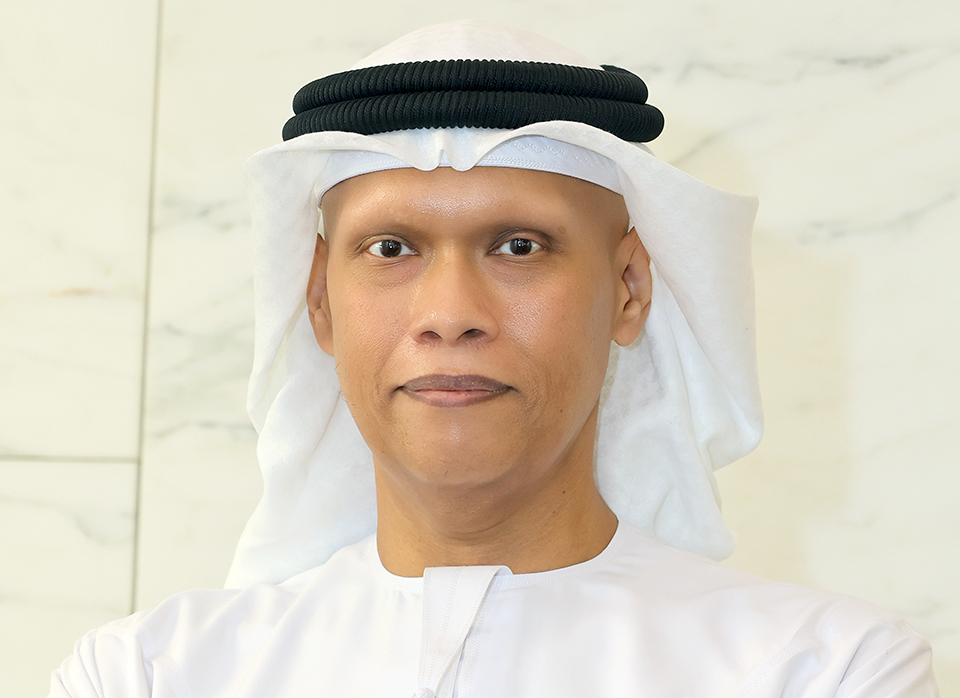
“Don’t expect me to go easily like some other leaders they dismissed by changing the constitution,” said the departing official. “The time will come when certain things will come to the surface and everyone will suffer the consequence of their decisions.” Fighting talk indeed. But you would expect nothing less from Mladjan Dinkic (pictured above), the pugnacious governor of the National Bank of Serbia (NBS) – or rather former governor.
After a series of political manoeuvrings that could have come out of Niccolò Machiavelli’s The Prince, Dinkic was deposed from his throne in late July.
Just when investors thought Serbia was clawing its way back towards normality and stability, the Balkan state has managed to add further uncertainty to an already confused situation. The assassination of Serbian prime minister Zoran Djindjic in March elicited widespread and deserved sympathy worldwide, but the ousting of the well-regarded Dinkic might prove to be a shock too far for a country that is increasingly struggling to maintain economic credibility amid a growing sense of political crisis.
While the café-strewn streets of Belgrade may be peopled by legions of Serbia’s self-assured jeunesse dorée, the gloss increasingly looks to be coming off the country’s investment story. “Some political shocks caused by internal infighting are inevitable in any transition economy,” says Richard Segal, head of research at emerging-market investment-banking boutique Exotix in London. “But,” he adds, “Serbia has certainly suffered more than its fair number of political shocks in recent months.”
The country may scream relative value when compared with many of the EU soon-to-bes in central Europe but the fact remains that the high returns available on EU wannabe Serbia’s debt increasingly look justified given the heightened sense of risk.
The dramatic manner in which Dinkic left one of the few official institutions in Serbia that could lay claim to any credibility in the world at large will have done little to assuage growing concerns that political and economic reform in post-Milosevic Serbia is at best losing momentum.
Bearish verdict on reforms progress Certainly political monitoring agency International Crisis Group thinks so. Its report entitled Serbian reform stalls again, published shortly before Dinkic was dismissed, was decidedly bearish about the current state of play.
“The reformist zeal displayed by the Serbian government following the March 12 assassination of premier Zoran Djindjic appears to have dissipated,” the ICG report said. “A number of important and positive steps were taken while the shock of that political murder was still fresh. Increasingly, however, their impact is being counterbalanced by actions that bring into question the government’s ability to press decisive political and economic reforms home so as to achieve the goal of integration with wider European institutions.”
It was not always thus. Indeed one of the more encouraging signs following the brutal slaying of Djindjic was the relatively mature and calm reaction to a truly shocking event, a fact that ICG itself acknowledged. “In the immediate aftermath of the shooting, public commitments to cooperate with The Hague Tribunal were made; the army began to be put under civilian control; the highest-profile organized crime gang and parts of the Milosevic-era parallel security structures were dismantled; several dozen prominent murders, many dating back to the old dictator’s time, were solved; and the new union of Serbia and Montenegro was admitted to the Council of Europe.”
The ICG report cautions, however: “As welcome as that burst of activity was, however, new troubling signs have appeared. Those who openly criticize the government on ties to organized crime risk arrest, and officials have launched legal actions to silence the media and respected human rights organizations. Serious human rights violations, including torture, have occurred in the prisons to which those rounded up in the post-assassination crackdown have been sent. The government has almost completely destroyed the independence of Serbia’s already dysfunctional judiciary, is imposing media censorship and has given the police sweeping powers of extra-judicial detention.”
|
Zivkovic: his popularity boost after Djindic’s murder fades |
While under the state of emergency declared in response to the Djindjic killing the Serbian government did strike a blow against part of the Milosevic-era parallel security structures, this appears increasingly to have been a one-off reaction, says ICG. “The government still appears unable to pursue reforms energetically since it remains excessively dependent on a Milosevic-era financial oligarchy and faces strong obstruction from a largely unreformed state security and army sector. The BIA [Serbia’s secret police] remains a bastion of individuals tainted by war crimes and connected to organized crime. Both it and the financial oligarchy are actively, and largely successfully, obstructing military reform, democratization, the rule of law, institution building, cooperation with The Hague [Tribunal], and the fight against organized crime and corruption. Indeed, it increasingly appears that the Democratic Party (DS), the power in the ruling coalition, may have used the assassination and state of emergency not to set Serbia on a fast course forward but to settle political scores.”
The DS and the new premier, Zoran Zivkovic, received a significant post-assassination boost to their popularity, largely because of their attacks on organized crime. But the approval ratings have dropped in recent weeks. This is apparently because suspicions have grown among the general public that the government is covering up its own association with criminal elements.
As the ICG report concludes: “Without strong and consistent international pressure, the opportunity that Djindjic’s death appeared to offer to mobilize a shocked public behind the reforms Serbia needs will be lost.”
All this political fighting has distracted attention from the really pressing issue – the economy. Unemployment is a particularly serious problem. One analyst calculates it at 35%, though a large proportion of those registered as jobless work in the grey economy. Growth in the industrial sector fell by 3% year on year in the first six months of 2003. Much technology is in danger of becoming obsolete, but companies find it extremely difficult to get long-term financing from Serbian banks. RZB arranged the first long-term unsecured loan ever in Serbia, as recently as June.
Some of the large state-owned companies are also dragged down by large amounts of redundant labour. This poor production climate has led to a $1.8 billion trade deficit. As one analyst says: “People are beginning to think the reforms are stagnating, because of political infighting. Early on, under Djindjic, there were fewer political problems.”
One of the cruellest ironies about the departure of Dinkic from the National Bank of Serbia and his subsequent spectacular falling out with the government, is that it has done much to overshadow the work that the central bank and the coalition had previously achieved in partnership.
When Dinkic was appointed governor in 2000 the Serbian banking system was famous – or rather infamous – for having been mercilessly exploited by Milosevic for personal and political ends. Even describing it as a banking system seemed wide of the mark, since the country’s banks had largely been used to relieve Serbian citizens of their hard-earned savings, with former president Milosevic and his cronies using their ill-gotten gains to finance either their political ambitions or lavish lifestyles.
As a result, the general population had all but exited the banks. “Before January 1 2001 the banks in Serbia didn’t really have any retail savings to speak of. People had lost their money twice, once to the government and once to the pyramid banks that sprang up in the 1990s,” says Bosko Kostic, chief executive officer of Raiffeisenbank in Belgrade.
Banking successes Dinkic and the government won universal acclaim for their courageous and daring solutions to the problems plaguing the Serbian economy and its financial sector when they came to power after Milosevic was ousted in October 2000. Under Dinkic’s stewardship, inflation has been slashed from 113% in 2000 to around 12%, while foreign exchange reserves have grown from less than $300 million to over $3.3 billion. “Dinkic did an excellent job of curbing inflation and boosting the country’s foreign exchange reserves,” says Ljiljana Grubic, head of financial institutions analysis at Raiffeisenbank. The dinar, historically one of the world’s most volatile currencies, has traded more or less unchanged since a December 2000 revaluation, which goes a long way towards explaining Dinkic’s popularity among the general population.
Dinkic’s bravest move, though, was undoubtedly the decision to close down weak and badly-managed banks, including the four biggest in January 2002 – Beobanka, Investbanka, Jugobanka and Beogradska Banka. Although the quartet accounted for a whopping 70% of banking assets and 40% of Serbia’s 35,000 bank employees, their collective debts totalled more than $1 billion and were considered too large to be tolerated.
While in neighbouring Croatia and Slovenia failed banks were nursed expensively back to health at great cost to taxpayers, Dinkic and his team at the central bank opted for the ultimate shock therapy and simply revoked bank licences – 23 in all in late 2001 and early 2002. Lock-ins and street protests by sacked bank workers soon followed, but the central bank mollified public opinion by establishing the government-owned Nationalna Stedionica Banka. It compensated the account holders of the big four banks then took over their roles.
International image boost A public relations masterstroke, the bank closures did wonders for the new government’s international image, conveying the impression that Serbia would take every decision necessary to speed its accession to the EU and make up for the decade-long period of international economic isolation it suffered during the 1990s.
From 105 in 2000 the number of domestic banks has been slashed to 48. At the same time there has been a rapid increase in the number of foreign banks operating in Serbia, with 13 establishing representative offices and six being granted full banking licences. Principal among these is Austria’s RZB, whose Raiffeisenbank subsidiary has been one of the fastest-growing banks in Serbia, having received a licence in March 2001. Its success is testimony to the efficacy of Dinkic’s reforms, which have transformed the public perception of the banking sector.
Since starting retail banking in September 2001 Raiffeisenbank has attracted some e190 million of deposits, roughly 20% of the overall total for the country and much of it flight capital from abroad. “We’ve brought more euros into the country than any other commercial bank,” says CEO Kostic. “We’ve been able to attract a lot of money from the unofficial economy into the official economy.”
On the back of the rapid growth in deposits, Raiffeisenbank has gone from one branch to 16 and plans to open another four by the end of the year. While some critics have alleged that the foreign banks have merely sat back and watched the money roll in and then transferred it abroad for lending elsewhere, Kostic says that Raiffeisenbank has a deliberate policy of promoting both corporate and retail lending in the country, targeting e130 million of corporate and e35 million of retail loans by the end of this year respectively.
Kostic says that in a country that still suffers from high unemployment the bank has also emerged as an important employer, with just three of its 440 staff being foreign nationals.
Grubic at Raiffeisenbank says that overall trends in banking as a whole are largely positive, with lending to the real economy running at a much higher rate than in the past decade. “In the 1990s loans as a percentage of total banking assets were just 10% to 20%, now they are at 25% to 30%,” she says. Perhaps more important, the quality of the loan book is also rising. “Banks are beginning to really analyze their corporate clients and are only placing money with the most creditworthy ones.”
Positive measures Among the other positive moves made by Dinkic was the obligation placed on banks in 2001 to deposit half of their foreign currency savings with the central bank, which helped boost confidence in the wider banking sector. In 2002, in conjunction with finance minister Bozidar Djelic, Dinkic also conceived a new tax regime for financial transactions. This involved rates being cut to encourage more money to flow into the banks, broaden the tax base and help boost investment in the real economy. Like much else that Dinkic did, the move worked a treat.
Having put in a more or less faultless performance – the only substantive economic criticism of Dinkic has been that the strength of the dinar has hit the export performance of Serbia’s agricultural and industrial sectors – his ousting would seem to an act of extreme folly on the part of the government.
Dinkic’s crime, if crime it is, is that he has been too politically engaged for the government’s liking. At the end of December last year, he turned the political think-tank he helped to form, G17 Plus – so called because it was formed by 17 economic experts – into a political party. As a vocal critic of the current government’s policy, G17 Plus soon became a thorn in the side of the coalition’s dominant power, the DS, headed by Zivkovic. It seems that ultimately the DS tired of G17 Plus’s sniping from the sidelines and decided to engineer
the dismissal of Dinkic, one of its most high-profile supporters.
Under the pretext of increasing central bank independence, the government rushed through a new law stipulating that the governor was not allowed to have any political party affiliations. It was a move that instantly made Dinkic’s position untenable.
“Dinkic’s ousting was definitely based on politics, not his performance as central bank governor,” says Segal at Exotix.
If the government thought Dinkic would go quietly, they were to be sorely disappointed. Since his dismissal, Dinkic has landed a number of heavy blows against it. At a packed press conference on July 26 in the offices of G17 Plus on Belgrade’s Republic Square, Dinkic accused Zivkovic’s security adviser Zoran Janjusevic and Nemanja Kolesar, executive director of the Bank Rehabilitation Agency of failing to pay taxes on fund transfers.
Under intense public pressure Janjusevic and Kolesar both tendered their resignations after Dinkic revealed that they were being investigated by the Hungarian police.
Though Zivkovic has insisted that both men are innocent until proved otherwise, he nevertheless accepted their resignations. The government’s image has been further tarnished by its crude intimidation of G17 Plus – sending round the tax and public revenue inspectors to investigate the party’s financial affairs did little to dispel the widely-held suspicion that the government is pursuing a vendetta.
Investors attracted by the economic potential of former Yugoslavia are being put off. James Oates, managing director of London-based hedge fund Convergence Capital observes that in this corner of the world “with one or two honourable exceptions the art of politics is largely the continuation of corruption by other means … it’s all very sad and depressing”.
|
Udovicki: the new central bank governor’s eight-year stint with the IMF will be useful in promoting Serbia’s relationship with the Fund |
Respected successor One ray of hope, though, is that Dinkic’s replacement as central bank governor, Kori Udovicki, has been universally welcomed as a legitimate substitute. “In terms of possible replacements for Dinkic, Udovicki is about as good as you could wish for,” says Segal at Exotix. Although previously minister for mining and energy, Udovicki is regarded as an apolitical technocrat rather than a political appointee. In Belgrade circles she is considered to be a serious and respected economist. “The fact that she worked for the IMF for eight years is useful as the IMF is a very important organization for Serbia,” says Kostic at Raiffeisenbank in Belgrade. He adds that the fact that Udovicki has been back in Serbia for two years after living in Washington is vitally important. “She understands the present-day realities of living in Serbia,” he says.
Segal cautions, however, that doubts have arisen about whether Udovicki will be able to effectively juggle all the priorities over the next year, given that new elections are likely and that the courts might try to overrule the revocation of insolvent bank licences that did so much to bolster confidence in the reforms in 2001 and 2002. Segal says that any reversal of the suspension of bank licences in particular would be a strong negative for economic reform as a whole. On the contrary he is looking for the central bank to encourage further bank consolidation. Grubic at Raiffeisenbank agrees: “Serbia is currently overbanked, we don’t need more than 20 banks at most.”
On the strategic investment front the picture is mixed, with several past privatizations dogged by allegations of corruption, but with recent signs that Serbia has the wherewithal to attract significant sums from high-quality investors.
The Italian finance ministry is investigating the possibility of fraud over the sale of Serbian Telekom shares to Telecom Italia under the Milosevic regime. And Dinkic has made similar allegations about the sale of cement plant Novi Popovac to Holcim of Switzerland, which was completed at the end of 2001 under the current administration.
While the political storm raging over earlier privatizations was at its height, however, the governing coalition was thrown a public relations lifeline last month with the news that two global tobacco companies had bought into Serbia through the privatization of two tobacco factories. Philip Morris International (PMI), the international arm the world’s biggest cigarette manufacturer, was selected as the winning bidder in the tender privatization for the country’s largest factory, Duvanska Industrija Nis, beating off competition from Tvornica Duhana Rovinj of Croatia and British American Tobacco.
Under the terms of the provisional sale and purchase agreement, due to be signed this month, PMI will pay e387 million to acquire 66.45% of DIN’s total share capital. Additionally it has committed itself to investing e68.85 million over the next five years and spending over e60 million on a social programme. DIN is the market leader in the 20 billion-unit Serbian cigarette market, selling 11.3 billion cigarettes in 2002 to give it a market share of 54%. Under the company’s existing e30 million investment programme, production capacity is to be raised from 12 billion to 14.5 billion cigarettes a year.
Serbian privatization minister Aleksandar Vlahovic said that the sale would ensure the financial future of DIN and bring long-term benefits to Serbian tobacco farmers: “The employees need not worry about their future: the buyer will increase salaries and the quantity of tobacco purchased from growers is expected to double.” Established in 1930, DIN has 2,459 employees.
Meanwhile, although having lost out on the biggest prize, British American Tobacco was able to console itself with Serbia’s second largest cigarette manufacturer, Duvanska Industrija Vranje. BAT is to pay e50 million for a 67.8% stake in DIV, based in the southern Serbian town of Vranje. Additionally, BAT has committed itself to invest e24 million to modernize DIV over the next five years and around e13.4 million on social programmes. DIV is responsible for around 8% of Serbian cigarette production and sold around 1.6 billion cigarettes in 2002. DIV, founded in 1885, has 586 workers
Dominant BAT BAT already had a strong foothold in Serbia, with its imported brands controlling around 13% of the market. Its Lucky Strike brand is the country’s top-selling international brand.
Around half of Serbia’s adult population are smokers and international brands have proved to be highly profitable for their owners. For example, while a typical Serbian brand retails for around e0.49 a pack, BAT’s Lucky Strike retails at e0.93.
Changes to the excise regime in Serbia that come into effect on January 1 2005 mean that it was imperative for companies such as BAT and Philip Morris to establish domestic production sites, however. From the start of 2005 the excise duty on foreign-produced cigarettes will be 10 dinars a pack – 10 times that for domestically produced ones. “The new Serbian excise tax system provides a significant incentive to manufacture locally, as well as an attractive and predictable operating environment”, says André Calantzopoulos, president of PMI. “This gives us excellent opportunity for strong volume and income growth. PMI has a long history of successfully integrating formerly state-owned tobacco companies and delivering considerable long-term value.”
Morgan Stanley acted as financial adviser on the transactions and Linklaters as legal adviser. “Philip Morris and BAT were willing to pay attractive valuations for DIN and DIV on the basis that Serbia is a growth market with largely untapped potential and that the country is following an EU accession track,” says Alan Apter, managing director, investment banking for central and eastern Europe, at Morgan Stanley in London.
Despite the assassination of Djindjic, Apter says that political risk was far less of an issue than might have been expected. Given the controversy that has haunted some previous privatizations, most notably those carried out during the Milosevic era, Apter says that there was strong government desire for the privatization – the largest in Serbia to date – to be seen as free and fair.
“The team at the privatization agency wanted to achieve a benchmark sale which was completely transparent and competitive. The sell-off was structured so that there was no opportunity for any corruption and in the end it achieved both a high purchase price and investment programme commitment,” says Apter. He adds that the success of the tobacco privatizations provides a strong platform for the expected sell-offs in the energy and telecommunications sectors in the next couple of years. “The prospects for further state sales look pretty good right now.”
Privatizations trumpeted Government officials were quick to make as much political capital out of the sales as possible, with prime minister Zivkovic claiming that the privatizations were proof positive of the success of economic reforms in Serbia. Revenues from the sales, which were 10% higher than expected at around the equivalent of YD25 billion ($432 million) will be used to part fund this year’s budget deficit which is set to come in at around YD40 billion and will also fund capital investments. According to Zivkovic some e150 million to e200 million of the sale proceeds will be used to cover the construction costs of the Corridor 10 Subotica-Presevo highway and other regional roads, while funds will also be transferred to the Serbian Development Fund to support small and medium-size enterprises.
Ironically, the sales were announced on the same day that groups of farmers blockaded a number of key bridges across Serbia in protest at the agriculture ministry failing to pay debts for tobacco delivered last year.
Finance minister Bozidar Djelic says the arrival of the global tobacco companies in Serbia was a major boost for the country, which can now look forward to becoming a cigarette exporter, which will earn important hard currency earnings. “This is a major inflow of direct foreign capital which will also have a great impact on the budget.”
The sales of the two plants are the first major privatizations in Serbia since it sold three cement plants in early 2001. Meanwhile there was further good news with reports that the tender for oil products distribution company Beopetrol – the third major state disbursement planned for this year – had attracted bids from MOL of Hungary and LUKoil of Russia, and that financial adviser BNP Paribas expected to complete negotiations on the sale by the end of August. With an estimated property value of e120 million the sales of a 70% strategic stake in Beopetrol were forecast to raise over e100 million.
Vlahovic says: “Transparency is the main principle of our privatization process, in order to increase the confidence in our country. So far we haven’t had any serious complaints from those involved in the tenders.” However some smaller privatizations have run into trouble. The sale of BPI, a Belgrade bakery, was cancelled in mid-July, and the privatization agency is now suing one of the bidders in the process, after it publicly alleged that the tender procedure was irregular and biased.
Second-time sell off Some big deals are in the pipeline. Next year, mobile telecom company MobTel might be privatized. This will be the second time the company has been sold off by the state. It was acquired by business magnate Bogoljub Karic under the Milosevic regime, with the state holding on to a 49% stake. Since then, MobTel has made a healthy profit, most of which, the government says, is passing it by. Vlahovic is now planning to reorganize the ownership structure of the company, giving the state 60% of the company. He defends this strategy, saying: “Lots of crazy things happened in the 1990s during the Milosevic era. I would never have privatized MobTel in that manner, with no transparency, no investment tender and no competition. It’s payback time. We’re not asking the investors to pay back the money from the last nine years, but we need to reconsider the ownership structure.”
The present owner of MobTel has protested but Vlahovic says the reorganization will definitely take place, and that the government’s stake will then be privatized, possibly in 2004 if market conditions are appropriate. Vodafone has already expressed interest in the transaction. That deal would be the first big privatization since the 1990s.
The state is also reviewing another controversial privatization of the 1990s – Serbian Telekom. Greek telecom company OTE and Italian company STET ended up buying 49% of the company for about e350 million. But the deal has been dogged with accusations of bribery and corruption, and is facing an Italian inquiry. Neither company seems keen to increase its stake in Serbian Telekom either. One Serbian banker complains: “They bought the company, but haven’t invested in it at all.”
To try to resolve these issues, in December 2002 the state bought back the 29% stake sold to STET, so that it would be able to reprivatize the company in more auspicious circumstances, probably in 2005. In that year, the state is also planning to start on other major privatizations, such as in the oil and gas monopoly.
Although large multinationals such as British American Tobacco and Philip Morris may feel comfortable investing in Serbia, there is anecdotal evidence that smaller potential investors who lack the political clout and influence of the multinationals consider that the country is still too risky.
“Until Djindjic was killed there was real hope of economic reform in Serbia,” says Michael Glazer, head of Croatian investment banking boutique Auctor in Zagreb. “But now it is looking more and more questionable whether the reform process will continue,” he adds.
Having appraised investment opportunities in both Bosnia Herzegovina and Serbia, Auctor is looking to pursue projects in Bosnia rather than Serbia. “As someone who has spent a lot of time in this region, I feel a lot more comfortable dealing with the authorities in Sarajevo than I do with those in Belgrade,” says Glazer. He adds that while both Bosnia and Serbia suffer from corruption problems, there’s more evidence that the authorities in Sarajevo are doing something about stamping out graft than those in Belgrade.
Perhaps most tellingly of all he adds: “Compared to Bosnia there are a lot more guns in Serbia and people willing to use them.”