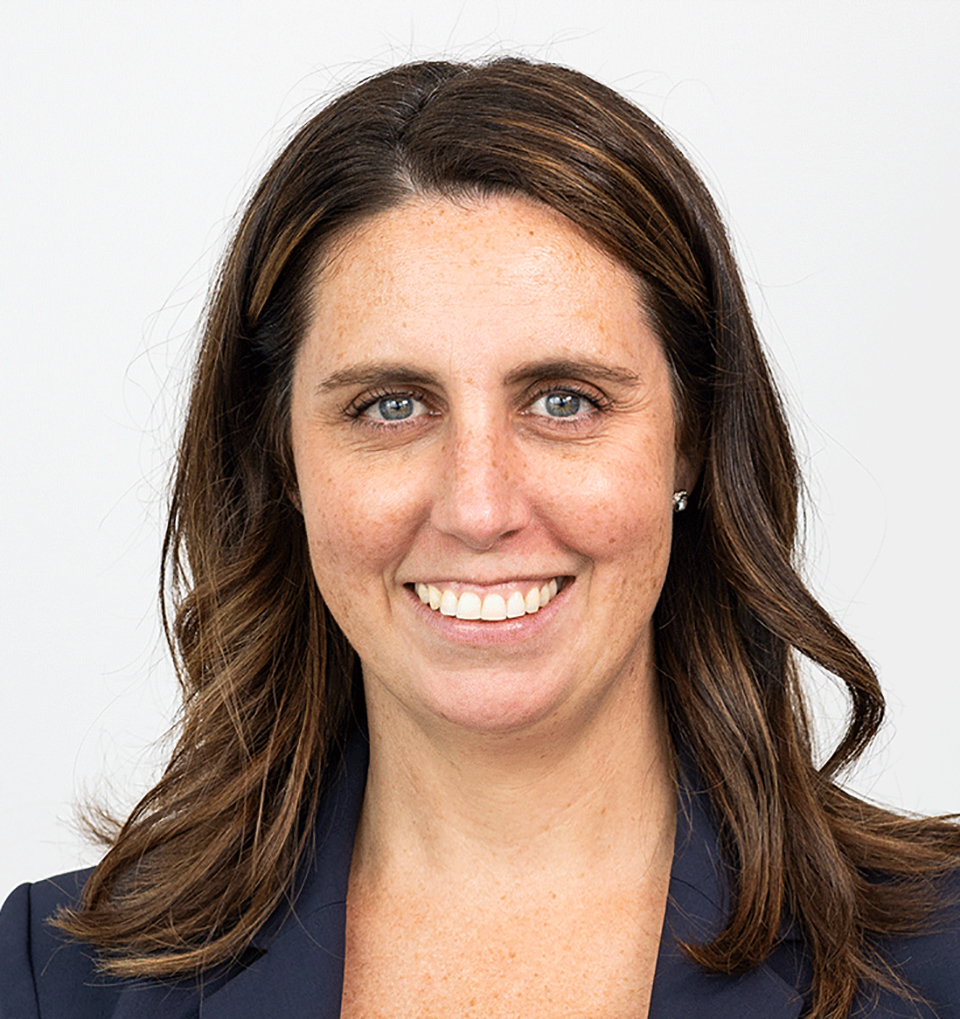
| Kritzman, Froot and Shelton: mining the fund-flow data from $8.5 trillion of assets under custody |
A quiet suburban street a few blocks from a university campus is not where you’d expect a groundbreaking research shop to be set up. But that is where State Street has sited the headquarters of State Street Associates, a 55-person subsidiary set up in 1999 to organize expansion into research provision for institutional investors. The buildings are two regular-looking houses in Cambridge, the Boston suburb most famous for Harvard University.
One of them belongs to Mark Kritzman, one of State Street Associates’ three senior partners, It’s from there that he also runs his own firm, Windham Capital Management Boston, a forex investment fund. The house next door is the data centre for State Street Associates.
The firm was set up in 1999, formalizing a process that first began in 1995 of starting to “analyze the behavioural elements of finance,” to use the words of Stan Shelton, an executive vice-president at State Street and another senior partner at State Street Associates. “It’s unique,” he says. “It’s a significant change in how to look at research, and it’s valuable.”
Central to the whole effort is one of the world’s largest libraries of securities flow data: the $8.5 trillion that State Street has in assets under custody, roughly 15% of the world’s total tradable assets. State Street Associates’ task is to mine the fund-flow data and develop robust and unique proprietary research and analytic tools.
Measuring appetite
The firm launched its latest product last month, the investor confidence index, developed by Ken Froot, a Harvard professor and the last of the three senior partners, and Paul O’Connell, a director at State Street Associates. It is a quantitative index that seeks to measure the relative appetite institutional investors have for investing in higher-risk securities.
“There’s nothing we can add to analyzing fundamentals that investors can’t get elsewhere,” says O’Connell. “What we do have is a way to gauge how investors feel about changes in fundamentals.” Quite simply, the higher the index number – the base is 100, set in 2000 – the greater the appetite investors have for riskier assets. “Markets can go up or down without any change in fundamentals,” says O’Connell. “It’s the equity premium puzzle, one of the main unanswered questions in finance. With the index we now have a fact-based methodology, and not just data, to tackle that head on.”
All of the firm’s products seek to help answer such questions, and in the process provide investors and policymakers – they claim that most central banks are users – with valuable information.
The firm is not recommending stocks or other securities – far from it, in fact. The analytics it develops are more macro in nature. “Issuers might find value in the investor confidence index, for example,” explains State Street Associates director Jeremy Armitage. “It could be a useful timing tool for those who have held back from capital raising in the last couple of years.” As for investors, State Street’s major client base, he says: “A portfolio manager might have a view and want to deploy the cash he’s been sitting on. The index can provide useful information on what his peers might be thinking.”
Scratching the surface
The aim, of course, is to get investors to send more business State Street’s way. “If we can give investors both breadth and depth in the quality of our research then we give them more reason to come to give us forex, debt and equity business,” says O’Connell.
Sheldon says the group has already proved that it can work in the first area that it focused on, forex. “In 1997 we weren’t even in the top 100 of forex dealers. Now we’re in the top five for non-leveraged institutional investors, and we think we have the most profitable forex trading business.”
The directors feel that they’re still only starting to unlock all the value from the data: “We’re just scratching the surface,” says O’Connell. Sheldon says they have various ideas close to fruition, including securities flow data based by sector on a regional and global basis, and even by investment style and market cap. But he’s thinking even further than that: “A GPS system showing where securities are flowing. That could be pretty profound.”