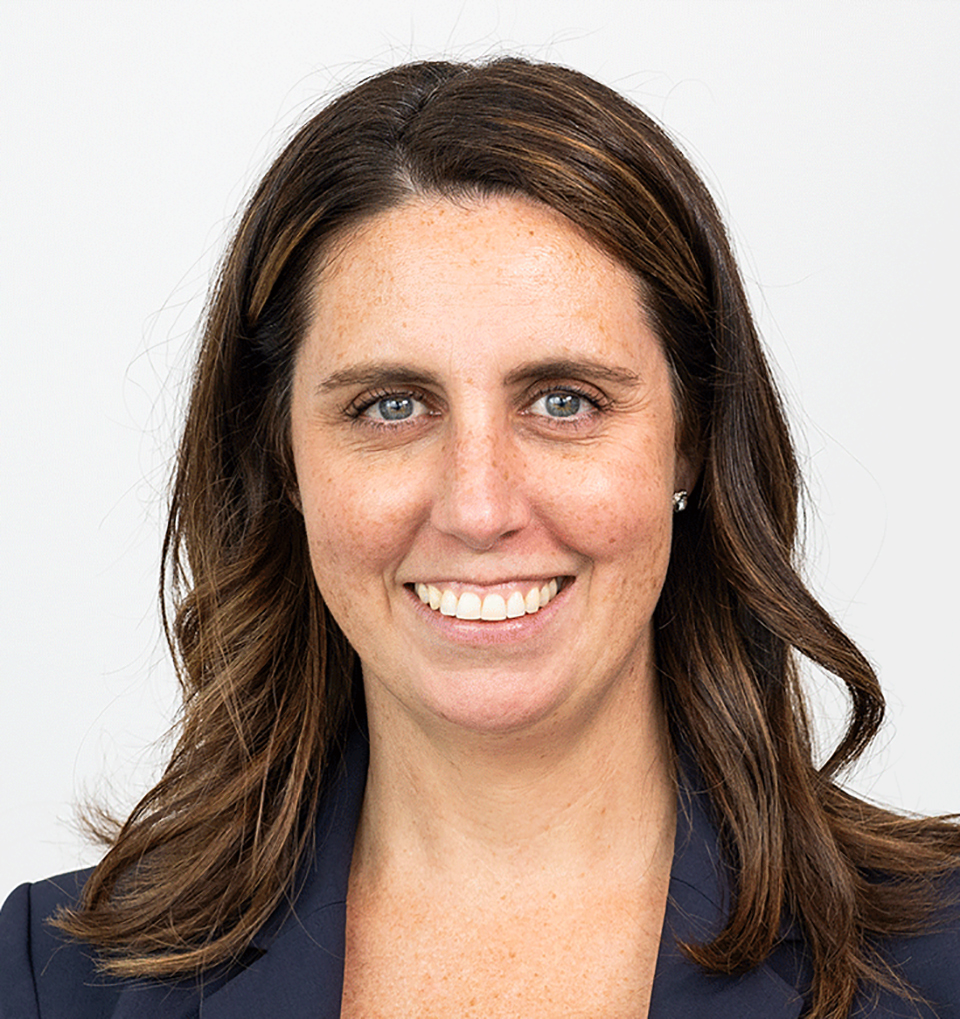
| Eadie: keen to get things off his chest | ||||||
If people thought the out-of-court settlement between Unilever and Merrill Lynch had laid the whole affair to rest, they were wrong.
A gathering of the great and good of UK fund management assembled in the Chartered Accountants Hall in the City last month to pore over the implications for their industry of the pension fund’s negligence suit against its asset manager. The star speakers were two men thwarted in their attempts to influence the trial by its early conclusion: expert witnesses Dugald Eadie and Tony Dye.
Although strictly speaking expert witnesses are supposed to act for the court, Eadie, the former head of Henderson Investors, was effectively due to give evidence on behalf of Unilever and Dye, the ex-investment chief of Phillips&Drew, would have been Merrill Lynch’s witness.
Neither got the chance to run the gauntlet of QCs Jonathan Sumption and Ian Glick as the case ground to a halt with Merrill Lynch handing over an undisclosed sum in damages. Speculation has it that it may have been as much as £70 million, although Unilever’s original claim was for £130 million.
Standard&Poor’s sponsored the debate, which was hosted by the Society of Investment Professionals, and the billing of Dye and Eadie was enough to ensure that the room was packed, with more than 100 people being turned away thanks to the level of interest.
In the end if anyone was expecting juicy revelations, they were likely to be disappointed – the lawyers had sealed up any loose ends following the settlement between the parties and ensured that details, embarrassing or otherwise, not already revealed in court, would remain under wraps.
Before Eadie and Dye took the platform, however, the first speaker, Clive Gilchrist, a leading pensions trustee, caused some laughs by posting a quote on the overhead display. “Large profits you don’t understand are more dangerous than large losses you do…” it read, prompting many sage noddings of heads. At that point Gilchrist revealed the source – a press release on risk management in 1997 from Arthur Andersen, now – under its new abridged name – suffering from the Enron affair.
With everyone suitably warmed up Eadie grabbed his chance. Having worked on the case for 18 months, he had been due to begin his evidence on the day it was brought to a stop. He was obviously keen to get things off his chest.
“I am quite constrained in what I am allowed to say because the lawyers advising Merrill Lynch are concerned about me or Tony Dye giving away any state secrets,” he warned. However, he added: “I was asked to shred my expert evidence but it’s in my head.” He also described the vehicle that turned up at his home to take the vast amount of case documents away from his Scottish retreat as “a lorry”.
Eadie complained that after 18 months of preparation the only document he could openly refer to was one he put together on the night before the case ended. He bemoaned the fact that negative coverage of the court proceedings had given the impression that pensions were not a sensible way to make provisions for retirement. “It made it look as if even a professional firm like Mercury was doing bad things with people’s money,” he said.
In comparison with such notorious cases as Nick Leeson’s bankrupting of Baring Brothers in 1994, Merrill Lynch’s dealings with Unilever were entirely transparent. “It wasn’t fraud and it wasn’t incompetence,” said Eadie. “It was a failure to catch up with the modern world of what investment management meant.”
However, as Mr Justice Colman said at the conclusion of the case, it would have been better had the two sides settled before taking matters to the court. “The whole rigmarole must have cost £10 million,” said Eadie. “An incredible amount of money to get nowhere.”
Eadie, who has made his name as a number-crunching performance measurer, made a compelling argument that the case, which became bogged down in highly complicated legal argument, could actually be made to be quite straightforward.
At the heart of Unilever’s complaint is whether or not Merrill Lynch adhered to the pension fund’s desire for its fund manager to attempt to achieve a plus 1% outperformance of its target benchmark, while not falling below a 3% underperformance. In the end Merrill Lynch fell way under that mark, although it said that Unilever was aware of what it was doing all along.
Eadie said that the performance target was simply a numerical statement of the traditional pension fund contract that a money manager should aim to be in the upper quartile of its peer group and not in the bottom quartile. A 1% outperformance return would place it in the top quartile, while 3% underperformance would put it in the bottom group.
He added that a fund manager should be careful to select only those contracts they know they could carry out. As he put it: “A plumber who took on every job he was offered would probably go bust very quickly. Part of the skill of being a successful business is taking on contracts you can fulfil.”
Dye, for his part was more laconic. “I am not going to say any more about the case,” he said. “There were tons of trees cut down for statistical analysis.” And he wasn’t about to add to the destruction.