Among all the many new online marketplaces for trading, issuing and offering research on bonds, none is as ambitious in its scope as BondBook, the alternative trading system launched this summer by Goldman Sachs, Merrill Lynch, Morgan Stanley and Salomon Smith Barney, which Deutsche Bank also joined in September, as a founding equity partner.
It’s not just the scale and power of its founding members that make BondBook stand out, so much as its apparent determination to alter the entire structure of the bond markets. BondBook may have filed with the Securities & Exchange Commission as a broker dealer, but that’s a legal and regulatory nicety. Make no mistake: it aims to be an exchange for bonds.
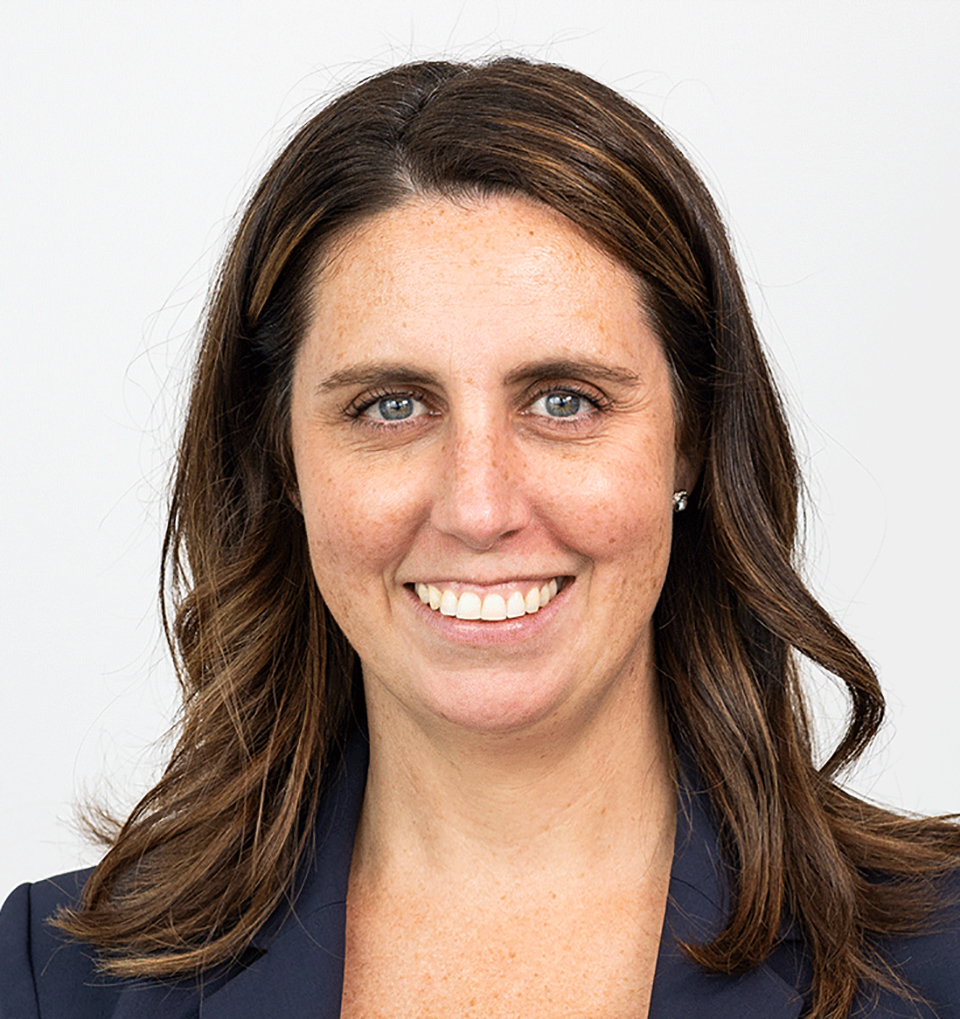
| Pellicane: addressing market structure issues | ||||||
“This is not ‘let’s trade bond dot com,’” says co-chief executive officer James Pellicane who before taking on that role headed the fixed-income businesses of Merrill Lynch’s direct markets group. “It’s about addressing issues of market structure. The markets have been telling us about certain limitations – price discovery is far from perfect, liquidity is fragmented and periodic special events have frustrated everyone. Our founding firms have made some large and unprecedented commitments to correct the situation – to transition trading to an open, more liquid and transparent market that will benefit all participants.”
BondBook will allow anonymous trading, with live bid and offer quotes against which participants can execute trades, initially in US corporate and municipal bonds. BondBook will act as agent and, if needed, step in to complete trades in the event of counterparty failures. BondBook is independently capitalized, according to the regulatory requirements for broker dealers. It has its own independent credit facility. And in addition, its founding firms have promised to make signiWcant capital calls available in the case of extraordinary market events or failures.
Not only that, the founding firms have made hefty liquidity commitments to support market making and also committed to moving substantial business onto the platform, including primary trading of all their new issues on break of syndicate. First-day trading for all the deals these five firms led in 1999 amounted to around $1.7 trillion. That’s a lot of volume to be going on with. And these are very robust, speciWc and measurable requirements which are set out in documented agreements. This is not all being done on handshakes.
Those commitments will surely be needed to kick-start BondBook but if trading takes off as planned, the founding firms’ share of business volume should become less important. BondBook’s list of founding partners has been carefully judged to demonstrate a powerful critical mass and at the same time keep it all lean enough so that the business can be governed and move forward quickly.
The goal of BondBook is to change the model for provision of liquidity in bond markets from a few providers – the leading sell-side bond firms – offering liquidity to many starved takers – the investors – towards a model where many participants, including investors, all provide liquidity to each other as both providers and takers. Participants will be able to see depth of book, as well as best bid and offer quotes in a certain size. So if the best bid for $50 million of a bond is seen to be 100 basis points over treasuries, it will also be clear that the next best bid at 101bp might be good for $150 million.
The open, exchange model alters the dynamics of the bond market completely. If it succeeds, it will certainly require the participating firms to overhaul their traditional bond businesses. Pellicane expects that firms will see the necessity and the benefits of this.
A simple hope is that as the cost of trading goes down, the volume should go up. Certainly, the absence of liquidity has created worries among investors in recent years. And while large institutions can still bully the leading firms into offering tight two-way pricing in size, smaller institutions cannot and that inability to execute trades efficiently can clearly hurt dealers as well as investors.
If a traditional bond firm has a very expensive research group that provides great trade ideas, but customers say they cannot execute them because dealing costs are too high, then a more liquid market will make that firm’s research more valuable.
It’s noticeable that BondBook was one of the first trading platforms publicly to appoint a customer to an external advisory board – in this case Putnam Investments, one of the world’s largest bond fund managers. Putnam played a prominent role in designing the system, as did other large investors. Issuers were also consulted, as they also clearly have an interest in accessing a large pool of liquidity and may eventually launch new issues on BondBook, just as companies launch equity deals on the New York Stock Exchange.
Pellicane says: “The attraction for issuers is that the pricing discussion becomes much more objective. If you’re sitting in the treasury of a major corporation, you’ll be able to see clearly where your 10-year bullets are trading in an open, liquid market.”
If the secondary bond market does develop as BondBook’s founders hope, then it may allow companies to manage their liabilities more actively, without consulting their bankers. If a borrower wanted to bid to buy back its seven-year bonds and re-issue in 10-years or three-years, it could just do that directly itself – if the market takes off.
Such a prospect again suggests that intermediaries will have to reconWgure their debt capital markets desks, as well as their sales coverage. The good news is that if firms and their customers have access to a deep, liquid secondary market, that should reduce the amount of balance sheet and regulatory and economic capital that firms have to use to underpin their bond businesses.
Further ahead it will be interesting to see whether the existence of an open exchange and the wider availability of information about bonds ever attracts more retail investors to the market – perhaps adjusting their portfolios out of equity. But “right now,” says Pellicane, “we’re not too worried about customer acquisition”.