High-wire act that changed the Bank
World Bank turns to guarantees
Seven-point plan to save the world
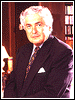 |
| “Corporate change takes a minimum of five years … I believe we’re through the trough” |
Is it true that Robert McNamara approached you, as he was preparing to leave the Bank in 1980, about becoming president and that you became an American citizen so that you could be considered for the job?
Bob submitted a number of names to president Carter to succeed him and he spoke to me and told me I was one of them. I had never previously given thought to this possibility although I was a huge admirer of Bob. It was discovered that you had to be an American citizen if you wanted to be president of the bank. So, inside of a week, given my long residence in the USA, the White House organized for me to become an American citizen and three weeks later president Reagan appointed Tom Clausen. It’s a true story.
People who know you say that you see your presidency of the Bank as the capstone of your career, despite your many accomplishments in business and as a philanthropist. Where does your time at the Bank fit in? I do regard my presidency of the World Bank as the most important thing I’ve ever done and I certainly don’t expect to go back to investment banking.
What do you consider to be the most significant achievements of your first term at the Bank?
The accomplishments are, at the first level, trying to refocus the entire institution the Bank, IFC and MIGA on the fundamental issues of poverty and sustainable development. We have attempted to weld a consensus inside the institution that we needed to improve our procedures, to increase the level of accountability and to delegate greater authority to the people within the institution.
I think there is evidence that this has happened. We have made very considerable progress on the internal, administrative side. On the delegation of authority, we have spread significant staff to overseas offices. In terms of internal accountability and responsibility, we have done everything from 360 degree personnel evaluations to participatory approaches to management which draw down way below the vice presidential level. I think the first level of achievements, which I share with my management colleagues, is quite a significant one.
I do not think we’re finished, but we have made enormous strides. If you conceive of the Bank as a tanker, I think we’ve turned the tanker but we’ve not yet reached port. This is part, I think, of a five-year process of change at an institution which had become quite large and quite encumbered by procedures. I would say that we’re two-thirds of the way through it.
We have also more than doubled expenditures on staff professional training, including an advanced management course for managers, where, in addition, they live in a slum or a village for a week to better understand poverty.
The second thing which I think we have done is to reach out very much more than we ever have before to the partners in the development field at the UN, the regional banks, other multilateral institutions, as well as in the private sector and civil society. I think that this is a necessity because no single institution can solve the issues of development. Certainly the Bank can’t do it alone. It’s essential that we continue to work with and build on our daily close working relationships with our sister institution, the IMF, and with the whole panoply of the international community, both official and unofficial. And I believe that we have brought about a change in the perception of the institution and the reality of the institution which is ongoing.
The third thing which I believe that we’ve done is to develop a better relationship with our clients a partnership with clients to try to set with them objectives and the goals, which they own, not to play the role of headmaster. I think that certainly the feedback that I’ve had reflects that there has been a significant change which has been recognized by client countries. I think we’re being more responsive across the board both in the Bank, IFC and MIGA.
I think that, on individual subjects, whether it be corruption, AIDS, debt relief, post-conflict reconstruction, environment, culture or technology, we have made great progress. I would guess that we’re one of the leading institutions in dealing with that aspect of governance and the conduct of affairs in a country. I’m very proud of what we’ve done.
What are your goals for the future?
The primary goal is to confront the concern that I have on the poverty question. If you look at the trends in poverty, they’re not very good. You’ve got approximately 3 billion people living under $2 per day, you’ve got 1.3 or 1.4 billion living under $1 per day in a global population of about 6 billion. And if you project out another 25 years, you will have an 8 billion population on the planet. So, you have population growth moving very quickly and environmental degradation also moving quickly.
So, the first goal that you must have is to start with that challenge. You have to reverse those trends: the trend toward poverty, the trend toward inequity between rich and poor, and the trend on degradation of the environment. So, my first goal is to try to see how we can play our part, in some cases, as a leader and, in some cases, as a follower, in trying to work with countries so that we can reverse what will otherwise be an inevitable trend in 2025. We easily could have 4 billion people living under $2 a day and 2 billion living under $1 a day. That’s the challenge.
The way we’re going to deal with it is to set clear priorities with countries as to what they believe they should do. There I refer you to the efforts on the Comprehensive Development Framework. Getting that started, I think, is an achievement of the last period and I think it will come into fulfilment in the next two years.
My guess is that probably the greatest priorities of the next five years are going to be in the areas of structural reform, trying to build capacity in governments, trying to deal with issues of corruption, of legal and judicial systems, of financial supervision and control, as well as the establishment of social safety nets. It’s the countries that have those characteristics that tend to succeed and countries that don’t have them don’t succeed. So, I think that, during the coming months, we’ll be looking at how it is we can gain greater leverage in terms of structure and also how we can develop some of the programmes that we have that really attack the roots of poverty in both urban and rural areas. I also want to attack the issue of education and health of the young so we do not miss the next generation.
I guess the final thing I’d say in this context is that we have to lift the awareness of donor countries and populations around the world to the issue of poverty. It’s not just an issue for the other people in developing countries, but it’s quite central to global development. There is a hard road to follow because, as I’m sure you know, overseas development assistance has been going down rather than up.
Most citizens who vote don’t see the connection between the good life in a developed country and poor lives in a developing country. That linkage, to me, is absolutely clear. We’re living on one planet. We’re united by trade, by environment, by immigration, by crime, by health, by economics and by peace. All these issues really need to be understood.
My hope for the next period at the Bank, indeed for the next 25 years at the Bank, is that we can be a leader not only in assisting in the development process but in ensuring that the developed and the developing countries come closer together so that the millennial dream for a better world is more likely. Certainly, I believe that if we continue to do what we’re doing now, without major changes, it’s unlikely that, unless we act now, the situation is going to be better in 25 years’ time. In fact, my own judgment is that unless we act now, it’s going to be a tougher row to hoe for our successors, for our children.
What have been the most important lessons from the Asian crisis?
I think that the one thing that the Asian crisis has demonstrated is that the typical analytical framework which people use is financial. If you look at Korea, Thailand and Indonesia and look at the coverage in the press including even in your own distinguished journal, much of it was about the rescue packages and the fiscal and monetary policy and the economics of the situation. All of that is extremely important and fundamental. But I think in the unwinding of the analysis of Korea, Thailand, Indonesia, Brazil, Russia, the parallel importance of structure and social dimensions is now more readily apparent. I think that in terms of analysis, people have to think more in human terms than they did before. Hard headed economists may regard that as soft and ineffective and difficult to measure. My own judgment is, having been in the world of money and deals for most of my life, that for the future it has to be a partnership of interests between the financial and macro on the one side and the social and structural on the other. I think that is gradually being recognized.
What we’re trying to do in the Bank, and working with the IMF, is to have a consistent social and structural programme obviously based on growth and sound macropolicies. But you can’t let macro and financial decisions lead you to think that the social and structural aspects will look after themselves. They don’t. I think that is the role for the Bank and I think it’s extraordinarily important.
What would you like to say in response to your critics?
I think there are a lot of people who stand at the side and say there are so many initiatives, so much is going on, is there any focus? My answer, very simply, is that to change an organization, you have to do a comprehensive job of change I’ve checked this with a group that meets with me once or twice a year, consisting of Lou Gerstner of IBM; Jürgen Schrempp, co-chairman of DaimlerChrysler; Percy Barnevik, chairman of Asea Brown Boveri; Lorenzo Zambrano, CEO of Cemex; Ratan Tata, chairman of Tata Group, and 10 or 12 really major corporate figures, each of whom has been engaged in corporate change. They all tell me the same thing. They say it takes a minimum of five years. You go through a period when everybody is highly critical. You start to move out of it and then people start to come on board and then you have about a two-year period in which the thing really starts coming together. I believe that at the Bank we’re through the trough.
For example, we just replaced 60 separate systems with one SAP [enterprise resource planning] system. That gives you an example of how the place had fragmented in terms of systemic control. We’re clearly on the way up and I think what you’ll see, in the next two years, is the real reward on the hard work that everybody’s put in. I believe it will be a remarkable period for the World Bank Group.
The thing that you find about the Bank is that there has characteristically been a huge number of critics. It is a self-critical institution and it is externally criticized constantly [laughs] by former employees, by civil society and by legislators. It’s not difficult to find critics of the World Bank. It is, however, possible to find today quite a number of people who will stand up and say that things are going rather well and that they’re grateful. If I didn’t get that sort of response in the institution, it would be hard for me to keep up the pace. You have 10,000 people at the Bank who are actually working their tails off to try to make the world a better place. Most of them could get jobs elsewhere. In my judgment it is the world’s leading development team.
I think that the criticism is very often unfair on the generalities. Though on specifics, I have no doubt that we’ve got a lot of things to improve. But here is an institution which, by any measure, is central to the development process today in terms of its coverage and its resources and in terms even of its people. I guess it’s an easy target, but I would vigorously defend it, both while I’m president and when I’m not president, because I think it has performed a remarkable role.
We’re trying to open up the place to our own analysis and criticism. We’ve found, in doing that, a lot of things that we’re doing right and we’ve found some things that we want to improve. We’ve done it openly and transparently. That upsets some people, but I think that it’s extraordinarily healthy. And I’m going to continue to do it whether there are critics or not, because I and the management team believe that we’re on the right track. In the end, we have to be accountable to ourselves before anybody else, and to the poor people we serve. I am not prepared to concede the moral high ground to our critics.
I am quite sure that you can come up with people who can tell you all sorts of stories about the institution: anecdotes, strategic imperfections, and management inadequacies. I don’t have any doubt that you can do that, but I think that it’s unfair to judge the institution without looking at its achievements. And its achievements are manifold, whether it be in the response this year on Central America, or its response on the international financial crisis, or the social response, or what we’re doing in Africa or dozens of things that we’re doing well. The reappraisal of our rural policy, our urban strategy. This is cutting-edge stuff.
For my part, I’m very proud of the team that we have. As to measurement of performance and why I think we’re doing better, there isn’t a financial scorecard that I can give you, although volumes are up. I can tell you that in terms of the monitors that we put in with our Strategic Compact, in terms of the mechanics of what we’re doing, in terms of the quality of our projects, the management of our projects, and the implementation of our projects, that demonstrable progress has been made.
We are also making the change to make ourselves a central knowledge bank on development issues, and we are at the cutting edge with the use of technology for educational development purposes. That whole subject would merit a separate interview.
As to coming out of the trough, we just had another staff survey which clearly indicates that, at least in the eyes of the staff, we have come out of the trough. I’m not trying to be defensive, or to kid you. It’s for you to judge, but it happens to be my belief that if you were to look at the results of the Strategic Compact, if you were to look at the staff survey, if you were even to find a few people who would speak kindly of us, I think you’d find that it’s not all bad at the institution. In fact, I frankly believe that we’re on a remarkable course and that the world had better hope that the Bank gets it right, because it is central to the whole process of development.
The World Bank, under your leadership, has recently shown new interest in using guarantees as an alternative to lending. What are your views concerning the reasons for this shift?
I am searching with my colleagues for ways in which we can use our credit in a more effective way, in addition to lending money. We’re immediately confronted, however, with a problem. The Bank is a AAA borrower and, because we lend at 50 basis points above Libor, it is very hard to provide resources to a country less expensively with a guarantee. With IDA [International Development Association] countries, where we lend 30 years at virtually no interest cost, it is even more problematic.
It’s worth exploring, however, if you can do it without burdening your balance sheet and if you can get extra leverage by introducing external credit sources and help popularize that credit to new sources of funding. That’s exactly that we’ve been pursuing.
As to the corporate sector where there’s a huge demand, the Bank is limited because we cannot guarantee corporate risk. So, any guarantees that are given by the Bank itself must be done through national intermediaries. That’s because the strength of the IBRD [World Bank] balance sheet is, in fact, the strength of its obligations from sovereign governments and if we weaken that, then it would weaken our institutional credit.
The fundamental objective has to be to get greater leverage from your balance sheet, to open up new sources of funding, to make it incremental, and to ensure that it not be wildly more expensive than the funding we could produce by lending. So, it has to be additional. It also has to be competitive. Those are the parameters that we’re looking at. It’s not easy, but I think that we’re making some real progress.


