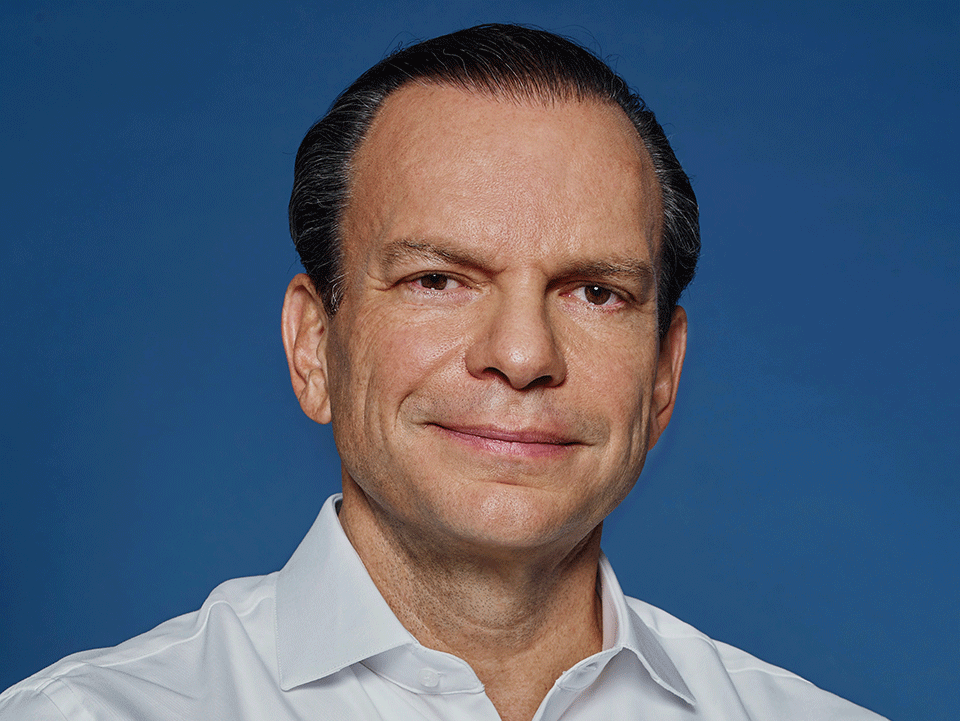
The comparison between poacher and gamekeeper was inevitable from the moment the Brazilian government put forward Armínio Fraga Neto’s name as the new central bank president in February. In a matter of weeks Fraga has gone from star Wall Street investor to stout defender of the real, a currency tattered by repeated attacks from traders.
The comparisons may continue dogging both Fraga and the government as Brazil endures one of its worst recessions ever, faces a possible debt crisis and struggles politically.
Fraga, 42, seems uniquely qualified as firefighter. He holds a doctorate in economics, once served as the central bank’s international director and worked at the former Salomon Brothers and Saõ Paulo’s Banco Garantia, now owned by Credit Suisse First Boston. For the last six years he was managing director at Soros Asset Management in New York.
Francisco Gros, his former boss at the central bank and now at Morgan Stanley Dean Witter, says: “He has a Princeton PhD, he is a guy who has worked in the markets. It is not all theory, he has a lot of practical experience.”
Fraga could establish his new credentials by moving interest rates down. However, it seems unlikely that a man like Fraga would risk a premature fall in rates that could worsen inflation and further weaken the real. Monetary policy is the last big weapon in the government’s policy armoury now that the real’s link to the dollar has gone and given that fiscal policy is hostage to Brazilian politics.
Neither is it likely that Fraga’s team at the central bank will be tempted by the attractions of monetary loosening. They include Luiz Fernando Figueiredo, former treasury director at BBA Creditanstalt, a Saõ Paulo bank run by Fernão Bracher a former central bank president. Figueiredo will steer monetary policy.
Daniel Gleiser, formerly research director at CSFB Garantia will head international affairs at the central bank. Sérgio Ribeiro da Costa Werland, an academic from the prestigious Fundação Getúlio Vargas, takes over the central bank’s economic department.
They will work alongside a group of career central bank officials, such as Paolo Zagen, who is straightening out the state-owned banking system. Sérgio Darcy stays on as head of regulation. Luiz Carlos Alvares, another career central banker, is promoted to head bank regulation.
Fraga and his team will be judged by their ability to work the markets – a tricky task for which they are eminently well suited – and success in agreeing terms with the IMF. Ultimately, Fraga’s success will be determined by his contribution to stabilizing the economy. However, this task is highly political. Fraga the gamekeeper may yet find the cunning he picked up as a Wall Street poacher keeping him in good stead in the nation’s television studios, or in the corridors of Brazil’s congress where favours, patronage and threats are the principal means of exchange. John Barham