Dawn raiders turn into gentlemen
“Mr Potanin cannot just pick up the phone like he can with Norilsk Nickel and Sidanko and tell us what to do,” says Renaissance Capital’s managing director of investment banking, Leonid Rozhetskin, rejecting speculation that following the merger of Renaissance and Unexim associate bank ICFI, the new company, MFK Renaissance, will be beholden to Unexim.
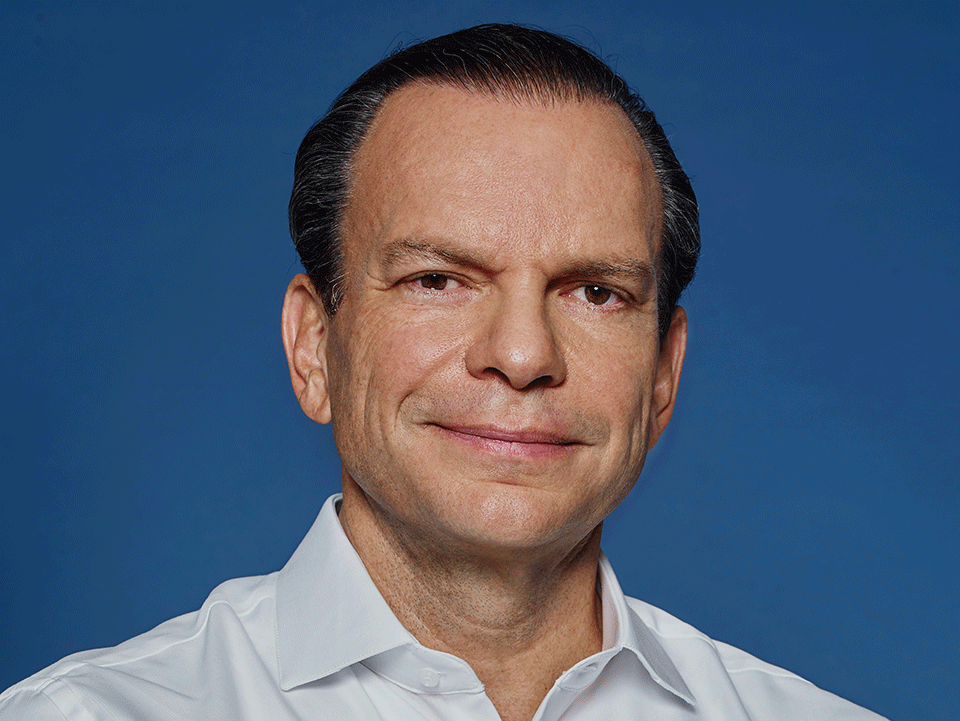
Boris Jordan, who founded Renaissance in May 1995 after leaving the Moscow branch of CSFB and who will be chief executive of the new company, is equally firm: “Unexim has very aggressive positions on certain industrial assets and competitors are not happy about it. But as an investment banker I have to work with everyone, not just Unexim-related companies. This year 80% of Renaissance’s revenues were from non-Unexim-related clients and I don’t expect that figure to fall after the merger.”
All the same, his relationship with Potanin appears to be the cause of Jordan’s latest visa difficulties. In October the 37-year-old American had his visa taken away at Moscow airport before boarding a plane to London. Unexim’s rivals may have been behind it.
Jordan has been described as Potanin’s “eyes and ears in the west”, and when Unexim launched its Eurobond in July it was Jordan’s task to phone members of the syndicate to check that lead-manager Merrill Lynch was doing a good job.
Jordan’s key role, however, has been to attract western investors into Unexim projects. For example, Jordan succeeded in gaining involvement from western backers, including George Soros, for Unexim’s bid for 25% plus one share of Syvazinvest. The visa episode may be an attempt to prevent Jordan from doing the same in future privatization auctions.
But whatever competitors do, MFK Renaissance will be Russia’s greatest force in investment banking with assets of $2 billion. “Our future is not tied to cross-border flows; our future is tied to domestic flows where we have no competition,” says Jordan, taking a swipe at formerly independent Moscow brokers which have tied up with international firms.
The merger will also help to clarify who does what within the Unexim banking group. Prior to the merger, loans will be transferred from ICFI to Unexim, emphasizing the latter’s role as a commercial bank. But what is not likely to become any clearer is the ownership relationship of the two banks. At present cross-shareholdings between the two banks are minimal. Unexim itself does not have a stake in ICFI, and ICFI as a nominee holds only 1.8% of Unexim Bank. While MFK Renaissance will be 50% owned by Renaissance management, analysts will presumably be left to guess who exactly owns the Unexim half.