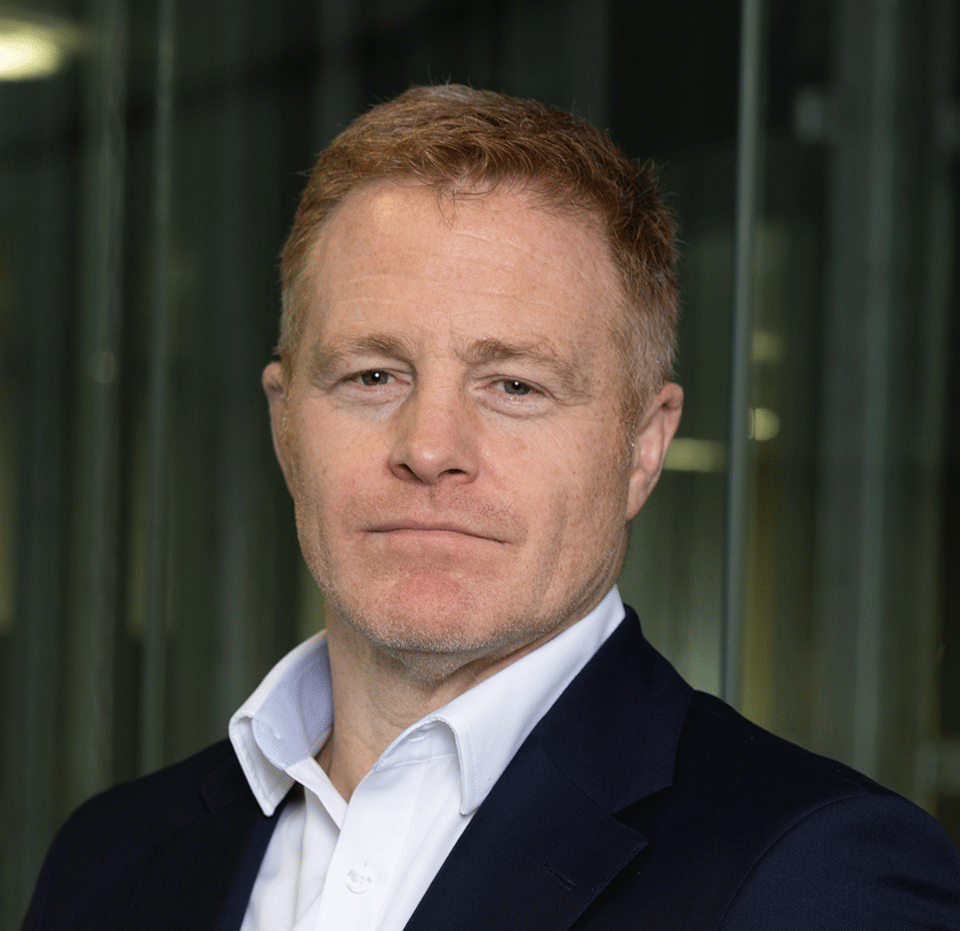
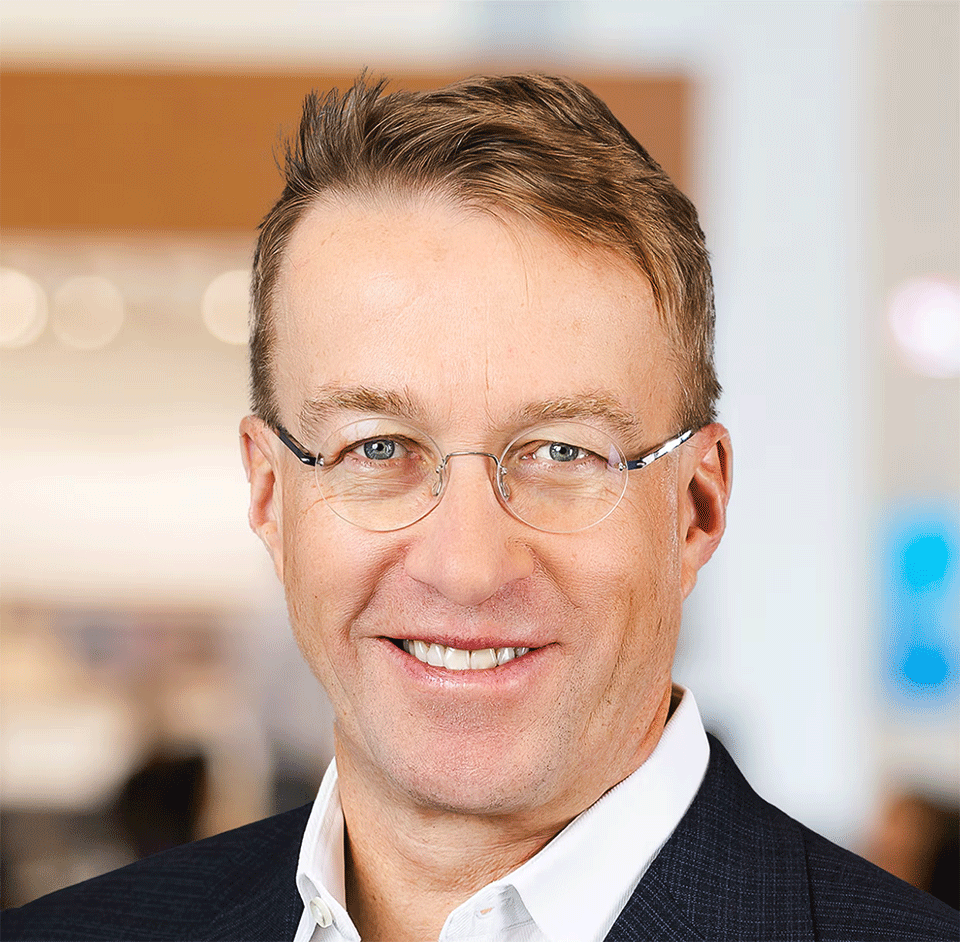
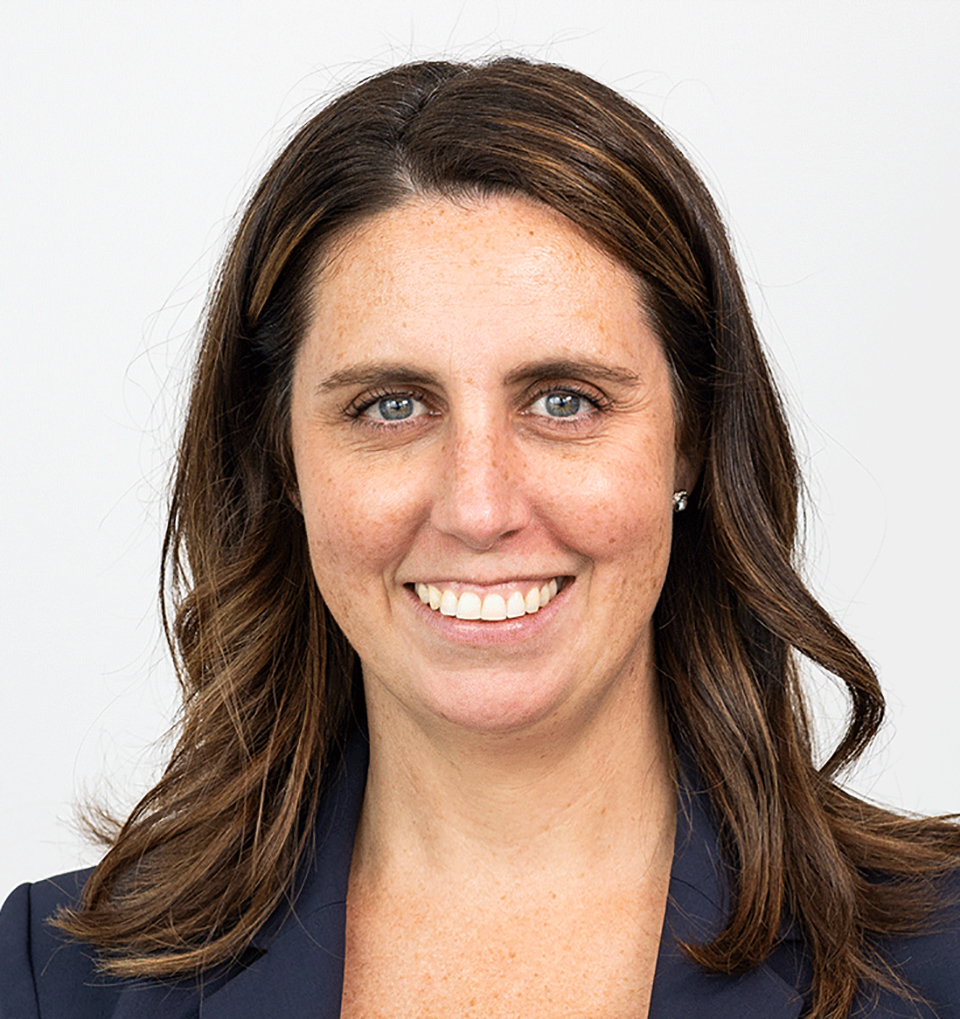
After helping to put NatWest Markets on the map in his native Australia, Peter Hall was planning in 1994 on retiring from the investment banking business. Then 45 years old, he intended to devote his time to other interests, including Buddhism, which he defines as the “science of mind and consciousness”. Although unable to take the week-long silent retreats that the study of Buddhism requires, he believes understanding its tenets have helped him a great deal. Far from the ego-driven mentality that seems to drive most investment bankers, Buddhism calls for a type of detachment. “It’s about having a calm and receptive state of mind,” explains Hall, who says he meditates for an hour a day.
Whatever the source of his success, Hall was promoted in 1994 to head NatWest Markets in the US. There he engineered the purchase of two highly-respected, and profitable, US businesses M&A boutique Gleacher & Co, and the fixed-income trading house of Greenwich Capital Markets as part of the bank’s strategic thrust into the top echelons of global investment banking.
Now Hall has been given another offer he says he couldn’t refuse. This month he becomes president of NatWest Markets in London, part of a global reorganization that is bringing the Americans he has hired in the US to top global positions at NatWest Markets. Partly in reflection of the expertise of the new executives, the team will reorganize NatWest Markets more on product lines, as is common in US investment banks, and away from the geographic orientation that has typified most commercial banks. The turnaround is bound to ruffle some feathers it figured in the downfall of NatWest Market’s joint venture with Wheelock in Hong Kong (Euromoney, December 1996.)
But Hall’s elevation is also a sign of confidence in his US strategy. Raphael Soifer, bank analyst at Brown Brothers Harriman, says that Natwest Markets chairman Martin Owen “sees what Hall did in the United States as a role model”. For his part, Hall says NatWest Markets has undergone a transformation of its business with four acquisitions totalling $1.18 billion. In addition to the US acquisitions, Hall was also involved in NatWest Markets’ purchases of UK fund manager, Gartmore Investment Management, and UK M&A specialist Hambro Magan. Although the bank has often been criticized for paying too much, Hall is sanguine. Pointing to the purchase in late 1995 of M&A boutique Gleacher & Co, he says: “We didn’t disclose the price-earnings ratios when we bought it, but the firm is highly profitable. Gleacher & Co will pay for itselfin a very short time.”
In the US, NatWest Markets has been building its equity business internally for a decade, which has given it a strong domestic business, particularly in the middle market. Hall declines to disclose revenues, but claims that NatWest Markets raised more equity for US corporations in 1996 than any other commercial bank in the United States including JP Morgan. The US revenues’ contribution to NatWest Markets entire business has more than doubled over the past year, he adds. Moreover, the UK bank’s US investment banking operation is profitable, whereas those of European competitors such as Union Bank of Switzerland and Deutsche Bank are probably not, according to analysts.
The new global management team includes several Americans. Tom Whelan, the former Morgan Stanley equity derivatives and global risk management chief, heads global equities in London. Eric Gleacher, formerly of Gleacher & Co, co-heads global corporate advisory. Gary Holloway and Konrad (Chip) Kruger, who co-headed Greenwich Capital Markets before it was bought by NatWest last spring, are now co-heads of the global debt markets division. Stephan Harris, also an American and a longtime NatWest employee, will be running global financial markets, while Paul Myners, Gartmore’s chairman, will head global asset management.
The Americans are a close-knit group. Whelan, Gleacher, Holloway and Kruger are all part of what one colleague calls the “Greenwich mafia”, a reference to the fact that they all live in the wealthy suburb popular with Wall Street executives. In fact, it was Holloway who advised Hall to talk to his old college roommate, Whelan, who had left Morgan Stanley, about joining NatWest. Holloway and Whelan had roomed together at business school at the University of Virginia in the 1970s.
Meanwhile, NatWest’s UK investment banking arm is still trying to rebuild its reputation, which was tarnished during the 1980s by the Blue Arrow scandal. “We have not developed sufficient critical mass in Europe and need greater focus,” Hall concedes. “The simplified structure and new management team will help to address this deficiency.”
He says that Greenwich Capital’s trading expertise in US treasuries will be used to build up sovereign debt capabilities in European countries. Greenwich’s Kruger has already been relocated to London to accomplish this task.
Like so many foreign institutions in the United States, NatWest has struggled in the past to acquire high quality talent. Foreign firms were seen as a dumping ground for ex-employees of Wall Street firms during their periodic rounds of lay-offs.
Now for NatWest, the question is whether the prima donnas used to running their own shows can work together as a team. “So far it looks good,” says Michiel McCarty, who was a managing director at Gleacher & Co. “Business-wise everybody’s pretty commercial.” He adds that “Martin Owen has done it with a very light hand, and very little bureaucracy.” Hall also gets high marks. “He’s low key and a very good manager, as well as being smart and focused,” says McCarty, noting that many US investment banks today are headed by traders, who are “almost a caricature of aggressiveness”.
Adds analyst Soifer: “Hall doesn’t strike me as a man with a big ego, though he seems sure of himself and very solid.” With all those big egos surrounding him, perhaps the daily meditations help. Michelle Celarier