|
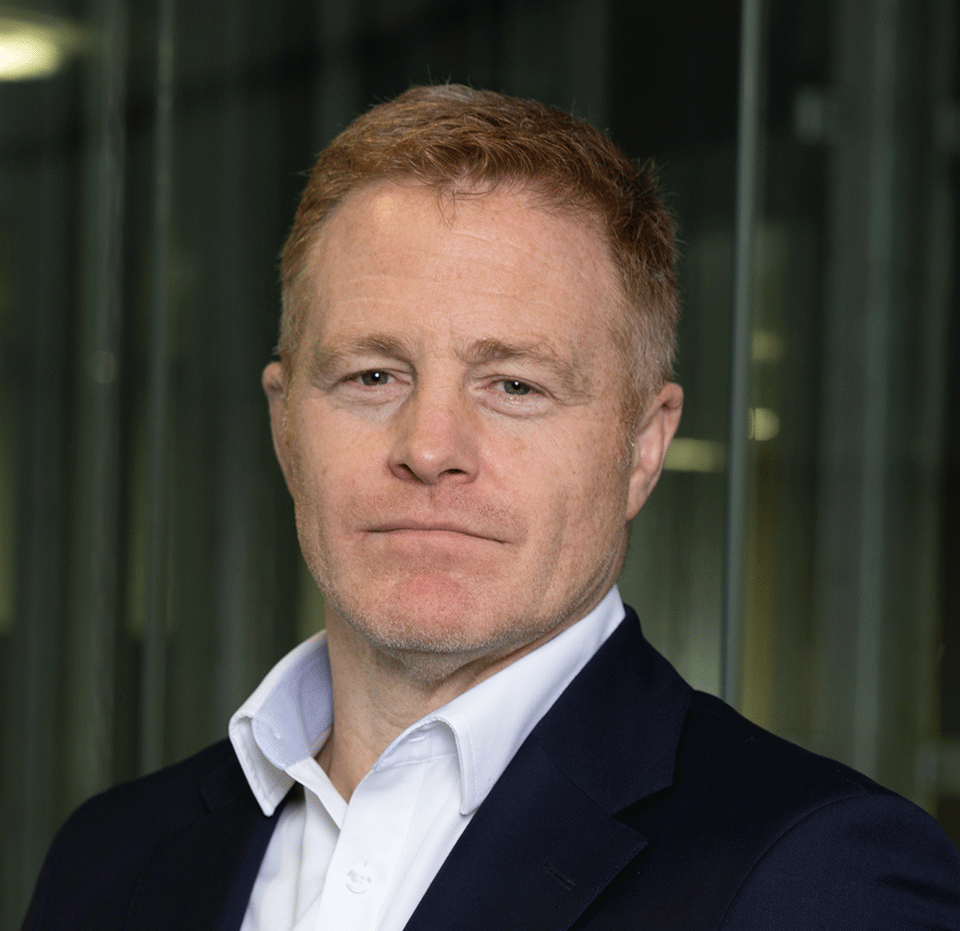
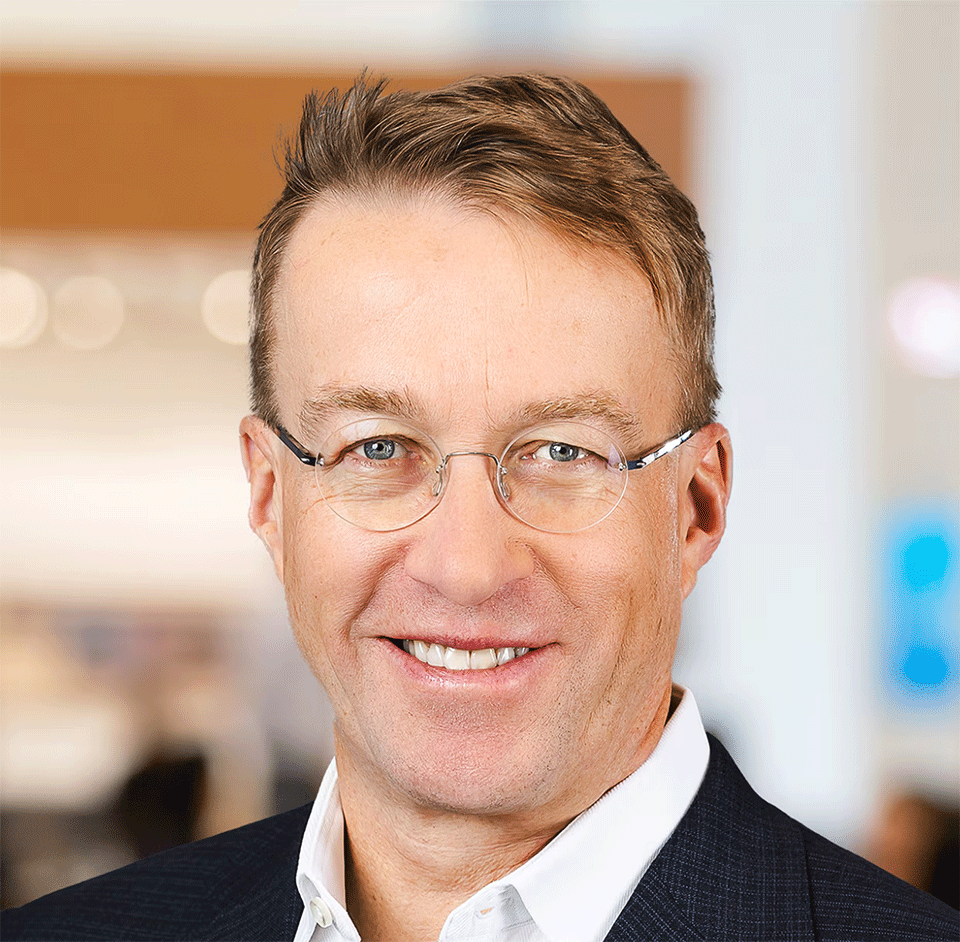
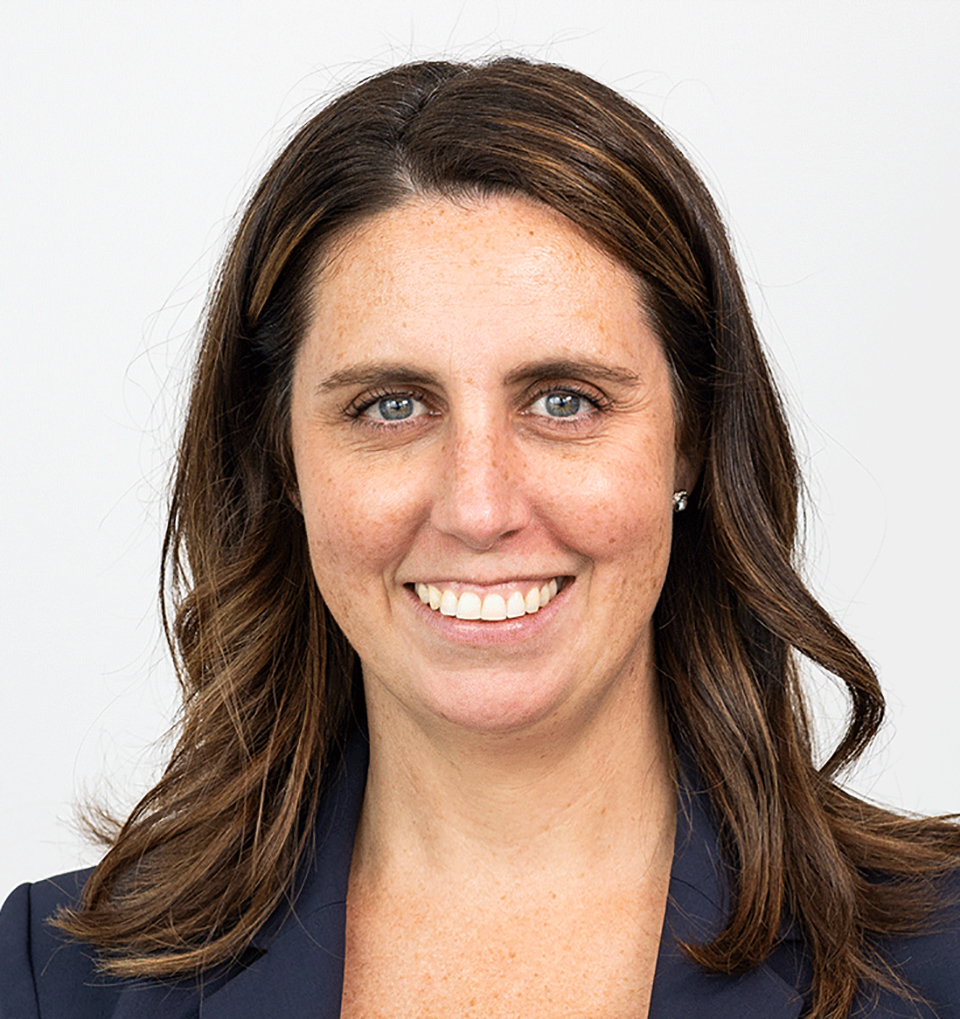
Jeremy Amias Managing director and head of European fixed income sales, Salomon Brothers International Among the guest speakers at a seminar for the Association of International Bond Dealers (now isma), in November 1987, in Montreux were two very young executives from Salomon Brothers in London. One was Jeremy Amias, now all of 34 and head of fixed income sales at Salomon in Europe. The other was Michael Lewis who shot to fame as the author of Liar’s Poker. Lewis who deified the “big swinging dick” salesman and made Salomon look like a robber baron, is long gone. Amias, whose big swinging attributes were more demurely exhibited, has prospered. With 12 years at Salomon, he is a genuine veteran in a firm renowned for high senior executive turnover. Amias and Salomon met more by luck than judgement. At Cambridge he read classics – hardly the perfect pedigree for a ruthless salesman – and seemed set for a life as a university professor. When finance caught his eye, he wrote to a number of banks, but admits that his presentations “were not literary masterpieces”. Even fuddy old National Westminster Bank wrote to him saying it was not sure about his ability “to handle large sums of money”. What a shame Amias didn’t keep that letter for future framing. Today, at 34, he earns more money than anyone in the NatWest group. In 1984, Salomon, thanks to the initiative of Charlie McVeigh and Sheldon Prentice, the co-heads of European capital markets, had begun to recruit Oxbridge graduates. A friend told Amias about the Salomon interest but he had never heard of the firm. However, perhaps miffed by the NatWest rebuke, he contacted Salomon and was accepted into the graduate training programme. Amias was a year ahead of the class immortalized by Lewis, with its Japanese participants asleep in every lecture and the weakest members being told that they would be posted “to sell equities in Dallas”. But there were some uk notables in the group. Ian Hannam, he of the shadowy military background, was in the class. Is it true that Ian was found in those early days not to have a proper us entry visa in his passport? Today Hannam is a main board director of Robert Fleming. Also among Amias’s classmates was Simon Meadows, a managing director and co-head of capital markets at cs First Boston, and Steve Roberts who recently left Salomon Brothers to take over all of Lehman’s fixed income sales and trading in Asia. Even the 1991 us treasury auction scandal, which nearly toppled Salomon, barely dented Amias’s enthusiasm for the firm and for bond sales. He is fiercely loyal about the firm’s traders and openly admits that their skills are a huge support to the sales group. “Obviously, our traders have a reputation in the market which means that when a client wants to deal in size, Salomon will be one of their calls. It must be difficult for a second division house which cannot offer clients similar facilities,” he says. New vigour The auction scandal is long forgotten. Almost all of the world’s major institutions are Salomon clients. New customers are particularly attracted by the renowned Salomon bond indices. “Expensive to set up and maintain, but one of the best calling cards in the business,” comments a former Salomon managing director. Also the firm’s fixed income research has improved. Once, the undisputed leaders in research under Henry Kaufman, Salomon slipped somewhat in the early 1990s. Amias maintains that chief economists, John Lipsky and his team, are almost as well regarded, and considers the firm’s research on emerging markets as second to none. What about Salomon’s new vigour in the new issue markets, an area which the firm neglected badly in the last four years? Amias is delighted to see Solly back among the top 10 lead managers: “For the sales force, it’s the perfect opportunity to make a customer call.” The outside perception was that Salomon’s concern for its customers was sometimes secondary to the firm’s own interests. “Not so,” says Amias who travels constantly visiting clients in Europe and accompanying salesmen on calls. He is quick to point out the success of Salomon’s annual fixed-income client training seminar to which customers are invited. Recently married and living in fashionable St John’s Wood, Amias skis and jogs. What makes a good salesman at Salomon Brothers? He mentions numeracy, perseverance and adaptability with clients. “You have to be equally at home in the Royal Opera House or bopping at Stringfellows until 4 am.” Amias may have all of those qualifications, but at Cambridge, he was also a member of the “Footlights” where he added invaluable acting and stand-up comedy experience to his sales repertoire. Andrew FraserFormer deputy chairman,Baring Securities In the summer of 1990, Baring Securities was on top of the world. The rest of the financial services industry world was still recovering from the great equity crash of October 1987. Only Japan seemed immune. The prosperity of Baring Securities was inextricably linked to the surging Tokyo stock market. Three books have been published on the collapse of Barings Group in February 1995. None has mentioned that, at least for a short time, Baring Securities, “the house that Heath built”, was one of the great investment banking success stories of the last 25 years. Christopher Heath, the mercurial salesman with a professional gambler’s instincts, may have built the house, but he had considerable help. He had been a partner in the socially well-connected but second division Henderson Crosthwaite. Heath ran a “firm within a firm” specializing in Japanese and Far East securities. He was extremely successful and certainly the highest paid partner in h&c. When a first division calling beckoned, Heath chose Barings although he was courted by several other houses. The team he chose to build Baring Securities became an elite group in its own right. Christopher Heath effectively was “the king”. The principal members of the team were “barons” which included Richard Greer (who is back working with Heath at his new firm), Andrew Bayliss, Colin Ring (whose connection with the Kuwait Investment Office was invaluable), John Bonfield, Diarmaid Kelly and Andrew Fraser. Fraser was an exception among the “barons”, being the only non-Japanese specialist – his forte was the Hong Kong and Far East regional markets. However, these markets were unimportant as Tokyo continued to rise higher and higher. Heath had poached almost the whole of Robert Fleming’s prized Japanese convertible and equity warrant trading team led by Trevor Sliwerski and Nigel Radley, early in 1987. This was a golden period for Japanese equities and warrants. “After a brief hiccup following the October crash, the Tokyo market just kept rising,” comments Fraser, “the Fleming dealers may have been good but there was no secret to making money, as the only trading strategy required was to be long, fully-leveraged and then long some more”. While all Heath’s financial roads led to Tokyo, Fraser, Bayliss and some of the other barons built up the nucleus of a truly international Baring Securities. Offices were opened in Singapore, Bangkok, Manila, Jakarta, Kuala Lumpur, and later, in Seoul and Taipei. Fraser likes to point out the success of those operations today and the fact that despite the collapse of Barings, the Far Eastern business of Baring Securities is still rated on a par with Jardine Fleming Securities. “At one stage, we were even considered to be ahead of Jardine Fleming – not bad when you consider that they were the Taipan house of the region, had connections going back more than a century and we were starting from grass roots up.” But Japan was a different story. “In the final stages of the Tokyo bull market, the profitability of Baring Securities was such that it definitely became a case of the tail wagging the dog,” says Fraser. Heath didn’t foresee the end of the Tokyo bull run and the subsequent market collapse. Others at Barings were better prepared: their traders ran major short positions and managed to keep the firm’s head above water. Heath’s headlong expansion into Latin and South America may have showed vision but they were a cost drain on the profitable east Asian business. The constantly-travelling Heath was no delegator. “We didn’t even have a proper management committee at Baring Securities until 1992,” recalls Fraser. By 1993, Heath had been ousted. But Baring Securities, until the Leeson debacle, continued to operate at a profit (after substantial cost reductions and staff pruning), and the company franchise, especially in east Asia, remains intact. Could the success of Baring Securities be repeated today? Heath’s new corporate vehicle, Caspian, is a very different animal from the original bs. Will Fraser attempt to build a mark ii version? He will shortly be taking a senior executive role in the old Standard Chartered Securities business recently sold to a major Thai bank. Fraser will concentrate on the east Asian regional markets – his original stamping ground. At Baring Securities, now ing Barings, he believed that the group had lost its focus on the core – and still profitable – east Asian business. In his new position he will be based in London which may allow him marginally more time to visit his Scottish home, and enjoy fishing, shooting and stalking. Will he be joined by one or more of the former barons who are now scattered around the globe? Bruno GabrieleCo-head, investment banking Europe,Lehman Brothers International Was it simply a matter of being in the right place at the right time? This is the question friends and competitors asked when Bruno Gabriele, barely six weeks into a new high-profile career at Lehman Brothers, moved even higher to be co-head of all the firm’s European investment banking operations. Lehman’s record in Europe had been spotty – remember the mass firings in the late 1980s, and more recently, the closure of the branch in Lugano and high staff turnover in Geneva? It put itself back on track then by hiring a Salomon man – in the unmistakable and hard-driving Dan Tyree, now ceo of Lehman in Asia. However, the turnaround in fixed income and international equities moved faster than in European investment banking and corporate finance. When Lehman lost the feisty Bill Harrison to Robert Fleming, it lost one of its major deal-makers. Steve Berger who then took over the firm’s European investment banking simply didn’t have Harrison’s presence or his formidable list of corporate clients, especially in the uk. To push Lehman into the premier division of European investment banking, m&a, corporate finance and advisory work, the firm needed some new faces. Tyree had worked well for Lehman. Why not look at Salomon again to recruit a top investment banker, or better still, a group of investment bankers? Ideal qualifications Bruno Gabriele must have been an obvious choice for anyone seeking to raid Salomon Brothers in London. Then only 35, but already a managing director, he was the moving force on the international side of Salomon’s financial institutions group. When Salomon lost its way in the aftermath of the 1991 treasury auction scandal, and then again in 1994, the reputation of the financial institutions group remained totally unblemished. In this specialist sector, where business was booming and the firm’s equity research was still among the best, Salomon was perhaps the first call for raising capital and advisory work. Gabriele has ideal qualifications for being a banker’s investment banker. His father was a senior international executive with Banca di Roma for 35 years. He started, like so many others who have shot up the ladder, with Citicorp where he worked for six years before joining Salomon in 1986. Salomon’s bankers in the financial institutions group, including Kenny Wilson, Dick Barrett, Bob Nan and Gerry Smith, had built up excellent relationships with the money centre banks and other core clients including Republic National Bank. There was also plenty of business in continental Europe. Gabriele worked on some major transactions, including the privatization of Compagnie Financière de Suez, the bank-insurance joint venture between axa and bbv, and the rescue and subsequent sale of Banesto to Banco Santander. There were also smaller but personally satisfying transactions such as the purchase, and the sale six years later, of Banca Steinhauslin (a small private bank in Florence) on behalf of Creditanstalt – “the only bank I bought and sold on behalf of the same client,” recalls Gabriele. Why leave Salomon for Lehman? By 1995 Salomon was beginning to get itself out of a trough, but Gabriele found himself at odds with the firm’s investment banking strategy and he admits: “I had stopped having fun.” When Gabriele answered Lehman’s call, he immediately took four senior Salomon colleagues with him – Thomas Marsoner, Antonio Villalon, Nick Lyons and Martin Dolan. Like the Pied Piper he attracted a total of 20 Solly employees, including five executive directors, two directors, nine associates and two analysts. Did Gabriele expect to be promoted to co-head of all European investment banking within weeks of his arrival at Lehman? “Certainly not,” he asserts. But, as Lehman might have hoped, there is a new resolve about the firm’s investment banking efforts in Europe and in other areas such as Israel, where Lehman is a major force. Specifically, Lynch and Gabriele are targeting European telecom and media, energy and utilities, financial institutions and health-care. And equity research, an area where Lehman’s commitment in Europe has often seemed half-hearted, is no longer neglected. In the last six months, Lehman has been on a buying spree recruiting analysts from csfb, Robert Fleming, Gencor, Merrill Lynch and, of course, Salomon. Gabriele himself remains firmly in the front line working with Cariplo (a former client of Salomon) and on Lehman’s defence assignments for Banca Popolare di Novara, and is determined to extend the firm’s investment banking successes in Italy to Spain, Portugal and France. |