To make the short walk between the headquarters of Hong Kong brokerage, CLSA, and its Chinese owner, Citic Securities International, you have to traverse two of the city’s busiest roads. This far from picturesque stroll through the middle of a concrete jungle is not likely to be recommended in many guidebooks. But while the often-gridlocked traffic of both Queensway and Connaught Road Central throws up a physical barrier between the two firms, it has failed to create a commercial one.
Citic Securities International, the global arm of Citic Securities, completed the purchase of CLSA midway through 2013, paying over a $1 billion for it, and bringing to a close a long courtship. Citic sealed the deal for the outstanding shares of CLSA after it had previously purchased a 19.9% stake in the company from former shareholder, Crédit Agricole, proving to the financial world in the process that Chinese players had ambitions beyond their home region.
Since the tie-up in July, 2013, Citic and CLSA have jointly worked on 39 deals, including 12 IPOs, three placements, 23 DCM transactions (raising over $9billion) and one M&A deal. CLSA has worked separately on eight IPOs, 42 placements and two M&A deals.
The $878 million IPO of Chinese pharmaceutical company Luye Pharma in July 2014 serves as a good example of the combined strengths of Citic/CLSA, which acted as joint global coordinator on the deal. Other notable transactions include a $900 million 7.5% 2020 bond for China’s Country Garden Limited in March this year, where they acted as joint bookrunner. The Citic-CLSA partnership also figured to good effect when it acted as global coordinator on a placement worth over $1 billion for India’s Reliance Communications Limited in June 2014.
Like any ambitious leadership team, those in charge of Citic/CLSA are disinclined to publicly state clear goals for their business. But ambitious they are, stating that they want to become “an Asia-Pacific financial powerhouse with global reach”. They aim to achieve it by “leveraging on our leading position as an investment bank at our home turf in China and further enhancing our capabilities to serve our clients, mainly Chinese corporates, as they expand their footprints into different markets”.
|
We have a huge market in China, but as an investment bank, we are far behind our global peers in things like risk management and trading technology, maybe 10-20 years behind. CLSA has a very decent client servicing system. They have a view about how we can build our trading technology in the long run Yin Ke, Citic Securities |
This would suggest Citic Securities is looking to improve on the ninth position it took in the Dealogic rankings for IB Revenue in Asia-Pacific ex-Japan in 2014, and possibly even break into the top five at some point.
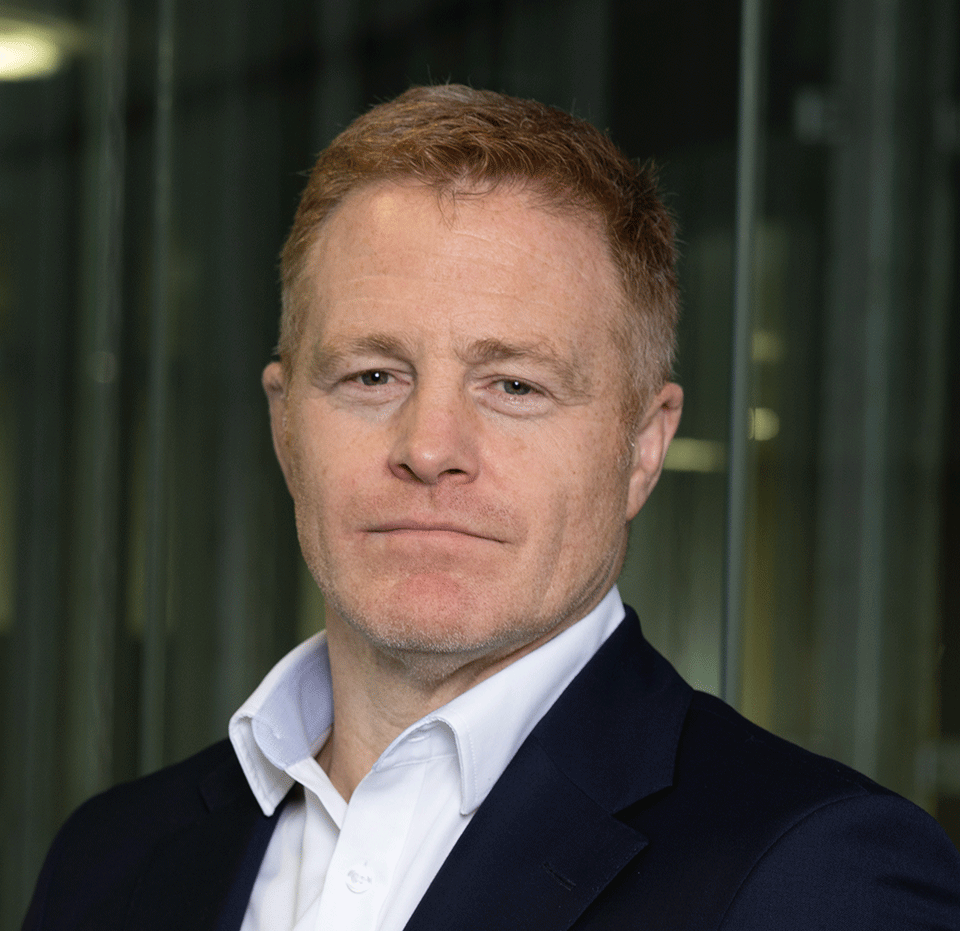
Yin Ke, vice chairman of Citic Securities and CEO of Citic Securities International, says the plan in the long run is for Citic Securities International and CLSA to serve clients as one platform in Hong Kong. ECM and research & institutional sales have already been integrated and more business lines will follow this year. But some of the main rewards of integration are still to come.
“If you ask which area a Chinese investment bank needs to develop, it’s the back office and the mid-office with technology,” adds Yin. “We have a huge market in China, but as an investment bank, we are far behind our global peers in things like risk management and trading technology, maybe 10-20 years behind. CLSA has a very decent client servicing system. They have a view about how we can build our trading technology in the long run.”
Closer integration seems an inevitable part of the new relationship between the firms, but Yin also stresses his admiration for the deep roots that CLSA has laid down in local markets and sees this as a preferable to the practice among some investment banks of regularly moving personnel around the world — something that is likely to be well-received at the firm he has just acquired.
While the eventual completion of the transaction took time to come to fruition, strong relations between the companies had been building for some time, laying the foundations for what would eventually be the formal tie-up. “The senior people at the Citic Group level, not just Citic Securities, have known the CLSA senior people since back in the early 80s,” says Yin.
The familiarity between the companies over decades rather than years goes a long way to explaining Citic’s comfort with making a move considered by many to be breaking new ground for a Chinese firm. But despite the existing closeness between the target and acquirer, it didn’t always seem certain a deal was destined to transpire.
“To start the conversation over the acquisition, we approached the shareholders of CLSA in Paris, but there was no real intention from them to sell at first,” continues Yin. “Over the months and years, they proposed several complicated structures to us on a sale, which is why we spent a lot of time thinking about it. But we were happy to be patient.”
The patience Citic showed in its pursuit of CLSA finally paid off when it took full control of the company and could take advantage of its new status as a strong regional player, fostering new links that were previously more difficult to forge. “Our issue was, as a typical Chinese SOE, how would we build trust outside our own market?” asks Yin. “CLSA has very good local connections in places like southeast Asia, so we have used that to introduce senior management from Citic group to people in those markets.”
Citic Securities’ need to build a larger presence further afield is in stark contrast to the position it holds in the domestic Chinese market, where it operates as a full-service investment bank and regularly ranks highly across a wide range of banking businesses. But this domestic business, no matter how impressive, was always going to be restricted by its lack of a strong international capability. The purchase of CLSA solved this problem for Citic and opened up a valuable window onto the global financial system.
Crucial step for China
The man responsible for spearheading the deal within CLSA was chairman and CEO Jonathan Slone. Slone knows CLSA inside and out, having first worked for the company in 1988 in regional research.
The working relationship between Slone and Yin is clearly strong and something that Yin highlights as important to the success of the venture. “Both Jonathan and myself work closely together, cooperate well and have the same strategy, common vision and values,” says Yin. “I think we have a very good relationship, not just in terms of deals, but also in terms of sharing our cultures. It is not easy but we are confident and appreciate the efforts of each other.”

|
|
China is the second largest economy in the world. It is unnatural for them to have the low level of representation in the global marketplace that they do. If the last 25 years has been about mercantilist China, the next 25 years will be about financial China and I expect that Chinese institutions will take their natural place alongside other large economies and their institutions
|
Slone sees the takeover as a crucial step for China and its place in the financial world. “China is the second largest economy in the world,” he says. “It is unnatural for them to have the low level of representation in the global marketplace that they do. If the last 25 years has been about mercantilist China, the next 25 years will be about financial China and I expect that Chinese institutions will take their natural place alongside other large economies and their institutions.”
Slone saw Citic as the right partner. “Their business is not that complicated. They are not taking huge risks; they are not on the edge of the envelope by any stretch of the imagination. They run a very strong and extremely clean business and that’s where they would like to see us.”
That said, one of Slone’s first challenges once the deal went through was to counter scepticism around the transaction. That was evident not just in the wider market, but also from some within his own firm.
According to Slone, scepticism is part and parcel of CLSA, and he seems in no hurry to discourage that characteristic.
“If I tell people at CLSA that I am going to take them for lunch tomorrow, they’ll be sceptical,” he says. “This is a bunch of sceptics. If I say ‘ok everbody, we are going right’ their first view is let’s take a left and see what happens. So we don’t hire people who are going to march in line and I never expect people here to. They are always sceptical of what we do. It’s just the nature of our culture.”
The differing culture is much admired in Hong Kong financial circles and beyond, but at the same time was seen as a deterrent to potential suitors. Its analysts are known for pulling no punches and highlighting research angles that may have been missed elsewhere. The company was founded in 1986 by two former journalists, something that no doubt contributed to the company’s culture of probing deeply and critically into subjects on behalf of its clients.
It also has a reputation for brashness that few thought would sit well with a Chinese buyer. CLSA is well known for having the liveliest box at the annual Hong Kong Sevens rugby tournament, an event distinguished by its raucous behaviour.
And this is the firm whose annual Investors Forum in Hong Kong is a must-have ticket, not just for the presence of many leading analysts and fund managers, but also because of its hired-in celebrity speakers. Guest of honour at the 2014 event? The Governator, Arnold Schwarzenegger. And the world’s current top-selling pop star, Katy Perry, performed at the 2012 forum gala in a costume carrying CLSA’s distinctive blue and yellow colours.
But even its detractors acknowledge that CLSA has strong foundations, having built its reputation as an Asia-focused cash equity broker and has also historically maintained a strong ECM business, but since being acquired by Citic it is growing its corporate finance offering into debt and M&A.
“At the time when Citic bought us, we were a very monoline product in cash equity research,” says Slone. “And if you look at the marketplace, cash equity research is a smaller and smaller piece of the available pocketbook. So now we are moving into leveraging our research into more parts of the pocketbook; it’s a very natural thing.”
While Slone does not want to put exact figures on how the pie will be divided up between business functions in the future, there is a clear aim to grow in some of CLSA’s more non-traditional areas. “In terms of percentages, there’s no target… we do however, want to go where the fee pool is and we are under-represented I would say in corporate finance, M&A, and related areas. So, I would like to get more of the market wallet there. I would like our share of wallet in all of the businesses we go into to be commensurate with what our market wallet is in cash equity broking, which is a business which we execute at a reasonable scale.”
If it can achieve anything like that scale in capital markets or advisory, then Citic/CLSA will be a force to be reckoned with. In our sister publication Asiamoney’s 2014 Brokers Poll, CLSA collected a number of top rankings. These included having the best research teams for strategy, quantitative and technical analysis, and being the best firm for execution in markets as diverse as Hong Kong, India, Indonesia, Japan, the Philippines and Thailand.
Equity capital markets
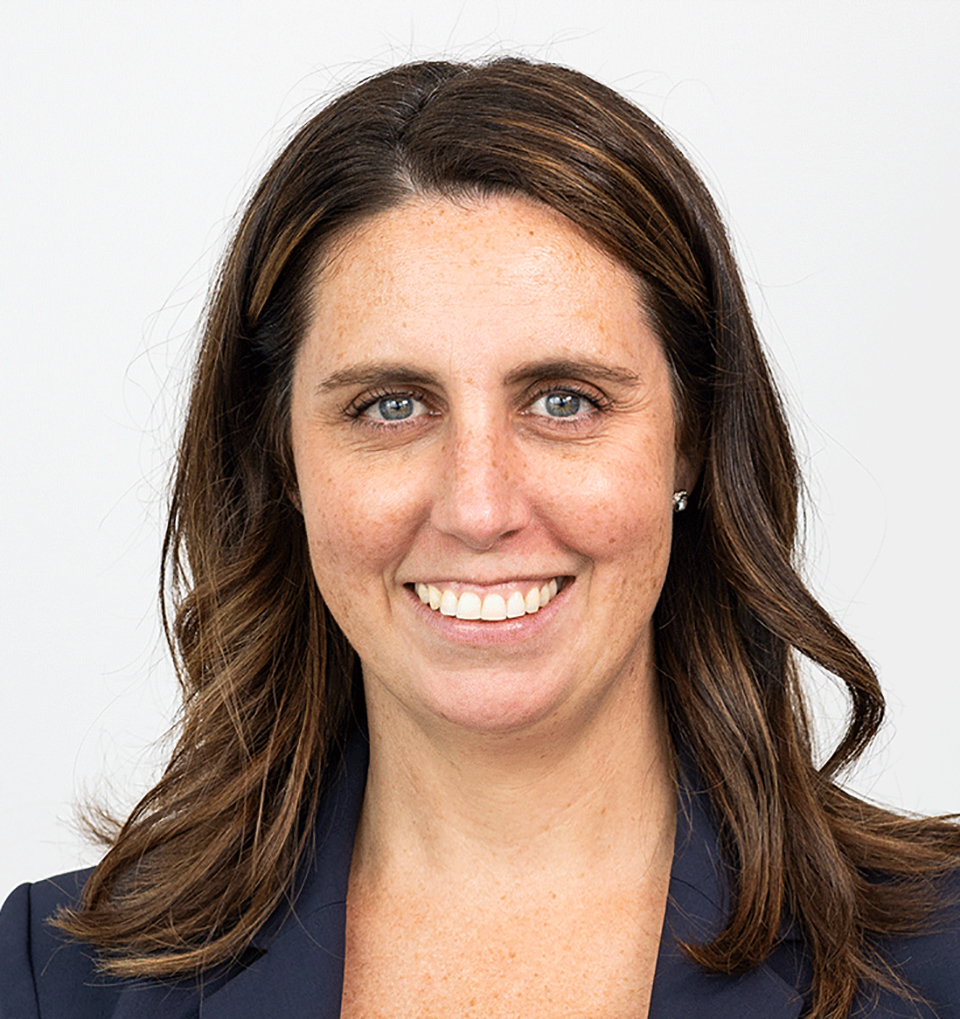
Overseeing the combined banking teams of CLSA and Citic Securities International is former Macquarie banker, Andrew Low, whose remit encompasses M&A, ECM, DCM and corporate advisory. Low sees the M&A and DCM businesses as an opportunity in terms of available revenue, but highlights the strength of the existing ECM business as something that can be built upon.
“One of the things that CLSA has always done very well is secondary market placements because the firm just has such a strong grasp of where the market is and where the stock can be placed and obviously the research analysts are so well-respected,” says Low. “So you would naturally expect a lot of that traditional strength in follow-ons in Hong Kong, Asean and India to start to extend to markets where the broking business has developed more recently.”

|
|
Citic Securities pre-eminent position in the domestic market obviously gives you a degree of insight and access to potential buyers that others don’t have Andrew Low, CLSA |
But building the ECM business will not be easy and some in the market are reserving judgment on how successful the combined firm can be. “I have lot of respect for CLSA as a broker, but it remains to be tested in ECM,” says one senior Hong Kong-based banker at a bulge bracket firm. “China is going to be interesting for them. The question is, will having a balance sheet help them in the rest of Asia? I’m not sure they have all that is required to go in and impress the clients…these things take a lot of time.”
The push by Chinese firms out into the world through acquisitions is a trend that Low sees as one of the company’s niches, and somewhere it can capture a good share of the revenues on offer. The fight for investment banking business from Chinese corporates is always fierce and local connections and reputation can be key when pitching for a deal, so CLSA’s new relationship with Citic will no doubt be helpful.
“It’s not just advising Chinese companies on things elsewhere, but it’s also working for companies that might be in Indonesia or Australia or the UK who are selling their business and feel that the natural buyer or one of the potential buyers is a Chinese firm,” continues Low.
“Citic Securities’ pre-eminent position in the domestic market obviously gives you a degree of insight and access to potential buyers that others don’t have. But equally we recognize that in terms of the execution capability in a number of other parts of the world, we are not yet at the Wall Street standard in every market we need to be.”
The edge that the company has in China-related business is something that could also translate into DCM, a business that Low admits still has a lot of upside as a proportion of the revenue.
“At the moment, most of the deals have been China-focused and at the high-yield end,” he adds. “But we have started to do more in India and south-east Asia.
Along with developing individual business areas, Slone is also keeping an eye on possible expansion opportunities, although he doesn’t envisage the geographical composition of the firm shifting all that much. CLSA currently has over 1,500 people located in 21 cities across Asia-Pacific, as well as Europe and the USA.
“We are expanding in the US,” says Slone. “We are expanding in Australia. Those are two very young businesses for us. We don’t wake up every morning saying ‘we’ve got to buy something’. We wake every morning and say ‘how are we going to build our business and service our clients better?’”
“We are opportunistic…we are not acquisitive for acquisition’s sake. You look at the risks involved. You look at the execution risks of executing your business plan versus buying somebody else’s business and integrating that business.”
Something that Citic spent some time doing before it bought CLSA. And, so far, it seems like it was a good opportunity to take.