Even by Petr Kellner’s own high standards, 2013 was a busy year. The acquisitive Czech billionaire – whose business empire has in the past decade grown from humble beginnings in banking to span sectors as diverse as mining, retail and biotechnology – began 2013 by raising €2.5 billion from the sale of his stake in a joint venture with Generali to the Italian insurer.
That was promptly followed in late January by the purchase of a €2.6 billion stake in Slovak gas distributor SPP by EPH, the Czech utility controlled by Kellner’s investment company, PPF Group. Then, in November, central Europe’s richest man finally achieved his ambition of entering the Czech telecoms market when PPF secured a controlling stake in the country’s largest operator, a deal that carried a price tag in the region of €2.5 billion.
Taken together, the three deals amount to more than 10% of expected total announced M&A activity – estimated to reach around €60 billion by end-December – in central and eastern Europe (ex-Russia) in 2013.
What is most notable about the transactions, though, is less their scale than the fact that they illustrate what M&A bankers are calling the dominant theme in CEE last year: the withdrawal from the region by western European strategic investors and their replacement by local buyers. The SPP stake was sold by E.On and GDF Suez, while Kellner’s Czech telecoms purchase was made possible by the exit of Spanish company Telefónica.
This continuing exodus has been partly prompted by a reassessment of CEE’s potential for growth, given the persistent macroeconomic weakness in the region six years on from the financial crisis, but is also part of a broader move by western European firms with international holdings to refocus on core markets and rebuild balance sheets.
Taken in conjunction with still relatively high returns on equity and a burgeoning local buyer base in stronger markets such as Poland and the Czech Republic, this makes CEE assets “obvious candidates for disposals,” says Artur Tomala, head of investment banking in Poland and director of Goldman Sachs International Warsaw.
On the buy side, local acquirers have included state-owned firms as well as oligarchs such as Kellner. In February, Polish state-owned energy firms PGE and Energa paid more than Z1.8 billion ($583 million) for the local wind-power arms of Spain’s Iberdrola and Denmark’s Dong Energy; in June banking market leader PKO BP won the bidding for Nordea’s Poland unit.
Renationalization was also in the mix, as political pressure over rising energy prices prompted two regional governments to bring utilities back into the public sector. In March, Hungarian public-sector energy firm MVM acquired E.On’s gas storage and distribution units in the country for €870 million. Six months later, Slovakia’s incoming centre-left administration opted to regain full control over SPP’s indebted gas-importing business (leaving EPH with a 49% stake in the firm’s profitable infrastructure arm).
 |
| A corporate financier’s dream. Petr Kellner had a busy 2013. First he sold his stake in General, then he bought SPP |
Local buyers have not had it all their own way, however. Kellner secured SPP, but on the other big Czech energy deal of the year – the sale of gas pipeline operator Net4Gas by RWE – he lost out to a pair of international buyers. In a deal that highlighted the growing reach of institutional investors, German insurer Allianz and the infrastructure arm of Ontario Municipal Employees Retirement System won the bidding process with an offer of €1.6 billion. What is more, not all sales by western European investors have signalled a retreat from CEE – in some cases they have rather reflected a “resetting of priorities”, says a CEE financier at Deutsche Bank. This was particularly evident in the financial sector, where CEE’s biggest banking players took advantage of regional exits by other western European houses to bulk up their stronger subsidiaries, while at the same time pulling back from less profitable markets.
Thus Société Générale sold out of Belarus but boosted its Serbian presence via the purchase of the banking assets of KBC (although not the Belgian group’s banking licence in the country, which again went to Telenor), while UniCredit’s exit from Kazakhstan in May came hard on the heels of its purchase of Royal Bank of Scotland’s retail portfolios in Romania. The Italian group was also one of several unsuccessful bidders for Rabobank’s Polish subsidiary, BGZ, which was sold in December to BNP Paribas.
Similarly, in the TMT sector, Deutsche Telekom disposed of the Bulgarian units of its Greek subsidiary OTE in April – to Norway’s Telenor – but then reappeared on the buy side in November with the €546 million purchase of Warsaw-based telecoms services provider GTS Central Europe.
Highlighting another of 2013’s key themes, however, the seller in the latter deal was not a western European strategic investor, but a consortium of private equity firms, comprising three US houses – HarbourVest Partners and TMT specialists Columbia Capital and M/C Partners – as well as local Polish player Innova Capital.
Private equity exits also provided the driver for two more large TMT transactions towards the end of the year, namely the €1 billion sale of Balkan pay-TV and broadband provider SBB/Telemach by regional specialist Mid Europa Partners to KKR and the acquisition of Polish broadcast infrastructure firm Emitel from Montagu Private Equity by investment fund Alinda Capital Partners. The purchase price for the latter was undisclosed but was estimated to be around €840 million.
Meanwhile, the interest of buyout firms in CEE’s growing healthcare market was intensified by a pair of successful disposals. Poland’s largest private healthcare provider, Lux Med, was sold for €400 million to the UK’s Bupa, again by Mid Europa, and Malaysian sovereign wealth fund Khazanah Nasional Berhad paid Dubai’s Abraaj Group $252 million for a 50% stake in Turkish health insurer Acibadem Sigorta.
These signs of health in the M&A market last year, however, have done little to cheer corporate financiers in CEE, many of whom are more focused on the number of deals that are not coming to completion than on the ones that are – a proportion that some put as high as 50%. As Tomala at Goldman Sachs notes: “Historically the pipeline has been a good proxy for future activity, but in the past 18 to 24 months it has become clear that the dynamic has changed. Processes are taking longer and the potential risk of a deal not going through is relatively high.”
All agree that, in contrast to the immediate post-crisis years, this is not for want of funding. Not only are western European banks gradually recovering their appetite for exposure in CEE, but in addition very high liquidity in local markets – a consequence of high regulatory requirements and restrictions on the repatriation of dividends from bank subsidiaries to their western parents – mean that many deals can be financed within the region.
Piotr Chudzik, managing partner in investment banking at Warsaw-based boutique firm Trigon, says Polish banks can provide financing for any deal under €1 billion, while bankers involved in the transaction report that the majority of PPF’s acquisition of Telefónica Czech was financed by local lenders on what one describes as “very favourable terms”.
Tomala notes that, high liquidity notwithstanding, local buyers and private equity firms can at times still struggle to put together financing structures that will give them sufficient leverage to both win auctions against strategic investors – which will likely have lower costs of capital and can count on future cost synergies – and achieve their desired returns.
Fortunately, while local lenders may be uneasy with more structured deals involving mezzanine financing, several of the bigger regional players in CEE – notably UniCredit, Raiffeisen, ING and Commerzbank – combine local expertise with a strong focus on leveraged finance at the parent level.
In addition, high-yield bond investors have recently shown an increasing degree of comfort with acquisition risk from even the remoter corners of emerging Europe. November saw the launch of a €475 million bond by Serbia Broadband (SBB), as part of the funding for its takeover by KKR, and a €400 million deal from Bulgarian telco Vivacom, sold to refinance bank debt taken on when the fixed-line operator was acquired in late 2012 by local lender Corporate Commercial Bank and Russia’s VTB Capital.
In short, it is not lack of cash that is preventing deals getting done, says Krzysztof Rozen, head of corporate finance for KPMG in Warsaw: “I am confident that I can find financing for almost any deal that’s reasonably structured and makes commercial sense at the moment.”
The problem, he says, is the persistent failure of buyers and sellers – particularly those that entered the market pre-crisis – to agree on valuations. “Sellers are still waiting for quite rich pricing, but buyers aren’t seeing the fundamental justification for those levels – and it’s definitely a buyers’ market so they are negotiating very aggressively.”
Piero Munari, global co-head of corporate finance advisory at UniCredit, agrees that valuation gaps in many markets are still the biggest hurdle to deal closure in the region – a situation that he notes has not been improved by rising political risk in countries such as Turkey and Ukraine over the past 12 months.
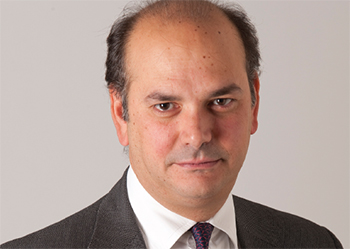 |
| Piero Munari, global co-head of corporate finance advisory at UniCredit |
All this explains, adds Rozen, why much of the M&A activity in CEE in the past two years has been driven by either forced sales – whether timed private equity exits or European Commission-mandated disposals, such as those by KBC following its government bailout – or fundamental changes of strategy by parent companies. Whatever the drivers of the reduced volumes and low deal closure rate, however, they are clearly bad news for advisers in the region – particularly as the market is, if anything, getting more rather than less crowded.
Despite often severe headcount reductions, the bulge-bracket and global banks have maintained their commitment to CEE, but are facing increasingly aggressive competition from the ‘big four’ professional advisers, new investment bank players looking to break into the region, and a rapidly growing cohort of local boutiques in bigger markets such as Poland, the Czech Republic and Turkey.
This is inevitably putting pressure on fees, as an expanding universe of advisers chases fewer deals, new entrants slash prices to gain a toehold in the market, and smaller local players use their lower cost base to undercut larger rivals. “It’s a tough industry and it’s getting more competitive every year,” says Francisco Abularach, head of M&A for CEMEA at Citi.
This in turn has prompted a renewed focus across the advisory spectrum on identifying and playing to individual strengths. Bulge-bracket banks such as Goldman Sachs and Citi emphasize their global reach, while the big CEE players are increasingly working to leverage their regional corporate client bases. As Munari at UniCredit notes: “Clearly the boutiques have more flexibility in terms of fees, so we are looking to differentiate ourselves by working with those companies that we finance through our various entities and that are the backbone of these entrepreneurial countries.”
Meanwhile, professional advisers and boutiques stress their independence – an attribute that is increasingly valued by clients that had bad experiences with the one-stop-shop approach in the post-crisis period, says Rozen – and the locals also point to their ability to pick up clients at a much earlier stage of their development.
“What differentiates us from the global investment banks is that we can engage very early with Polish entrepreneurs and stay with them throughout their development process,” says Chudzik at Trigon.
As he notes, Trigon has been involved in some of the largest deals of the past decade in CEE thanks to its long-standing association with Polish billionaire Zygmunt Solorz-Zak, who in 2011 acquired mobile operator Polkomtel for Z18.1 billion in a leveraged buyout. In another example of the growing ambition of local entrepreneurs, Solorz-Zak subsequently opted in November last year to consolidate Polkomtel into Polish TV services market leader Cyfrowy Polsat, in a Z6.15 billion transaction that created one of the region’s largest integrated media and telecoms companies.
Trigon acted on both transactions alongside some of the biggest regional and global investment banks – and, although not all the latter might have been happy to share the fee pool with a boutique house, Tomala at Goldman Sachs says working with such firms can provide “a valuable symbiosis” for external players. “They can be very useful in helping us to understand the local dynamic,” he says.
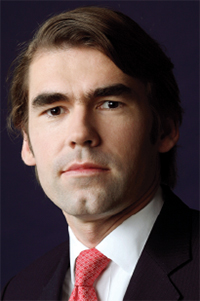 |
| Artur Tomala, head of investment banking in Poland and director of Goldman Sachs International Warsaw |
It is an experience that many more big banks might have to look forward to if, as Chudzik suggests, one of the key trends in regional M&A over the next couple of years turns out to be a second wave of CEE acquisitions by international firms – but this time of assets in the rapidly expanding private sector rather than out of state-owned portfolios. “We have seen an increasing number of Polish companies expanding their global reach to regions including the US, Latin America and Asia, and this is attracting the interest of both global private equity houses and strategic investors,” he says. Private equity firms, both global and local, are indeed widely tipped to reappear on the buy side in CEE following several recent rounds of fund-raising. According to KPMG analysts, just three regional buyout firms – 3TS Capital Partners, Abris Capital Partners and Enterprise Investors – had put together around €1 billion of funding by mid-November.
Preferred sectors are, unsurprisingly, expected to be consumer and retail, as well as – in the wake of the Lux Med and Acibadem Sigorta transactions – healthcare.
Bankers warn, however, that suitable targets for private equity firms are relatively thin on the ground in CEE, particularly given the limited exit potential offered by underdeveloped equity capital markets in many smaller economies.
“It’s difficult to find sizeable, viable projects in the region outside Poland and Turkey,” confirms the banker at Deutsche Bank.
Private equity buyers will also likely continue to find themselves shut out of financial services transactions by cautious-minded local regulators, says KPMG’s Rozen – although some market participants have recently suggested that they could play a role in resolving the deadlock in the banking sectors of southeastern Europe, where lenders are known to be up for sale, but are failing to find bidders because of soaring levels of impaired loans.
Even without that impetus, however, activity in the FIG segment is expected to be fairly brisk through 2014 as the reshuffling among strategic investors continues. Raiffeisen’s CEO, Karl Sevelda, indicated in November that the bank was looking to follow fellow Austrian lender Erste Group in exiting Ukraine, while Portugal’s BCP and Norway’s DNB are among those touted as possible sellers of Polish subsidiaries in the next 12 months.
What is more, while Poland’s long-running privatization programme finally looked to be nearing completion with the IPO of Energa in December, several smaller countries still have assets to dispose of, notably in the financial and TMT sectors. Croatian policymakers announced in October that bids had been secured from Erste and Hungarian national champion OTP for an outright sale of state-owned Post Bank (HPB), while local conglomerate Adris Group and Polish market leader PZU had made the shortlist for a 50% stake in the country’s largest insurer, Croatia Osiguranje.
A wave of financial privatizations is also expected in Slovenia following the expected recapitalization and restructuring of the predominantly state-owned banking sector this year.
The troubled Balkan state also looks set to make a second attempt at a sale of local telco Telekom Slovenije this year following the announcement in October that Citi had been appointed to act as adviser to the owner, the Slovenian Restitution Fund.
(A previous sale process was abandoned in 2008 because of the financial crisis, but not before attracting bids from Deutsche Telekom’s Hungarian subsidiary and a private equity consortium.)
Similarly, Serbia is this year expected to revisit the privatization of Telekom Srbija, which also failed at the first attempt after the only bidder, Telekom Austria, refused to meet policymakers on price. Recent indications, however, suggest that the Serbian government might opt for a public listing rather than an industry sale – a process bankers say might become increasingly common among private as well as state sellers if the flurry of primary ECM activity in the second half of 2013 continues into the New Year.
“The recent wave of successful equity placements has definitely prompted a renewed interest from sellers in re-engaging in the IPO discussion,” says Tomala at Goldman Sachs. “If equities remain buoyant then we might well see strategic or trade sales being converted into IPOs as sellers decide to opt for a relatively quick listing rather than initiating a lengthy M&A process that might end in failure.”
Nevertheless, he adds, he sees cause for at least “cautious optimism” for the corporate finance market in CEE over the coming two years. Others are less circumspect. “There’s a lot of untapped M&A potential within the region and activity levels will inevitably pick up as confidence continues to return to the region and concerns around the eurozone crisis continue to recede,” says Citi’s Abularach.
Munari at UniCredit agrees, citing the bank’s continuing investment in the mid-cap segment on the advisory side as proof of its faith in the market. “We believe strongly in the future of cross-border activity in CEE, both in terms of international investors looking to enter the region or local companies looking to expand,” he says.
By far the most positive prognosis, however, comes from Chudzik at Trigon. “We have seen a big uptick in the market in the past three months,” he said in early December. “There is huge optimism returning to the market, so we are looking forward to much more activity in the next three to four years.”
If that means the emergence of more ambitious local players in the mould of Solorz-Zak and Kellner, that will indeed be good news for corporate financiers across the region.


