
|
|
| OGX | |
| Value | $2,563 million |
| Date | May 26 2011 |
| Bookrunners | Credit Suisse, HSBC, Itaú BBA and JPMorgan |
| return to the Latin America Deals of the Year index | |
Away from the sovereign issuers there were many other impressive transactions, such as Petrobras’s $6 billion issue in January. But the outstanding deal was OGX’s debut $2.563 billion transaction. It was the largest high-yield offering by an emerging market issuer and it was the largest high-yield oil and gas offering. But more than this, it was an example of international capital markets delivering debt financing to the region’s vital energy industries and an excellent demonstration of the markets working with the issuer and its investment banks to deliver a mutually beneficial transaction.
Last January, when OGX mandated Credit Suisse, HSBC, Itaú BBA and JPMorgan it was still one year away from producing oil (which was scheduled for January 28 this year as Euromoney went to press).
“There was a general perception from all the institutions we dealt with that despite the fact that we were somewhat far away from generating revenues the investment proposition – and the fact that we had found a lot of oil and were well on the way to developing first production – would enable us to obtain a rating,” says Marcelo Torres, CFO of OGX.
The bond was needed to bridge the time between when it was issued and the end of 2013, which is when the company expects to begin to produce positive cashflows. “It is a very important deal for us,” says Torres. “The bond market was ultimately a great solution – it was big and deep enough and gave us the liquidity we needed – effectively as a bridge to the positive free cash which we will see at the end of 2013.”
 |
|
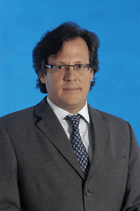
Marcelo Torres, OGX |
“Selling a credit that was not yet generating cashflows was a challenge – we needed to explain to both the rating agencies and investors what the concept was, what their plans are, what capex needs remained and what that capex is expected to generate,” says Roberto D’Avola, head of Latin American DCM markets at JPMorgan. “And at the same time you are raising a significant amount of capital, so I think those are all the things which made the transaction compelling.” But getting the agencies and investors on board wasn’t easy. Torres describes the five months leading up to the bond as “very intense work”. The rating agencies ultimately rated the deal B1/B+ but there is acknowledgement that the company could – if the business plan is fulfilled – be upgraded to investment grade within the lifetime of the bonds.
The unusual corporate story meant that price discovery was something of a journey into the unknown. The bond opened with whispers of mid-to-high 7% for the 2018 notes: “We thought it could have been anything from 7.5% to 8% as we approached the market,” says Torres. “A couple of days into the roadshow [around May 20 2011] things started to look bleaker in Greece and then the market got more volatile as we got into the third and the fourth days. Investors were coming back saying we need a little more yield. At the end of the day we ended up paying 50bp more than we were targeting but given the returns we will be able to generate, it wasn’t a problem. What was important to us was to secure the funding we needed to take us to positive free cash.”
Investors sought, and got, an extra no-call year and additional restrictions on future leverage. “We got feedback on covenants and terms and conditions which was a very constructive process – it showed a lot of people were interested,” says D’Avola. “It became a discussion with investors rather than just between the issuer and the bookrunners. It had to be very detailed as we needed to make sure the issuer was meeting the market – and vice versa – the covenants had to work for the company and fit with its growth strategy.”
Another interesting facet of the deal is that both high-yield and emerging market investors were targeted. Torres says there was an internal book among those working on the deal about which group of investors would take most of the deal. In the end it was close, but those betting on high yield won, with roughly 55% of the paper going to high-yield accounts and the remainder to emerging market investors.



