 |
|
|
Best M&A House: Goldman Sachs |
|
|
Also nominated: Morgan Stanley and Credit Suisse |
Another year, another furore over conflicts of interest at Goldman Sachs.
In March, Delaware Court of Chancery judge Leo Strine delivered a critical opinion in a suit brought by shareholders of El Paso alleging that the company’s takeover by Kinder Morgan had been tainted by flawed incentives for certain El Paso executives, reducing their determination to extract the highest possible price. Strine also noted that Goldman Sachs, while advising El Paso, owned a large stake in the acquirer and controlled two Kinder Morgan board seats, while the lead Goldman banker advising El Paso owned Kinder Morgan stock.
Goldman’s rivals rubbed their hands with glee at such an embarrassment for the firm, but it’s hard to see why. They can’t have been looking at the league tables.
Goldman increased its market leadership in the 12 months under review, advising on deals worth $740 billion, giving it an 18% market share, according to Dealogic.
It finished ahead of second-placed JPMorgan, which advised on $586 billion of deals for a 14.5% market share, and third-placed Morgan Stanley, adviser on $539 billion-worth of deals for a 13% market share.
That’s a big gain in a tough market where overall volumes are down. Goldman had ranked third in the global M&A rankings for the prior 12 months. It must be doing something right.
Gene Sykes, chairman of mergers and acquisitions at Goldman Sachs, says: “The league tables only partly reflect our performance. There are many situations where our defence work is valuable to clients, and I would point to our defence of Illumina against an opportunistic hostile bid from Roche as one recent example.
“Takeover defence is sacred for us as the highest form of advice. It tends to be very emotional for targets, and so is entrusted to the closest adviser that knows the management, board and operations the best. And we take pride that clients trust us when the stakes are highest. But often the outcome is no deal and therefore no league-table credit.”
He adds: “We also take pride in the number of deals we work on, which speaks to the breadth of our business.”
Dealogic has Goldman working on 406 deals in the 12 months under review compared with 350 each for JPMorgan and Morgan Stanley. And while some firms have cut headcount in M&A in the past year, Goldman has done the opposite.
 |
|
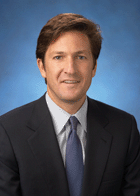
“We have brought more people formally into the M&A practice because, in difficult markets like this, clients really demand experience and expertise”
Gregg Lemkau, head of M&A for Europe and Asia, Goldman Sachs |
Gregg Lemkau, head of M&A for Europe and Asia, says: “We have brought more people formally into the M&A practice because, in difficult markets like this, clients really demand experience and expertise.”
The breadth of contacts that such a large M&A practice creates might regularly bring the risk of conflicts of interest, but that can also bring advantages. Goldman advised Nycomed, the Swiss generic drugs-maker – with a growing business in emerging Europe – and its owners, led by Nordic Capital, on the $13.7 billion sale to Takeda Pharmaceutical of Japan.
Lemkau says: “This was a company that had been owned for more than five years by the financial sponsors who wished to monetize their investment. Our global industry insight was important in helping identify the right buyer in Takeda and our cross-border execution expertise was critical to enabling our client to successfully negotiate a transaction.” At the time the deal was struck, it was the second-largest-ever foreign acquisition by a Japanese company.
In the US market, a growing driver of M&A volume is shareholder activism, and Goldman has been to the fore. Two years ago, it was on the opposite side to Kraft Foods, representing Cadbury in a controversial cross-border takeover. Now Goldman is advising Kraft on its announced decision to split into two. Kraft had some activists in the stock pressing management to present a growth agenda and Goldman helped the company review restructuring options and devise a spin-off to shareholders of the developing-markets business, while it retains the core developed-markets business. Shareholders will own two companies instead of one, and portfolio managers can choose which to underweight or overweight.
Michael Carr, head of M&A for the Americas, says: “As shareholder activism has become more prevalent, our practice advising companies in these situations has grown dramatically. This dynamic is a permanent part of the strategic and governance landscape and not necessarily a function of the current market environment.”
As for dealing with conflicts, Goldman, like the rest of the industry, is moving to full disclosure to clients of key bankers’ shareholdings. It is used to dealing with conflicts and claims often to turn down business because of them.



