 |
|
|
Best Global independent investment bank: Lazard |
|
|
Also nominated: Moelis and Ondra Partners |
Lazard’s future briefly appeared uncertain following the untimely death in 2009 of Bruce Wasserstein, the iconic deal maker who, as chief executive, had striven to unite the firm’s US, London and Paris-based partners. But under his replacement, Kenneth Jacobs, an M&A banker who has served the firm since 1988, Lazard has thrived. It ranked 10th in the global league table of M&A advisers for the year under review. Every firm above it has either a large balance sheet or large capital markets financing and trading businesses. Most of them have both. Lazard has neither.
It has to be good at advisory because, aside from its asset management business, it doesn’t have anything else to fall back on. Its annual advisory revenues come in at just over $1 billion, roughly half what Goldman Sachs earns. But at Lazard that accounts for 55% of the firm’s total revenues while at Goldman the contribution is only 6%.
Antonio Weiss, global head of investment banking at Lazard, is cautious of making too much of its independence from trading and taking principal positions. “Independence is of interest to clients but being capable is of greater interest,” he says. “The key difference between Lazard and the smaller independent firms is that the scale of our advisory practice is comparable to that of the integrated banks. We have strong domestic teams across Europe, the US, Asia, Asia-Pacific and Latin America. In today’s markets, it’s hard to advise a corporate client without a clear sense of its global opportunity set. And the way you get that wide market read is by advising internationally every day.”
He does not criticize the balance-sheet banks but rather commends their value. “We often go to financing banks on large acquisitions, because they really do use their balance sheets to support the M&A business strategically,” he says. “We will often advise clients to lock in the key banks early if they are looking at a multi-billion dollar or specialized financing.” He does allow: “It may prove difficult to negotiate the best terms on financing for a client, if you are providing the capital yourself. And clients know that.”
Weiss says there are times when the presence of lending banks obscures the extent of Lazard’s role in helping a client develop its thinking leading up to a deal and then in all aspects of executing it including organizing the financing, dealing with regulators and negotiating with the counterparty.
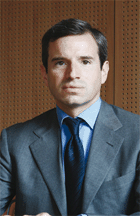 |
“Independence is of interest to clients but being capable is of greater interest” |
“We played a key role in transactions such as advising Qwest on the combination with CenturyLink, 3G Capital on the purchase of Burger King, OSI on its sale to Astellas Pharma, and ACS on its bid for Hochtief. Our teams are central to the highly complex combination of Wind Telecom with Vimpelcom, including related transactions to demerge OTMT and refinance debt.” As M&A revives, Lazard tends to prosper. It is noteworthy how many large mergers of equals there have been recently across industries such as airlines, utilities and telecoms – such as Qwest and CenturyLink and Continental Airlines merging with United. These are typically deals with very long lead times in which bankers are assisting in the construction of an entirely new company including advising on business plan, governance and stock market positioning. Lazard does a good share of those kinds of deals.
Lazard also does a lot of work with governments, in both developed and emerging markets. It advised the US Treasury on how best to exit its equity holdings in GM and its debt position in Chrysler. It is offering general advice to Greece, including on privatization, and is advising governments across Africa on setting up sovereign wealth funds, development banks and infrastructure funds.
Lazard faces stiff competition both from the large universal banks and from the more boutique-sized firms such as Rothschild, Evercore and Moelis, short-listed again this year. The latest new entrant that Euromoney hears good things about is Ondra Partners, the now two-year-old and 40-strong firm created by Michael Tory, Benoit d’Angelin and Michael Baldock. Euromoney hears from clients how much they like the firm’s proposition of charging a retainer fee to ensure continuing unbiased strategic advice that does not always inevitably lead to doing an M&A deal; the quality of insight and advice and the willingness to engage deeply over long periods. The firm does pick up discretionary fees as well for working on transactions.
One client sings Ondra’s praises for its advice on a transforming demerger. The outfit remains tight-lipped but apparently has the ear of a small number of very powerful chief executives at some very large companies, mainly in the UK and Europe. It’s one to watch.


