Two Buenos Aires private equity managers, DLJ South American Partners and Pampa Capital, plan this year to raise funds of up to $600 million and $500 million, respectively, highlighting the growing international interest in private equity in Argentina.
DLJSAP, a firm established in December 2006 by Credit Suisse’s Alternative Investments business and a team of Latin America investment professionals led by Carlos Garcia and Marcelo Medeiros, raised a fund of $700 million between 2007 and 2008, including money from co-investors. It was dedicated to Latin America and $100 million has been invested in companies in Argentina or that have a strong presence in the country. The new fund will again have a Latin American focus and invest in businesses in Argentina.
|
“Argentina’s private equity industry is relatively small. There are only five players that have assets under management” Carlos Garcia, DLJSAP |
|
|
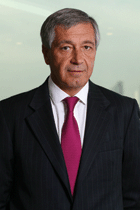
Founded in 2005, Pampa Capital invests in companies in the agribusiness value chain, primarily in Argentina and Brazil and selectively in Chile, Peru and Uruguay. During 2007, its Pampa Agribusiness Fund raised a total of $400 million. Its new fund, which started raising money at the beginning of January, will again focus mainly on agribusiness in Argentina and Brazil. “Argentina’s private equity industry is relatively small,” says Carlos Garcia, managing partner at DLJSAP. “There are only five players that have assets under management in the country. There are around 10 others that have a network of contacts, including high-net-worth individuals, and put syndicates together behind a deal. During the past few years, there has been an overall reduction in capital inflows into Argentina and that has affected private equity as an asset class as well.”
He adds that it is not easy to undertake private equity deals in the country because of bureaucratic obstacles. “However, Argentina is now attracting a lot more private equity interest from investors worldwide. The economy has been booming, with an annual rate of growth of 9% to 9.5%. There are also more regional groups, especially from Brazil and Chile, that are interested in acquiring in Argentina.”
Currency risk
Alejandro Quentin, founder of and chief executive at Pampa Capital, says: “The advantage of investing in the agribusiness sector in Argentina is that most aspects of the industry are priced in dollars. Commodities are sold in dollars, seed is purchased in dollars. Only labour is priced in local pesos. This means there is little currency risk. There are very few places in the world that offer the final returns that we seek and that do not involve a foolish level of risk. We do not use leverage and can have internal rates of return of more than 30%. During the last five years, the focus of international investors has shifted from financial assets to physical ones and that has helped Argentina, which has one of the largest areas of arable land in the world.”
In 2007, DLJSAP was part of a consortium, including Gavea Investimentos, a Brazilian private equity manager, that created Arcos Dorados to acquire the master franchise of McDonald’s restaurants in Latin America and the Caribbean (including Argentina) for $700 million.
DLJSAP also became the largest shareholder of Ebec, a leading educational company in Brazil with interests in Argentina. In July 2009, it acquired a 75% stake for $60 million in L’Equipe Monteur, an Argentine auto-parts manufacturer. Founded in 1990, the company specializes in thermoplastic parts and sells to companies such as General Motors, Mercedes-Benz, PSA Peugeot Citröen, Renault and Volkswagen.
Before setting up Pampa Capital, Quentin ran Adeco Agropecuaria (also known as International Farmland Holdings), a $140 million fund backed by Soros Fund Management, which invested in agribusiness. He says it made a 40% IRR. Pampa Capital’s investments in Argentina include Sursem, which produces and markets soya bean seeds, and Campo Austral, a prepared meats producer.
Advent International, a global buyout firm, has had an office in Buenos Aires since 1996 and has undertaken four deals in Argentina.
Attractive valuations
“Brazil has been receiving most of the private equity interest in the region,” says Juan Pablo Zucchini, a managing director at Advent International. “However, during the past two years, Argentina has been attracting more attention. Despite the country’s political uncertainty, it has had a fast-growing economy, up to 9% during some years. Its growth has outpaced all its regional peers. Furthermore, Argentine companies have lower valuations on average than their counterparts in Brazil and Mexico, and that makes them attractive to private equity investors.”
In April, Advent International announced the final close of its Latin American Private Equity Fund V at $1.65 billion. It will focus on control buyouts and expansion financing of companies across the region, investing mainly in Brazil, Mexico and Argentina.



