Nordea’s digital banking agenda was defined by a single, cross-Nordic codebase and a clear commitment to mobile-first banking. By completing a three-year consolidation that replaced 22 separate codebases and 42 front ends with one unified platform, the bank created a common mobile-and-web framework that now powers Nordea Mobile, Nordea Business Mobile and their accompanying Netbanks across four countries. More than 70% of all new functionality is rolled out simultaneously in every market, giving customers identical experiences and shortening time-to-market for new features.
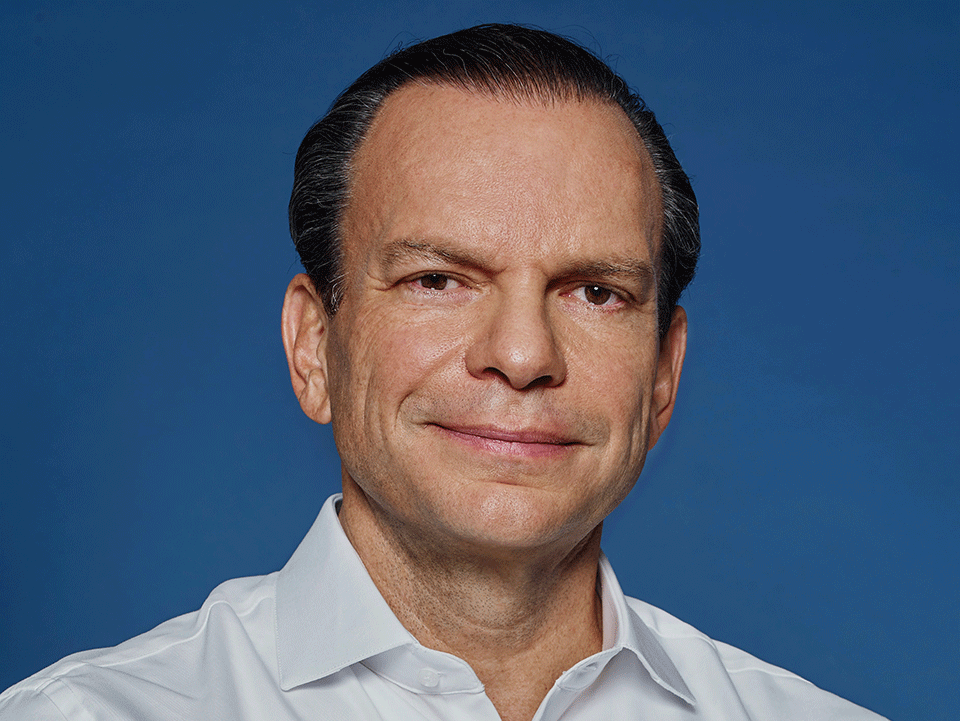
“A key milestone for us in 2025 was further strengthening our digital ecosystem to deliver a more connected and intuitive experience for our customers,” says Malthe Falck, head of Nordea’s Group Digital. “You have the bank with you on the go, making everyday finances easier while we offer more value-added services, personalised advice and guidance on top of those everyday financials.”
This model underpinned an unmistakable surge in customer engagement during 2025. Nordea closed the year with 5 million digitally active users, up 29% since 2021. Ninety-nine percent of all retail interactions now take place in digital channels. Monthly logins reached 135 million, while digital originations accounted for 70% of personal-banking sales and 44% of SME sales.
Additionally, customer endorsement kept pace with usage: average app ratings held at 4.4 for consumers and 4.3 for businesses. Personalisation also matured: the machine-learning engine delivered 1.6 billion context-aware insights in-app in 2025, nudging customers toward better-timed payments, savings top-ups and risk checks.

A key milestone for us in 2025 was further strengthening our digital ecosystem to deliver a more connected and intuitive experience for our customers
Malthe Falck
Product innovation focused on embedding finance into lifeevents and automating routine decisions. In Norway, fully digital onboarding flows for Fondskonto endowment insurance increased conversion by 50% and trebled sales in a year, while the new Individual Pension Account journey let savers invest up to NOK25,000 ($2,555) annually in a pre-built portfolio straight from the mobile app.
Swedish customers gained a hybrid pension planning module that blends a real-time simulator with two-hour call-back access to a human adviser, achieving a 50% completion rate. For families, the Nordea Family package shrank the time it takes parents to open a full banking suite for a child from 35 minutes to under three, adding a debit card, wearable payment wristband and the Gimi financial-education app at no cost.
Nordea also tackled friction in everyday credit and the home-buying journey. A rebuilt credit-card flow in Norway introduced instant know-your-customer checks and automated risk scoring, cutting manual effort by 80% and shortening the application by 30%. In Denmark, the bank inserted its mortgage “loan-promise” directly into real estate search portals such as Boliga, Boligsiden and Danbolig, so prospective buyers can compare financing without leaving the listing.
For SMEs, the emphasis was on cashflow visibility and delegated controls. The bank’s digital CFO module, branded Nordea Business Insights, now provides forecast dashboards, while new invoicing tools let entrepreneurs issue and chase e-invoices from within Nordea Business, and a granular user-management layer allows founders to assign role-based permissions. Corporate Access Lite migrated Sweden’s biggest ERP vendor to real-time file exchange, paving the way for full Nordic roll-out from 2026.