
DBS has built a global franchise around a simple idea: connecting gateway cities with a One Bank model and staying disciplined through cycles. Its strategy comprises four fundamental pillars – resilience, relevance, responsibility and reinvention – which translate into conservative underwriting, sector-specialist coverage and an ability to mobilise lending, markets and advisory teams across borders.
With operations in 19 markets and a dedicated focus on 10 priority geographies in Asia and beyond, the bank concentrates its efforts where most global real-estate capital actually trades. That focus has supported quality-led growth, with notable expansion in Australia, the UK and India, and a deliberate recalibration in parts of Greater China to higher-quality credits.
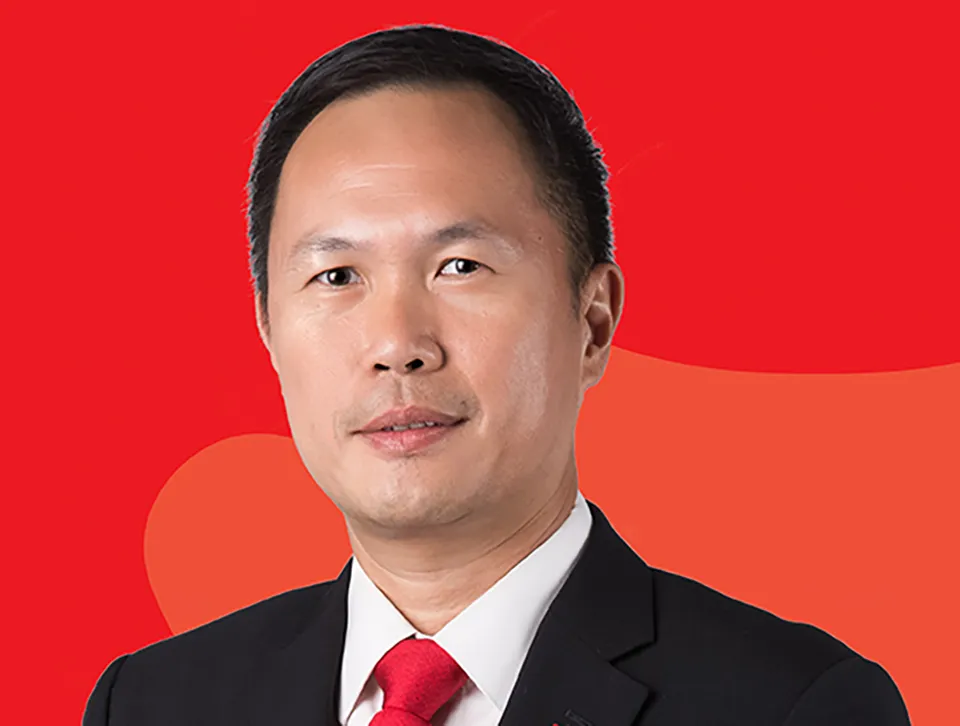
“In line with our longstanding strategy, we have been strengthening our presence in the global gateway markets as investors and customers continue to favour these same markets,” says Chew Chong Lim, group head of real estate and shipping, aviation, logistics and transportation. “This has positioned us well to originate and facilitate the cross-border flows through these markets.”
This consistency fosters trust, particularly in view of the uncertain macroenvironment, and allows our customers to operate with confidence
Chew Chong Lim
The connectivity thesis shows up in how DBS serves clients rather than in any single product. Real-estate specialists, averaging well over a decade of experience, work alongside capital markets, treasury, transaction services and private-banking teams to deliver the full capital stack, from bilateral loans and club deals to bonds, perpetuals and equity raises. The goal is consistency, where the same standards and risk frameworks in Singapore or Sydney apply in London or New York, enabling multinational sponsors and developers to execute repeatably across balance-sheet and market windows.
“We are committing further in building a single, consistent ecosystem that delivers a seamless connectivity experience for our customers as they invest and operate across markets,” says Chong Lim. “This consistency fosters trust, particularly in view of the uncertain macroenvironment, and allows our customers to operate with confidence.”
Through a period of rate volatility, softer transaction volumes and uneven recovery in parts of North Asia, the franchise has prioritised asset quality and portfolio selectivity while continuing to support clients in challenging markets. Growth in its asset book has been channelled into stable, liquid gateways – especially Singapore, Australia and the UK – while India and Japan have emerged as the next wave, where sponsors increasingly seek international structuring and alternative financing expertise.
Sustainable by design
DBS’s real-estate business also leans on capital markets leadership. During the review period, the bank ranked first for bonds issued by Asia (ex-Japan & China) real-estate corporates across all currencies, a clear demonstration of its role as an arranger that can access deep pools of liability-side capital when loan markets are tight. At home, it remains a dominant equity house, leading the majority of IPOs and follow-on fundraisings on the Singapore Exchange in recent years.
A second strategic strand is sustainability by design, not as an afterthought. Real estate accounts for a substantial share of DBS’s green-asset portfolio, which continued to expand over the review period. The bank also topped sustainable-bond league tables in Asia (ex-Japan) across 2024 and year-to-date 2025. Equally important was ecosystem building.
The bank launched its ESG Ready Programme, which helps mid-cap and small and medium-sized enterprise (SME) counterparties navigate decarbonisation with access to specialist partners, data and practical roadmaps. Internally, the bank measures its real-estate book against pathway-based emissions targets and reports progress annually, aligning commercial activity with sector-level transition goals.
On the digital side, DBS rolled out DBS Token Services, bringing tokenisation and smart-contract capabilities to transaction banking and opening the door to programmable, data-rich solutions that can benefit landlords and retail ecosystems. In addition, the bank has embedded generative-AI tools into underwriting and relationship-management workflows to accelerate credit analysis and improve client responsiveness, freeing bankers to focus on structuring, risk and cross-border execution.