A survey of 252 CFOs, treasurers and senior finance decision-makers in North America mid-sized corporates conducted on behalf of FX-as-a-service provider MillTechFX in May hinted at trouble ahead for the major FX banks.
The headline finding was that the vast majority (88%) of the corporates surveyed were looking to diversify their FX counterparties, concerned by the potential risks associated with having only one or two banking partners in the wake of the problems experienced by Silicon Valley Bank, First Republic Bank and Signature Bank.
Julie Ros, strategic adviser to the Foreign Exchange Professionals Association, acknowledges that there are pros and cons of working with a small number of banks, with the benefits of having fewer ‘mouths to feed’ and relationships to keep up having to be balanced against reduced competition when bidding out FX trades and fewer opportunities for research and other banking resources.
For those with the largest FX wallets, it is not uncommon to trade FX and related services with as many as 50 separate financial institutions
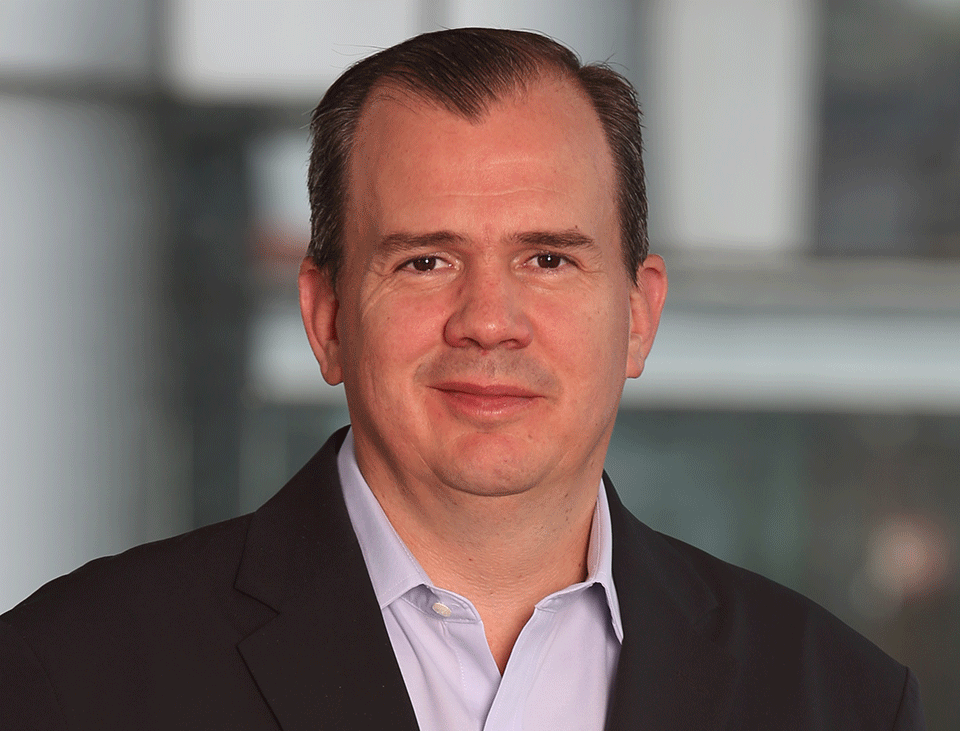
Richard King, Bank of America

“Clients who limit their banking partners benefit from not having to manage and divide their finite FX wallet across numerous counterparties, and in doing so they also become more comfortable asking for analysis, advice and bespoke content,” suggests Scott Sinawi, head of corporate sales, global markets Americas at BNP Paribas.
“One downside of working with fewer FX banks is greater concentration of counterparty risk, which can be managed by only trading with the highest credit quality banks and managing positions – and resultant exposures – across banks,” he adds.
Another possible downside is the potential for gaps in pricing certain currency pairs and structures, although this can be offset by working with banks that can provide liquid and competitive pricing in both G10 and EM FX products.
Corporates want to work with a manageable number of banks that they trust in terms of the advice they are giving and the execution they can deliver. For their part, each bank needs a sufficient share of their business to make it worthwhile.
But corporates also need to have relationships with enough financial institutions with sufficient credit capacity to ensure their FX requirements can be fully addressed and that they have the capacity to create some price tension.
That is the view of Richard King, head of EMEA corporate banking at Bank of America, who says the large European corporates he deals with will typically work with between 10 and 30 different banking partners.
“For those with the largest FX wallets, it is not uncommon to trade FX and related services with as many as 50 separate financial institutions,” he says. In this context it is not surprising that the MillTechFX survey found corporate treasury teams were spending almost half their time on FX-related matters.
According to King, large European companies have been much less impacted than their North American counterparts by the turmoil in the banking sector during the first half of the year. “The typical European corporate has been diversifying its banking relationships for a number of years and was much less exposed to regional US banks,” he explains.
Impetus
Comprehensive counterparty reviews pre-date the events of March 2023, agrees Sinawi, who says the global finance crisis was the real impetus behind corporates giving greater scrutiny to counterparty risk.
“The collapse of Credit Suisse – and to a lesser extent the US regional bank crisis – was just another reminder of the importance of maintaining a diverse, creditworthy group of FX bank counterparties,” he says.
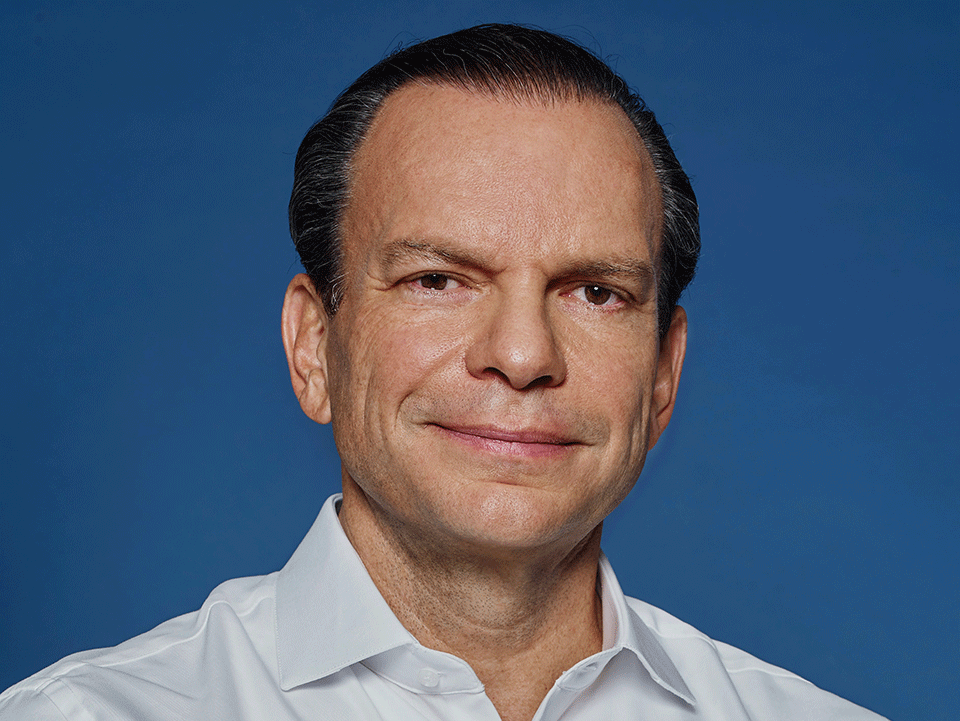
The collapse of Credit Suisse… was just another reminder of the importance of maintaining a diverse, creditworthy group of FX bank counterparties
Scott Sinawi, BNP Paribas
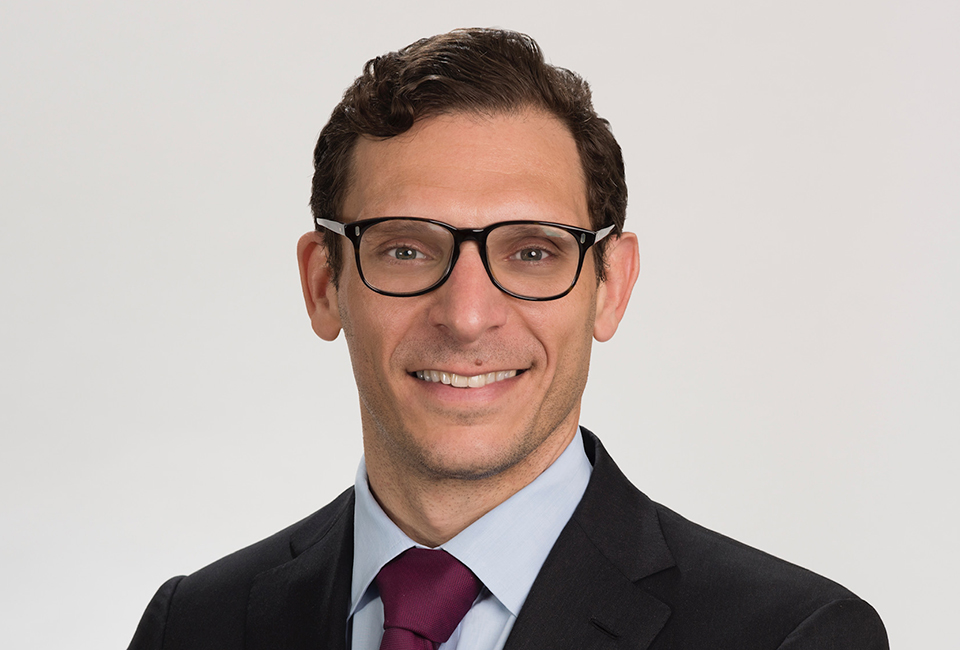
“In contrast to the cited research, we did not see the need from corporates to diversify or increase the number of FX banks they work with. Most of the corporate clients we see do not work with US regional banks for their FX hedging needs.”
The members of the Foreign Exchange Professionals Association noted an increased focus on ensuring that banking partners were global systemically important banks, rather than a desire to work with a larger number of banks, adds Ros.
Eric Huttman, CEO of MillTechFX, observes that diversifying counterparties has the added benefit of providing corporates with the ability to compare prices, aiding transparency and enabling best execution.
“Obviously more banks means greater competition, which can improve pricing for the client,” says Sinawi. “However, it may become harder for banks to justify the capital and human resources they need to expend on clients as a result.”
King describes the travails of the banking sector as a reminder of the importance of counterparty risk management, but adds that the major European FX banks remain strong in terms of capital and liquidity ratios.