
Elizabeth Warren was furious at the Senate banking committee hearing this May and her anger, not for the first time, was directed at Jamie Dimon, chief executive of JPMorgan Chase. Warren, a former Democratic presidential contender, accused Chase of being the biggest beneficiary of what she said were billions of dollars in overdraft fees charged by banks during the pandemic.
Jump to
“No matter how you spin it, this past year has shown that corporate profits are more important to your bank than offering just a little help to struggling families, even when we’re in the middle of a worldwide crisis,” the senator fumed, after Dimon flatly refused to refund the fees.
According to Dimon, Chase waived overdraft fees for customers under financial pressure because of the pandemic, but only if they asked for it. Warren’s choice of topic had added resonance and added irritation for the big banks because of the recently accelerating growth of new digital rivals. Many of these firms launched less than a decade ago and typically describe their mission as helping financially vulnerable Americans, precisely by doing away with things like overdraft charges and minimum balance fees.
Lifeline
In Europe, neobanks initially used social media to target a young but not necessarily poor or marginalized customer base. In the US, by contrast, they have much more explicitly set out to target less well-off people who struggle to engage with big banks. This includes a high proportion of minorities, who – as Warren pointed out to Dimon – pay a disproportionately large chunk of banks’ overdraft fees.
Chime, recently valued at $25 billion, says it is designed for the 80% of Americans living paycheck to paycheck. In other words, it’s targeting people who spend all their salary on living costs with little or no room for saving. One of its early differentiators, launched four years ago, was the ability to make salaries available two days before a traditional bank would by filling the delay through the clearing system between money being paid and when it lands in the employee’s account. It’s been a lifeline for some customers and has become standard for US digital challengers.
Free overdrafts are another key selling point for Chime today; something vice president for banking Aaron Plante compares favourably to the billions of dollars that big banks charge in overdraft fees. “We think our approach is more designed for their interests,” he says. “We think it’s more of a force for good for them and their financial lives.”
The big banks are not able to profitably serve Americans making less than $100,000 without charging those significant fees
Jason Wilk, Dave
Judged by the neobanks’ growing ability to take customers from the incumbents, the approach is popular. It could be politically useful too, serving to counter some of the lobbying power of the big banks. Getting a national bank charter, even today, is often prohibitively expensive for US digital banks. Unlike their peers in Europe, most US neobanks must piggyback on the licences of bank partners. They then get accused by Dimon and others of benefiting from a lower capital and compliance burden because they don’t have a licence of their own.
At Dave – as in David and Goliath – chief executive and founder Jason Wilk says, his firm was the first digital challenger to launch a free overdraft, offering $100 with a 90% approval rate using machine learning. While most peers, like Chime, have followed, he says big banks are still charging fees, even on a few dollars of overdraft, that can equate to an annual interest rate of as much as 17,000%. Better use of data, Wilk adds, allows Dave’s app to alert customers to bills that they might struggle to afford.
He cites a Federal Reserve statistic, which has attracted some controversy in the US, showing that 40% of Americans can’t afford a $400 emergency. “People who are looking for digital-first accounts, most of the early adopters, are the ones that are being most affected by fees and liquidity,” says Wilk.
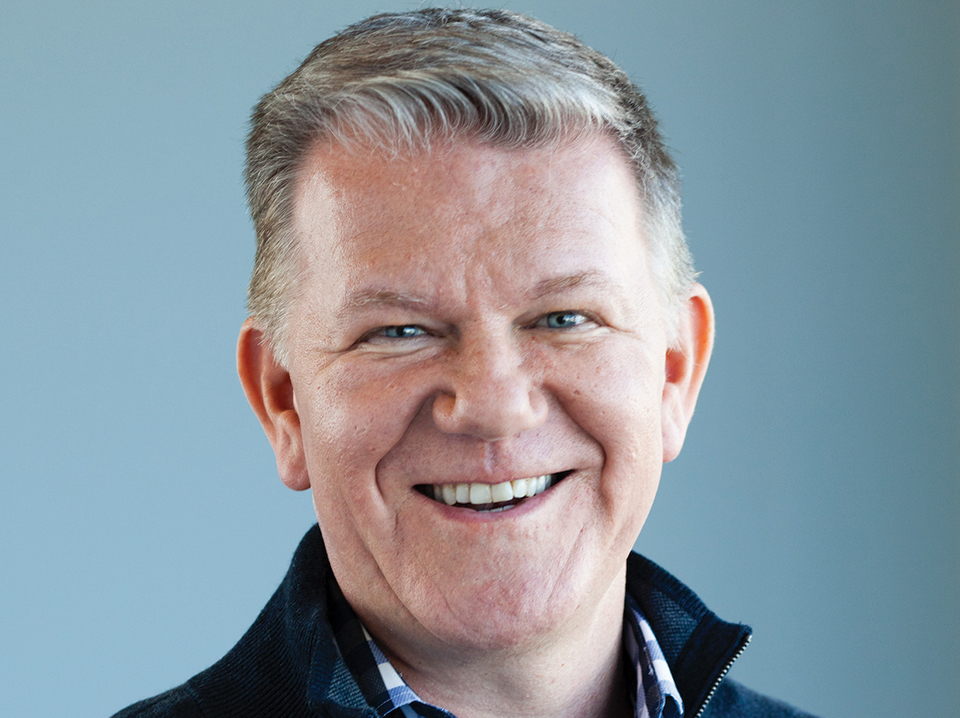
Colin Walsh, chief executive of Varo – the only nationally chartered neobank – cites a similar purpose behind his firm, which he says has become even more relevant as Covid has highlighted the huge economic disadvantages facing so many people in the US, especially minorities. Walsh says Varo customers usually have a bank account already. Their income is about average in the US, around $50,000. Yet given the high costs of healthcare and housing, it’s still difficult for them to gain any financial security.
“They want access to tools that are going to help them build wealth over time, but the system feels against them in terms of what’s available and the support they’re getting,” says Walsh, a former banker at Wells Fargo and Lloyds Banking Group.
“Having spent so many years working inside the incumbent system, it was pretty evident to me that it works pretty well for folks who have money, but if you don’t, you tend to not get the best help with problems you might be trying to solve around managing cash flow, starting to build savings habits, accessing affordable credit. All of these things are foundational pain points for people who are trying to climb what oftentimes seems like a very broken ladder.”
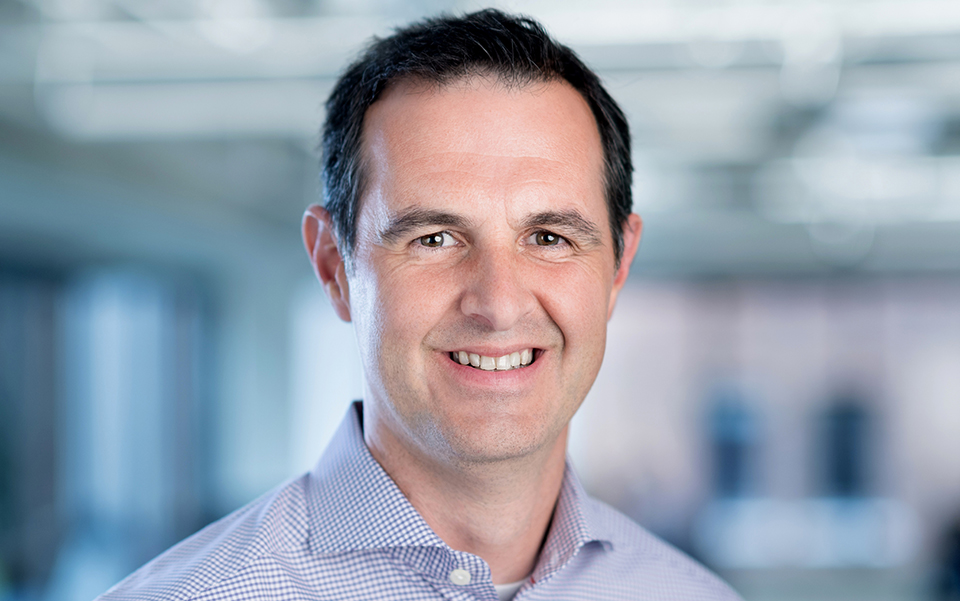
Upgrade is a rare example of a developed market consumer banking company focusing firstly on credit cards. It consequently targets a slightly older and richer audience than other US neobanks. However, according to chief executive and founder Renaud Laplanche, Upgrade’s approach is like that of Chime and others in that it offers a more affordable and responsible service, partly thanks in his case to securing cheap funding from not-for-profit credit unions.
Upgrade cards are unusual, Laplanche continues, as the balance turns into an instalment plan at the end of every month, much like a buy-now-pay-later product. “It’s not this revolving debt that you get into with traditional credit cards, where you make a monthly minimum payment and the debt never amortizes down, creating a never-ending debt trap,” he says.
Better value
Why are neobanks able to offer consumer financial services in a more socially responsible way? In the US and elsewhere, they can claim they are better value than incumbents – and therefore perhaps less predatory and more inclusive – largely thanks to much lower costs versus those of bricks-and-mortar lenders, which operate on old and expensive IT systems.
This is not specific to the US. Brett King, executive chairman of banking software company Moven, says the same applies to China’s WeBank and Nubank, which started off tapping an unexploited mass market for credit cards in Brazil. “These are customers in southern China and Latin America who were deemed untenable by traditional banks because they’re lower income and there’s not enough margin in the segment,” says King.

There’s a similar story in Africa, where telecoms companies have won plaudits for providing payment services to unbanked consumers and where full-service banks are more often the preserve of urban elites. Now African neobanks are seeking to use their cost advantages to take this to the next level. “We look for the best way to offer a service at the lowest cost and we do that by leveraging on technology,” says Babs Ogundeyi, founder and chief executive of Nigerian neobank Kuda.
Coenraad Jonker, founder and executive chairman of South African neobank Tyme, says of his home country: “Traditional banks have made incremental progress in serving poorer segments, but it’s very difficult for a conventional bank to do that because of expensive physical distribution infrastructure and the fact that they’re very people heavy.”
Big banks in the US also have much higher costs of acquisition than neobanks, says Vikas Shah, an investment banker at Rosenblatt Securities. Whether it’s from credit or fees, he says big banks like JPMorgan typically earn thousands of dollars per customer every year. Firms like Square – a US payments app that’s moving into small and medium-sized enterprise banking – might only earn about $120 per customer, yet the difference in the two firms’ acquisition costs is even greater, according to Shah.
Wilk compares Dave’s 170 staff to the hundreds of thousands working at big US consumer banks like Bank of America and Chase. “The big banks are not able to profitably serve Americans making less than $100,000 without charging those significant fees,” he says.
A cornerstone investor in another big US neobank agrees: “I think there’s a view of: ‘Let the neobanks have them,’” he says, referring to lower income customers. Getting publicly harangued over overdraft fees makes the big incumbents even less keen to serve people on lower incomes, he adds.
In the US there’s an element of regulatory arbitrage to all this, which has been tolerated up to now. In 2010 the Dodd Frank Act exempted banks with less than $10 billion in assets from new caps on the interchange fees they earn from merchants each time a customer uses their card. The so-called Durbin Amendment means neobanks like Chime or Dave, with more than 10 million users, can charge interchange fees that are twice as high as a mid-sized regional bank with a few tens of thousands of customers.
“We’re using that increased interchange for what it was designed to do, which was to help smaller companies compete against the larger incumbents and offer better products for consumers,” says Wilk. “It’s what allows us to keep prices low.”
In part thanks to the Durbin Amendment, US neobanks can build attractive business even while focusing on low-income customers, says one private equity investor. He admits it will become more of a problem for the big banks once they broaden their offering to products like car loans. Neobanks, moreover, do attract some higher income accounts.
“A lot of neobanks have started by addressing the unbanked and underbanked segment of the population. Slowly, because of convenience and budgeting tools, they are attracting the banked segment too,” says Shah.
Physical burden
As elsewhere in the world, there’s a debate in the US about whether neobanks are at an unfair advantage because of the incumbents’ official and practical obligation to maintain physical branches for those who still need them. Big banks naturally amplify that argument when it’s in their interest. Even so, it’s more urgent now because of behavioural changes, low interest rates and low loan demand – all accelerated by Covid – which make branches more of a financial burden.
Meanwhile, mergers between small and medium-sized banks are also on the rise on both sides of the Atlantic, potentially resulting in more branch closures.
At a time when the industry should be investing to transform itself, our pockets are not full
Gonzalo Gortázar, CaixaBank
In the eurozone, negative rates make it especially hard for banks to afford extensive networks of physical branches. “The traditional deposit-gathering activity of banks is heavily regulated and now loss making, thanks to rates that will remain negative over the long term,” complains Gonzalo Gortázar, chief executive of CaixaBank, Spain’s biggest domestic bank. “At a time when the industry should be investing to transform itself, our pockets are not full.”
Negative interest rates, in fact, were a big driver behind CaixaBank’s merger with Bankia, completed earlier this year. The merger came with a renewed commitment by CaixaBank not to withdraw from communities with no other bank branches.
But it’s not yet clear that the business and regulatory advantage of maintaining a branch network is enough to protect incumbents in Europe, especially when these banks’ retained earnings are so meagre that they lack the capital to invest in digital transformation – and when the neobanks are clearly adding value to consumers.
In Europe, neobanks generally target a more upwardly mobile social class. They’re nonetheless winning over thousands of current account customers with what is often a cheaper and higher-rated service, including things like budgeting tools. And it’s the sort of disruption that the UK Financial Conduct Authority (FCA) wants to support. That’s why the FCA and the Prudential Regulatory Authority set up a New Bank Start-Up Unit in 2016.
Revolut, Europe’s biggest neobank, has up to now lacked a banking licence in the UK, its biggest market. But most of Europe’s other big neobanks have licences. These include Monzo and Starling Bank in the UK and N26 in Germany. Revolut also has a licence in Lithuania, valid in the rest of the European Union. Now, however, there’s an increasingly important political question in the UK and elsewhere in Europe around the impact of branch closures on people who can’t get bank accounts and for those who, like many elderly people, find it difficult to use digital channels.
The UK government is working with the FCA on how to maintain access to cash. This includes legislation to make it easier for people to get cash-back from supermarket checkouts. The banks themselves are piloting shared-branch schemes. But according to reports, the new drive could involve the FCA blocking branch closures – provoking cries about the incumbents’ ability to compete on a level playing field. Although neobanks revenues and balance sheets are relatively small, as they have no branches to close, it could boost their cost advantages.

In effect, the government will require the incumbents to provide the basic and least profitable physical aspects of their business, thinks Richard Davies, a former UK HSBC executive and Revolut chief operating officer, now chief executive of Allica Bank – and the neobanks won’t have to. “Other players can cherry pick the most attractive customers while they’ve got almost a public service element,” he says.
“I don’t think there’s a huge amount of sympathy with the big banks. There’s a certain stage – you see it with Google and Amazon – where the new players suddenly got big enough that the government and regulatory clampdown happens. I think that’s still at least a decade off in fintech. They’d have to be loads bigger, dominating the market, whereas now they’re the people adding value and helping the customers, keeping the price down, making it easier.”
However, it is far from plain sailing. As they grow, US neobanks are already attracting the wrong type of regulatory attention. In July, Senate banking committee chairman Jerrod Brown wrote to the Consumer Financial Protection Bureau about ProPublica reports of Chime mistakenly closing accounts and freezing funds for potentially fraudulent activity. This could put some customers at risk of being unable to pay their bills or even of being evicted from their homes, Brown noted.
According to Chime, the closures came as part of a clampdown on accounts using funds from fraudulent federal stimulus payments and unemployment claims. But Brown flagged wider privacy, data and fraud risks associated with firms like Chime, including inadequate disclosures of the fact most are not actually banks. Politicians in Washington may be just as suspicious about the neobanks’ claims to be a benign force for those on society’s periphery as they are about the incumbent banks’ claims that they prioritized vulnerable customers’ wellbeing during Covid.
“I think regulators now understand that players like us can play a purposeful role in the system by being able to profitably serve millions of consumers that the banks struggle to serve because they struggle to make the economics work,” concludes Walsh. “But whether they’re going to change their posture and make it easier to license these innovators remains to be seen.”
The battle for a bank licence
State regulators in the US have fought hard against new federal financial technology banking licences that might give the sort of leg-up to fintech offered by the UK’s FCA and others.
A firm like Chime is arguably well past the point at which it should be financially better off running its own balance sheet. Moven, which previously had a consumer-facing neobank operation, calculated that point at about five million customers. Speaking to Chime’s Aaron, however, there appears little chance of it applying for its own national bank charter – despite it having become one of the country’s biggest bank account providers – unless the US makes it easier for fintech firms to get licences.

As things stand, industry insiders say getting a national bank licence can take much longer in the US than in places like the UK, Singapore and Australia, and the cost – such as the capital you need to set aside – tends to be much greater.
“You’re going to be looking at least $5 million,” says Brett King, executive chairman of Moven. “It assumes you’re building an entire bank built on branches and so forth, so you’re going to have raised $50 million or $100 million in cash, not $20 million or $30 million, where you’re taking 30% of your funding just to apply for a banking licence.”
US fintech players such as Moven and more recently SoFi and Lending Club have tried to get charters by buying small, licensed banks. But that can run into problems with the Community Reinvestment Act (CRA), reform of which has stalled due to partisan disagreement. Congress passed that act five decades ago to ensure banks didn’t stop lending in low and middle-income areas – partly through giving supervisors the power to stop branch closures.
“When we tried acquiring banks in the US as Moven, the federal regulators told us very clearly that we must maintain the branches of the banks we were acquiring, but as a digital bank we had no interest in running a branch network,” King explains, saying officials cited the 1977 act as the reason.
Ultimately, according to King, the much greater difficulty of securing a licence in the US compared with Europe is down to the lobbying power of big banks in the US. “If there was a fintech charter on its own, it would essentially say fintechs could operate without the CRA requirements, whereas other players in the US would still be subject to it,” he says. “We kept coming up against this issue of it being a level playing field: fintechs shouldn’t be able to operate in the US without bank branches and without the capital adequacy requirements that traditional banks have.”
Standoff
Others in the industry agree there’s a sort of standoff, with traditional US banks arguing they shouldn’t have to operate branches in unprofitable areas if fintech players don’t have to.
Colin Walsh, chief executive of Varo, argues that the US regulators’ attitudes to challengers are different to the approach taken in the UK, for example, partly because the industry is still relatively fragmented in the US. The UK’s regulatory landscape, he notes, is a creature of the post-2008 environment, with the FCA being set up after mergers such as the one between Lloyds Bank and HBOS. “The US had many more banks to start with, so regulators didn’t feel the need to introduce a lot of new competition,” Walsh says.
Nevertheless, he readily admits that getting a charter is a long and difficult journey for US firms. “The reality is you have to build confidence and get approval from the OCC [Office of the Comptroller of the Currency]. You’ve got to get approval from the FDIC [Federal Deposit Insurance Corporation]. You’ve got to get approval from Federal Reserve. Those three regulators don’t talk to each other very often, so you’re going through multiple paths and they’re somewhat sequential in nature. You’ve got to build the technology and the risk and control infrastructure. You have to hire the executives and the right board, and you have to raise the capital.”


