
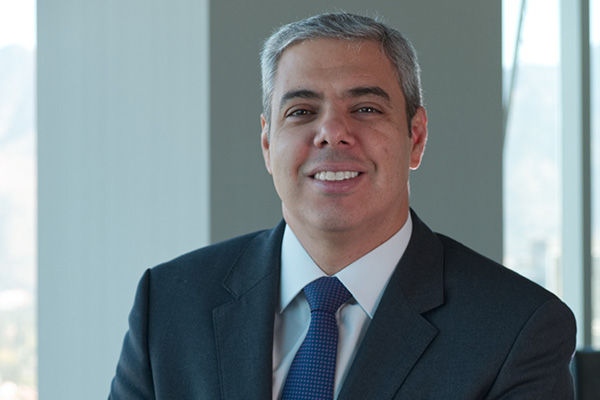
Maluhy’s first results conference call was more interesting for what he said about the future than the past.
What Maluhy faces will be radically different from any other of the bank’s illustrious list of CEOs.
Whereas his predecessors were all focused on growing the bank organically and – under Roberto Setubal particularly – through acquisitions and mergers, Maluhy will have to take an axe to the bank’s network of branches.
In the past, put bluntly, scale won in Brazil. Itaú grew so large that it became known as Banco-Padaria – the bakery bank, so-called as there was a branch on every corner.
This resulted in domination of the industry – the bank has long had returns on equity above 20%.
Shifting the weight of its competitive advantage from the scale to the funding part of the equation would give Itaú a renewed edge in the market
HSBC and Citi gave up on Brazil after they concluded that they wouldn’t be able to match the scale of big lenders such as Itaú. And those retreats were recent, too: 2015 for HSBC and 2016 for Citi.
There were rumours that Santander Brasil might have to follow suit, but the digital-transformation age came to that bank’s rescue – ably capitalized on by its CEO Sergio Rial, who has transformed the bank into one that can match Itaú and Bradesco in the metrics that really matter.
It is interesting to wonder what HSBC and Citi could have done if they had retained their banking base – and licences – in Brazil for a few more years.
Could they, too, have built a profitable business without the need to open branches in cities across the vast country? We will never know.
However, the scale that Itaú built for decades is now a problem.
Challenger banks have been growing rapidly and, with more efficient cost structures, have been attracting millions of Brazilians, long weary of the high cost of banking services, with no- or low-cost services.
Banking platforms are now all about scalability – not scale.
Itaú’s most recent results – Maluhy’s first in charge – hint at the problems this is causing. Fees fell by 5% year on year: most dramatically and unsurprisingly in the investments (-19% year on year).
However, perhaps most telling was the fact that, according to JPMorgan’s modelling, the bank saw current-account fees fall for the first time.
Worryingly for the bank, there is room for further deterioration.
Fintech Guiabolso recently reported on the costs of 225 credit cards from nine financial institutions – able to do so for the first time due to the central bank’s new open-banking agenda.
The results found that only 5% of these cards are free from annual fees and the majority (74%) have fees ranging from R$101 ($18.70) to R$1,000.
Greater transparency will likely lead to greater customer selection, and Itaú will face the challenge of lowering fees to retain customers. The fourth quarter of 2020 saw credit card fees fall 8% year on year.
Maluhy will have reassured many shareholders with his tech-focused comments.
An expanded executive committee will focus on technology and operational transformation through improving customer satisfaction, efficiency, digitalization, client centricity and growth. The bank has also hired 3,700 tech professionals in 2020 and 260 data scientists in the fourth quarter.
Maluhy has committed not to develop a standalone digital bank, neither does he believe in a ‘zero branches’ model.
However, there is a lot of room between the current bank’s 3,000-plus branch network and zero. It was surprising Maluhy didn’t commit to further branch closures this year after the bank closed 95 in 2020.
Grasp the nettle
At some point he will have to grasp the nettle and start cutting down the physical network and its 97,000 employees. That is because the bank still enjoys one advantage of its scale: its cost of funding.
If Itaú were to halve its branch network in the coming five years, it would be able to adjust the cost of its credit portfolios – particularly for unsecured products – to a level that fintechs wouldn’t be able to match with their own cost of capital.
Shifting the weight of its competitive advantage from scale to the funding part of the equation – and taking out huge swathes of structural costs in the process – would give Itaú a renewed edge in the market.
It would still face big headaches about how to retain clients and make money in investments and payments, but at least it would have market-leading segment with which to take on the challengers.


