As we’ve said before, HSBC’s ‘pivot to Asia’ strategy is nothing new.
One could take many comments from Noel Quinn and Mark Tucker at Tuesday’s fourth-quarter announcement, mix them up in a hat with comments from Stuart Gulliver and Douglas Flint from a decade ago and find them largely interchangeable.
In fact, it is so intuitive as to be stating the obvious.
Of course HSBC should pivot to Asia. If anything, the question is why it should have pivoted anywhere but Asia.
Reported profits before tax for Asia were $12.8 billion in 2020, representing 146% of group reported profits, which is to say, HSBC would have done much better if it was only in Asia and not anywhere else at all.
But something is different. For much of the past 20 years, ‘Asia’ in HSBC parlance, has really been a shorthand for Greater China. Sure, it has a century-long presence all over the continent and its logo is familiar from Mumbai to Melbourne, but Greater China, and in particular Hong Kong, has always been the main game to a far greater degree than in, say, Citi’s Asia operations.
Now, though, it feels like when HSBC is talking about Asia, it really means Asia.

It is not hard to imagine what might have prompted this. HSBC’s position in Hong Kong and China has been exceptionally difficult, way beyond its own control, and pretty much unwinnable: caught in the middle of China-US political and trade tensions and between the polarized opinions of Hong Kong’s citizens and its leaders, both official and remote.
And the truth is, HSBC is Hong Kong top-heavy. A division of the value of customer accounts by geography shows Hong Kong is the largest chunk worldwide, at 32%; the rest of Asia – ignoring mainland China at 3% – is just 11%. Hong Kong accounted for $16.4 billion of adjusted revenue in 2020, compared with, for example, $1.3 billion from Singapore.
So, bolstering other bits of Asia, which boast excellent potential growth rates in countries where HSBC already has a footprint, but face less geopolitical risk than Greater China, is exactly what it should do.
As Asia-Pacific CEO Peter Wong said on Tuesday, Asia is the largest banking opportunity in the world, forecast to represent 50% of the global economy by 2025, by which time wealth assets will have doubled and trade flows will continue to grow faster than anywhere else in the world.
Tucker referenced the signing of the regional comprehensive economic partnership (RCEP), which should boost intra-regional activity across Asia.
Hard numbers
Tuesday’s presentation made several efforts to put hard numbers behind these pan-regional ambitions: a commitment to increase capital allocation to Asia, measured as a percentage of group tangible equity, from 42% in 2020 to 50% in the medium to long term; and a promise to invest about $6 billion in Asia, including $3.5 billion in wealth and personal banking in Asia over the five years to 2025, and $800 million in global banking and markets in the region.
Time and again, any statement of ambition in the group was tied to Asia: “expansion of our investment banking coverage across Asia”; “the next five years should see global banking and markets pivot to a less volatile and higher-returns model… focusing more on the growing capital markets opportunity in Asia and the Middle East”; “our transaction banking franchise that has strong linkage to Asia”.
But if Asia now means more than just Greater China, how might that look?
Singapore is central to our ambitious growth plans in the region
Peter Wong, HSBC
The first place to look is private banking and wealth, where HSBC already considers itself to be a top-three player – rankings are notoriously treacherous in Asia-Pacific private wealth – but largely because of Greater China.
The bank specifically said on Tuesday it wants to catch high- and ultra-high net-worth segments across Asia, including southeast Asia and Singapore, not just Hong Kong and China.
Anecdotally, Singapore has already been seeing a benefit in asset terms as private bank clients have moved money out of Hong Kong for geopolitical reasons, or at least for diversification; it is the place where the battle for Asian private wealth is conducted.
But that, right there, is a challenge. Euromoney reckons the number of institutions now aiming to be a top-five player in Asia-Pacific wealth management must be at about 15. There’s hardly anyone who doesn’t call it a strategic priority.
Competition for relationship managers is fierce, compliance burdens are high and margins are under pressure. HSBC can make headway here, but it will be neither easy nor cheap.
Focus vital
Then there is India. HSBC is doing better here than most people realize: it earned $3 billion of adjusted revenue in India in 2020, and enjoyed 20% of growth in revenues in its wholesale banking arm. It plans to grow wealth, including its non-resident Indian offering and insurance; and it has a plan to grow share in transaction banking.
Here, focus will be vital: there are great opportunities in India, but also a long and glorious tradition of foreign banks not making any profit, most notoriously in investment banking.
There are very strong local players who are very good at what they do and it is a market that rewards the ability to find niches and not stray too far from them.
In Asean, HSBC has committed to enhancing regional product and coverage, and building client coverage teams. It needs to leverage trade within the region, and can already see the evidence: 55% of client revenue in commercial banking and global banking booked in Asia was driven by cross-border activity, and 20% of that was intra-Asian in 2020.
That is exactly the sort of figure you would expect to grow, and it probably needs to.
HSBC says that half of the $6 billion of investment in the region during the next five years will be in south Asia and southeast Asia.
Work is already under way: HSBC tells Euromoney its headcount in Singapore is up 10% since 2018, with steady hires in global banking and markets, private banking and asset management.
It has built a new private banking business in Thailand and has brought some of its green finance expertise into Asean. It has launched new offshore booking centre capabilities in the region and has become an anchor tenant in Singapore’s Marina Bay Financial Centre alongside DBS and Standard Chartered.
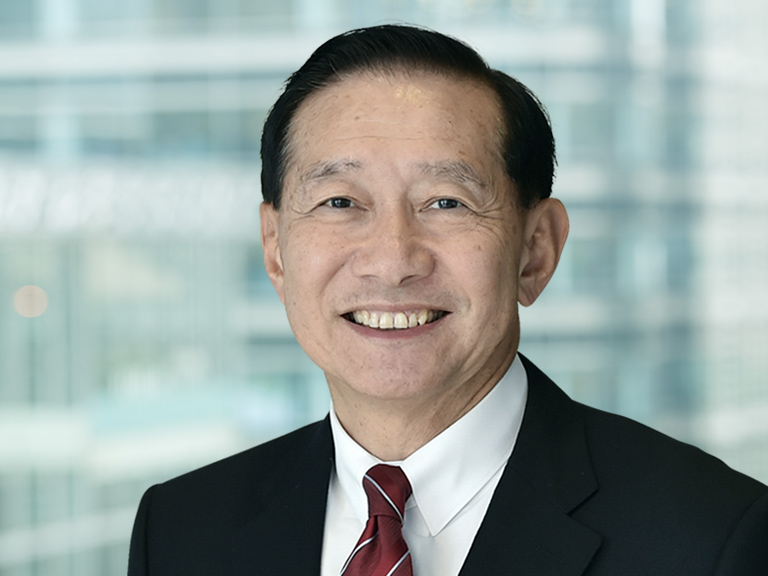
“Singapore is central to our ambitious growth plans in the region,” said Wong on Monday when announcing the appointment of Kee Joo Wong as HSBC Singapore CEO.
“We will be increasing our investment in both people and technology as we continue to strengthen our wholesale banking services, particularly for multinational corporations headquartered in the country, and to grasp the growing wealth management opportunities in southeast Asia and beyond.”
Nobody should expect HSBC to turn its back on mainland China, or its spiritual home of Hong Kong, but circumstances require it to be stronger in the rest of Asia than it has been for some time.