Awards for Excellence 2018
|
|
|
Also shortlisted |
Evercore |
Moelis & Co |
| View full 2018 results |

Lazard sets the standard to which all those more recently established independent investment banks seeking to break out of the ranks of boutiques and build truly global firms – like Evercore and Moelis & Co – aspire.
Highlights of the last 12 months for Lazard include advising clients on four of the 10 largest completed global M&A transactions, including the two largest of the year, in deals spanning the four marquee sectors for M&A: consumer and retail, healthcare, industrials and technology, media and telecommunications (TMT).
Lazard advised Dow Chemical on its $130 billion merger of equals with DuPont; it advised Reynolds American on the $49 billion acquisition by BAT of the remaining 57.8% of Reynolds; Level 3 Communications on its $34 billion sale to CenturyLink; and Johnson & Johnson on its $30 billion acquisition of Actelion and related spin-out of Idorsia, a research and development company.
Lazard, which won world’s best bank for public-sector clients in 2017’s Awards for Excellence, expanded its sovereigns, supranationals and agencies advisory presence in the Middle East and eastern Europe. Its work included a complex domestic debt refinancing for Croatia, geared toward overhauling its roads and motorways sector, as well as meeting targets that must be hit for the country to join the euro.
In June 2017, it closed its operation as financial adviser to the central bank of Egypt on economic reforms that were a condition for a €12 billion package from the IMF. Its work in the public sector spanned privatizations in Greece, restructurings and financings in Azerbaijan and M&A in China.
In recent years, the firm has sought to expand beyond its traditional franchises in M&A, restructuring and sovereign advisory into equity and capital structure advisory. It has also invested in pockets of excellence in its asset management division. But advisory still accounts for 52% of total firm revenues. Among the four firms it competes against, the highest equivalent figure is at Goldman Sachs at just 9%.
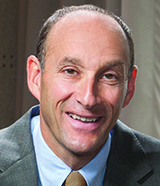 |
| Ken Jacobs |
“There was a sea change after the financial crisis and it has created a new competitive dynamic for at least the next several years,” Ken Jacobs, chairman and chief executive at Lazard, tells Euromoney.
“Many of the integrated banks lost multiple generations of talent and became less competitive in the advisory business. Some of that talent left the business; much of it now resides in the boutiques. But the migration is largely over, and the key challenge for everyone going forward will be in attracting, retaining and developing talent. Lazard has a long history of doing this on a global basis.
“We are the only truly global independent firm. We are strong across all geographies and industries in both developed and developing markets. Today, competition from the boutiques comes primarily on a regional basis,” he adds.
“Lazard’s mission is simple: to give great financial advice to clients,” says Jacobs. “What distinguishes us is that we develop our own people. We recruit selectively, but many of the firm’s leaders have grown up here over two decades and more. What keeps people here is the chance to make a difference and work on our clients’ most important matters.”
A good example is the firm’s work with Netherlands-based chemical company AkzoNobel, defending it against three unsolicited offers from PPG of the US, while at the same time responding to an aggressive activist campaign from Elliott Associates. Lazard has advised the company on its path to a new future that involves selling its specialty chemical business for €10.1 billion to Carlyle and GIC and exploring the potential of a separate paints and coatings business.
“We had a team in Holland that provided local connectivity and insights, a sector team that delivered deep chemicals expertise and a shareholder advisory team that helped craft a strategy for dealing with the activist and approaching institutional investors,” says Alex Stern, chief executive of Lazard financial advisory.
Lazard was able to negotiate a standstill with Elliott while the firm explored a dual-track process for divesting its specialty chemicals division. It all remains a work in progress. Through a staple financing process Lazard was able to establish a valuation floor at 6.25 times leverage on the disposal. The share price of AkzoNobel, which had stood at €61.40 before PPG’s unsolicited approach, rose to €77.70 after the sale of that division to private equity was announced.
There wasn’t a long preceding history of working for AkzoNobel.
“There were individuals at AkzoNobel who knew people at Lazard for some time,” says Stern. “There was a basis of trust and we were able to deliver a global, integrated team.”
Increasingly central to strategic advice is providing insights on how the stock market is likely to respond.
“We have always advised companies on how investors value them and how their stock is likely to trade in response to corporate actions,” says Jacobs. “Now we have built quantitative tools that measure what investors actually do, not just what they tell us. In the US, for example, we have mapped what every institutional investor has done in every M&A situation for large public companies over the past 18 years.”
It has provided some interesting lessons for a company that prides itself on industry knowledge. “Sometimes we see that the drivers are not so much industry-specific considerations as purely financial dynamics, for example, in deals between a low P/E high dividend stock and a higher growth company,” says Jacobs. “You might get more insight into what will happen in an industry transforming healthcare deal by looking at what happened to the stocks of companies with similar financial characteristics in the TMT sector.”