JPMorgan Private Bank stands out in alternatives not only because it has built one of the largest platforms in the industry, but because it has also reshaped how private clients use an asset class that was once reserved for the world’s most sophisticated institutions. In a nutshell, the bank has turned a historically illiquid, operationally clunky subset of investments into something goal‑based, scalable and near frictionless to access.
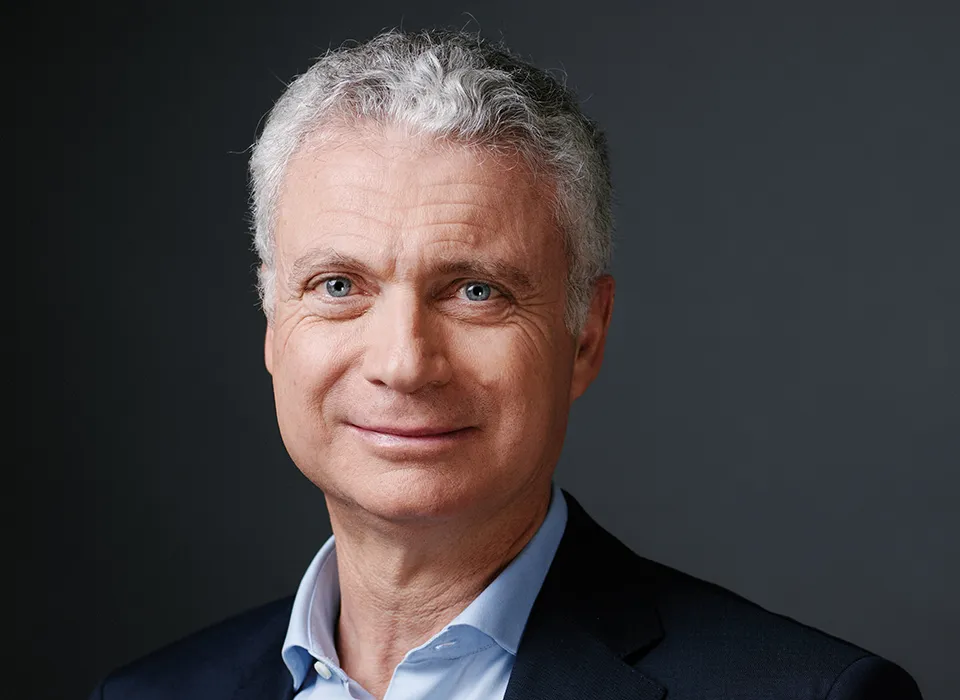
The proof of its success in doing so is in no doubt. A decade-and-a-half of sustained investment in JPMorgan’s alternatives capabilities has created a genuinely institutional‑grade platform for private clients. Alternatives assets under management (AUM) have grown from roughly $40 billion in 2010 to more than $200 billion as of July 2025. “We set a goal to double the business in five years,” says Kristin Kallergis Rowland, global head of alternative investments. Today, alternatives represent close to half of portfolio assets for the bank’s 200 largest clients on average, and more than a fifth of assets across the broader ultra-high-net-worth (UHNW) base.
Product architecture is a major source of differentiation. JPMorgan has leaned harder than most peers into evergreen funds, building a shelf that spans private equity, private credit and real assets, and converting entire senior direct‑lending and infrastructure sleeves into evergreen options. This gives clients semi‑liquid exposure with institutional‑quality underwriting, while smoothing deployment and simplifying pacing. Pointing to an 18‑strong in‑house structuring team that designs vehicles from the ground up rather than outsourcing to third‑party platforms, Kallergis Rowland stresses that, “there is no one that has anchored more solutions than us this year … in the rise of evergreens.” That internal capability, combined with the bank’s global client base, allows it to co‑create funds with leading managers, lock in capacity and tailor terms and liquidity to private bank needs.

There is no one that has anchored more solutions than us this year … in the rise of evergreens
Kristin Kallergis Rowland
Innovation has moved beyond single funds into portfolio‑level solutions. In 2025, the bank launched managed evergreen alternatives (MEA) portfolios – discretionary, outcome‑oriented sleeves that combine multiple evergreen strategies into profiles such as income, diversified, real assets, private credit/real assets, and private equity. “Clients want outcomes,” Kallergis Rowland explains, noting that receptivity to MEA has been “incredible” as advisers can now plug a single, curated multi‑manager solution into strategic allocations. Alongside this, tax‑aware alternatives for US taxable investors focus on strategies that generate ordinary losses and long‑term capital gains, helping to improve after‑tax returns while maintaining diversification.
Reengineering the investment lifecycle
A three‑year overhaul of the operating model has made alternatives dramatically easier to implement at scale. The bank re-engineered the full lifecycle – from subscription and know-your-customer to capital calls, distributions and reporting – drawing on digital tools and process redesign. As Kallergis Rowland puts it: “We did an end‑to‑end lifecycle journey … now processing four times as much with [the] same‑sized middle office,” and the experience for advisers and clients is “as easy as buying on Amazon.” Proprietary analytics are layered on top: the patent‑pending PIPPA (Private Investment Portfolio Planning & Analytics) tool allows advisers to model cashflows, pacing and liquidity for different alternatives allocations. “If they can’t figure out how it fits in the framework of a portfolio, you’ve lost the game,” she says.
Breadth across sub‑asset classes rounds out the story. The bank has leaned back into growth and venture capital, underwriting a slate of new solutions including a bundled growth fund that raised around a billion dollars in just over a week, while staying disciplined about manager selection and vintage diversification. In hedge funds, it has introduced uncorrelated portfolios that have resonated particularly with international clients seeking diversification away from traditional beta. Real assets and private credit are addressed not only through evergreen funds but also via Morgan Private Capital, which opens up direct deals, co‑investments and secondaries sourced in partnership with the firm’s commercial and investment bank.
JPMorgan Private Bank’s alternatives franchise combines scale, structuring expertise, operating‑model transformation and genuinely advisory‑led delivery in a way that few competitors can match. Its ability to create and anchor evergreen solutions, provide tools and portfolios that translate complexity into outcomes, and integrate alternatives into core strategic allocations makes a strong case for recognition by Euromoney this year as world’s best for alternatives.