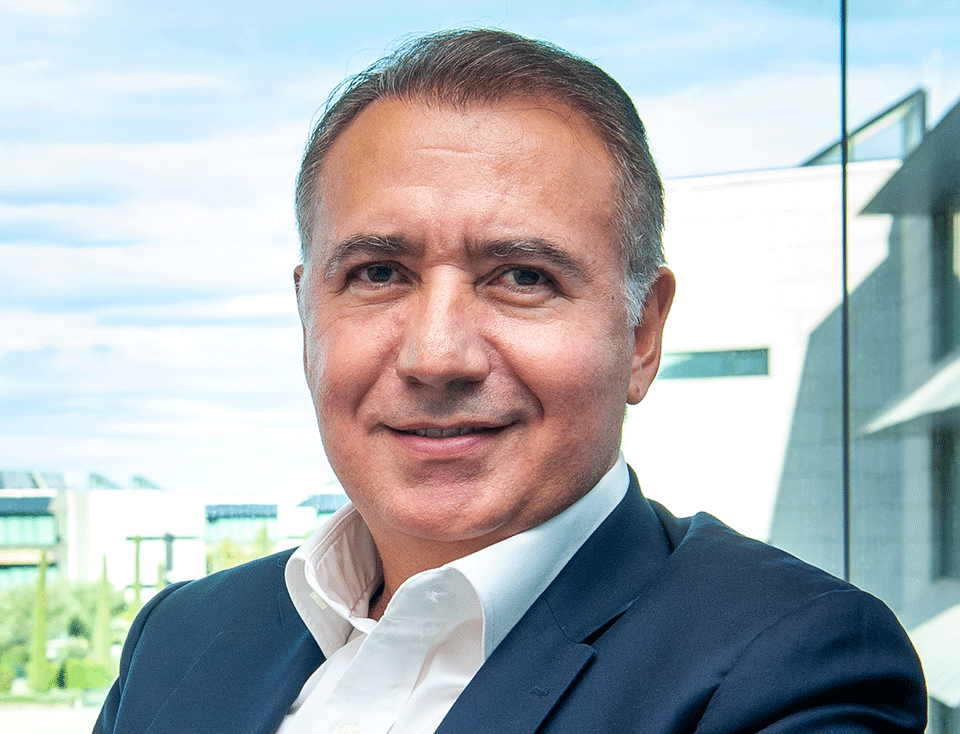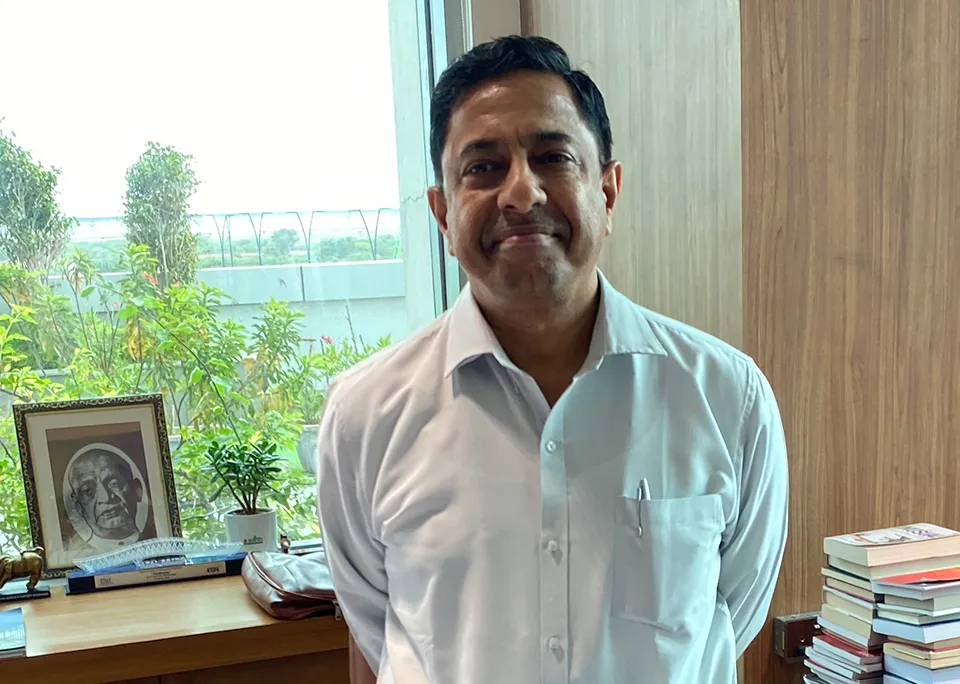
K Rajaraman greets Euromoney with a wide smile, starts talking – and doesn’t stop. An hour-long conversation with him, words flowing like a torrent, is like five hours with someone else.
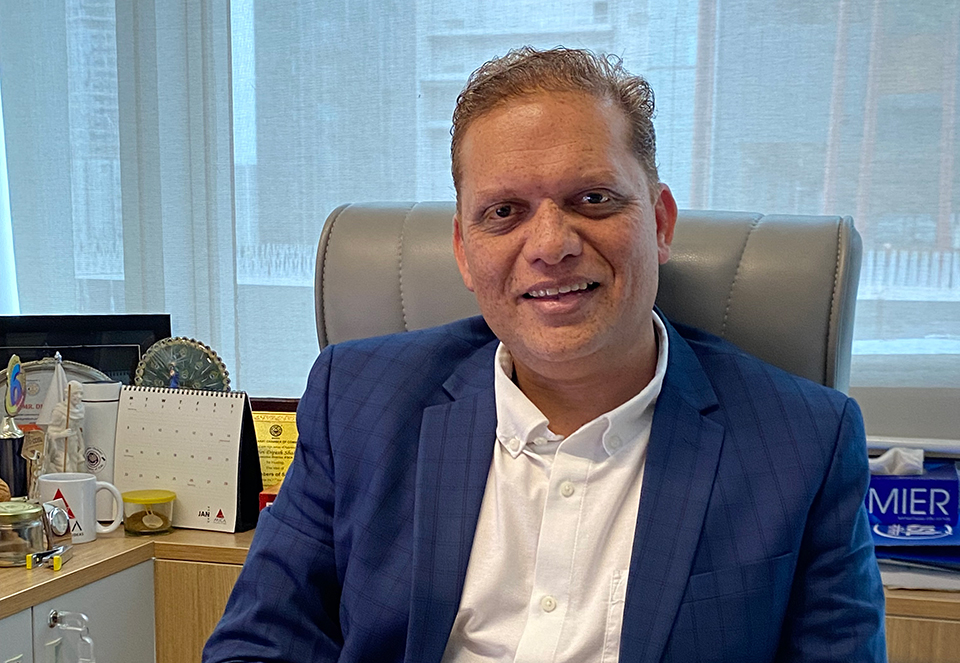
There’s a lot to discuss. Cheery and engaging, with an open demeanour, Rajaraman is chair of the International Financial Services Centres Authority (IFSCA), a four-year-old national-level financial regulator. He oversees the International Financial Services Centre, which in turn is part of the Gujarat International Finance Tec-City, better known as Gift City, a cross-border financial services zone taking shape near Ahmedabad in northwest India.
A high-flying civil servant who previously headed India’s telecommunications ministry, Rajaraman was tasked a year ago with transforming the IFSC region into a true international financial hub to replicate and rival those in Singapore and Dubai.
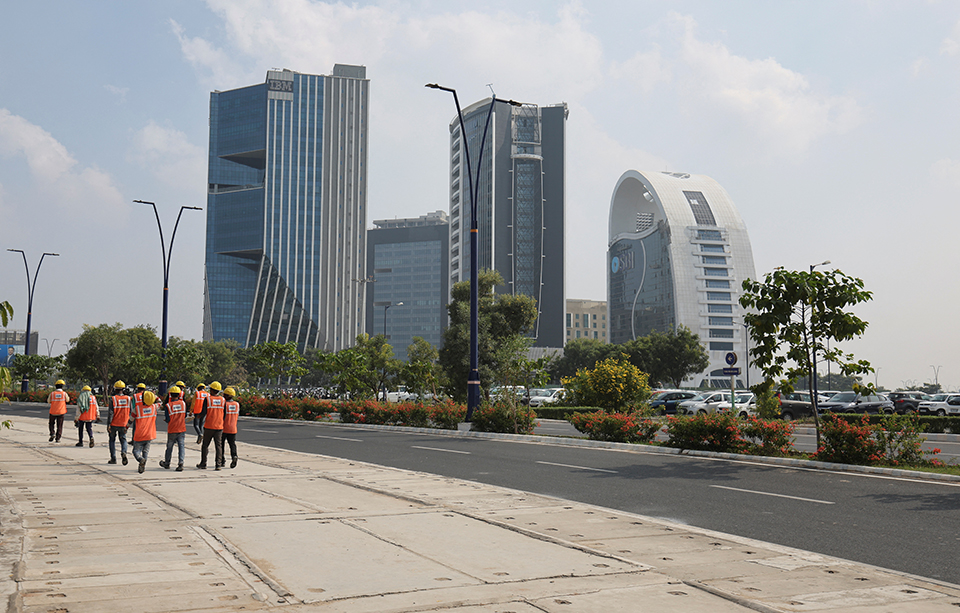
“What we want to do is be a platform for foreign investors to land in India in a very soft manner,” he says. “That is the whole idea. We give foreign investors the option of directly setting up business here in India.”
“Soft manner” is a careful way of describing the many challenges global banks, insurers and funds face in putting capital to work in a country with an only partially open capital account. India’s currency, the rupee, is not yet fully convertible, and while rules have been loosened in recent years, there are still controls on foreign exchange.
For a fast-growing emerging market intent on being a $32 trillion economy by 2047, this presents a problem. India is creating capital at a record pace as citizens pour money into financial assets, eschewing traditional investment options such as gold and real estate. An obvious way to alleviate the current stock market bubble is to let more foreign capital in – encouraging more new paper to be issued via domestic share listings – and allow more local money to be put to work offshore in foreign markets. Gift City exists precisely to let this happen.
The best way to think of Gift City is as a tax haven sitting in the middle of India. For decades after securing independence from Britain, India was a largely sealed economy. Millions of residents moved wealth offshore, eventually emigrating. The ministry of external affairs reckons there are 29 million non-resident Indians (NRIs) living overseas.
Enticement
When India began to reopen in the 1990s, foreign funds started to buy up rupee-denominated securities and assets, with local investors buying assets overseas. But a raft of controls remained a hindrance to the free flow of capital.
A rising share of Indian-related financial activity began to take place offshore, often via Indian-owned or India-centric funds based in markets such as Dubai, Hong Kong and Mauritius. For years, it was easier to operate in those jurisdictions than in India itself; a fact that irked lawmakers.
“So the thought process within government was: ‘Why don’t we get them to come back to India?’” says Rajaraman. “And the next question was: ‘Why would they want to?’”
This is where Gift City comes in. Its key instigator is the current prime minister Narendra Modi. In 2008, while chief minister of Gujarat, Modi drew the first outlines of a project designed to draw more local and international lenders to a state then well off the beaten track.

It took a long while for the 3.6 square kilometre zone on the banks of the Sabarmati river to take shape. Gift City branded itself from the outset as a ‘smart city’. The first lender to secure an operating licence was Mumbai-based Yes Bank. But for years, the idea lacked momentum and clarity.
Takeoff happened in 2019, when parliament passed the International Financial Services Centres Authority Act. Early the following year, IFSCA itself was created to guide the zone’s development.
Overnight, Gift City was transformed from a place with little brand recognition among investors into a national-level regulatory body under the aegis of the finance ministry with the same rule-setting power as the central bank, and with a remit to create a world-class regulatory environment for the financial sector.
Business began to roll in. “The moment the [Act was passed], all the regulatory clearances started falling into place,” says Dipesh Shah, head of the department of development at IFSCA, one of 11 business divisions overseen by the chairman. “In 2020, we’d issued only 129 operating licences for Gift City. Since then, we have issued around 500 more.” At the end of May 2024, a total of 628 entities were licensed to operate in the zone.
Some of the names are well known, including HSBC, JPMorgan and local firms ICICI Bank and HDFC Bank. Rajaraman reckons the areas where the zone has made the greatest progress in recent times are in banking and alternative investment funds.
On July 25, the day of our visit, 28 commercial banks (including 12 foreign lenders) had a formal presence in Gift City. Australia’s ANZ will be the 29th bank to establish operations there.
More than banking
But there is more to Gift City than just the banking community. Among the entities licensed to operate in the financial zone today are: 35 insurance firms, two stock exchanges, 80 broker-dealers, 124 fund managers and 137 alternative investment funds, of which, 15 have moved their operations “lock, stock and barrel” to the zone, Rajaraman claims.
A curious location
Ahmedabad is a curious place to build Gift City. It isn’t overly remote, but it isn’t easily accessible either; and during India’s monsoon season visitors are at the mercy of the weather gods. The morning Euromoney visited, the heavens opened early over Mumbai, delaying our departure by two hours.
Once airborne, the small plane bounced around the sky so violently, it felt like it was being shaken to bits. At one point, the pilot came on the intercom and said, with a strained voice: “Ladies and gentlemen… [long pause] …sit.”
On our arrival at Ahmedabad airport, we discovered that most of the taxi drivers were on strike. But after finally hailing a cab and after some traffic delays, involving at one point a large and unruly herd of goats, we arrived safe and sound.
Gift City doesn’t lack ambition. Branded India’s first ‘smart city’, it sits on a swathe of previously unused land north of Ahmedabad. A new metro line, set to open soon, will connect it with the airport and train station; a high-speed rail line should link Ahmedabad with Mumbai by 2027, cutting overland travel time from 15 hours to five.
So far, so good. But why is it here at all? Why not build the whole thing in or near Mumbai?
K Rajaraman, chair of the International Financial Services Centres Authority, doesn’t have a coherent answer to those questions. Invited to justify the choice of location, he describes Gift City as “an experiment” and “a testbed”, adding: “At this point in time, the government is focused on getting it up to speed.”
Mumbai mistrust
Like so many projects of its ilk, the truth is that the larger Gift City gets, the harder it is to relocate. India’s current premier, Narendra Modi, was chief minister of the surrounding state of Gujarat when he created the zone 16 years ago. He was hardly like to ditch his project once he became the head of government.
So India’s international financial services centre, a vital conduit for cross-border capital, will be based here for the foreseeable future, far from the financial (Mumbai) and political (New Delhi) centres of power.
Many Mumbai bankers sniff at the project. “The real challenge is its location,” says the country head of a global bank. “It’s not in a good place to draw talent in.” Adds one of his peers: “Had they decided to do Gift City in Mumbai, it would have been built by now.”
These are serious points to consider. Like so many creative and collaborative industries, financial services thrive in places where talent is most closely concentrated – hence the success of cities such as New York, London, Singapore and Mumbai. Ahmedabad is a nice enough place, but seeing it as a future hotbed of financial innovation is a stretch.
Our return flight was delayed once again by thunderstorms in Mumbai, although at least the turbulence had abated. Touching down was a relief but also a reminder that among Gift City’s many attributes, location is not one.
“Around $13 billion in commitments has already been raised by these by these funds, with about $4 billion invested into India, which is good, given that most of them have only been operational for just two years.” He adds: “I think we are now registering at least about seven to 10 funds every month.”
The zone is also home to 55 fintechs, two foreign universities, a pair of clearing corporations and the India International Bullion Exchange. Both colleges – Deakin University and the University of Wollongong – are Australian and the chairman’s face lights up at their mention. He is heading a delegation of IFSCA executives to Australia in mid-August to meet financial luminaries in Sydney and Melbourne. “Our duty is to go out and meet people and tell them what we are and what our intentions are,” he says.
Another key growth area is leasing. According to IFSCA data, Gift City is now home to 28 aircraft leasing and financing companies, and 12 firms that specialize in ship leasing and financing. “We are seeing a lot of traction there,” Rajaraman adds. “It’s [an important] ecosystem because India is a large country that’s acquiring a lot of ships and aeroplanes.”
Whatever the zone’s administrators are doing, it’s working. As of May 2024, licensed banks held assets with a total value of $61 billion in Gift City. The value of all securities listed on IFSCA’s bourses at the same point in time was $93 billion, with historical derivative transactions booked by all banks over the period totalling $839 billion.
Most of the business that banks do here involves trade finance and project finance work for Indian corporates working onshore. Gift City is an exclusively non-rupee zone, so all business must be carried out in one of 14 global currencies, with loans denominated in US dollars, euros, Japanese yen and so on. “Everything is in a foreign currency,” says Shah. “You cannot have a rupee account here.”
This aspect of banking is key to Gift City’s future. India’s stock markets are booming and the economy is in the grips of a growth phase not unlike that of China in the late 1990s and 2000s. Corporates working onshore are thirsty for capital to meet their growing needs. That’s true of Indian firms, who, as Rajaraman notes, “borrow a lot of foreign exchange”, as well as global multinationals with significant onshore operations, all of which are assessing their capital needs.
Fund raising will come in all manner of guises – such as the forthcoming $3.5 billion Mumbai IPO of South Korean carmaker Hyundai’s India unit. But going forward, ever more of it will involve firms borrowing from the Gift City subsidiaries of local and foreign banks in multiple non-rupee currencies.
The process is designed to be simple and seamless. “There are no restrictions on bringing capital in or taking it out,” notes Rajaraman. “Full conversion is permitted on the capital account and the trade account as well.”
In essence, any foreign investor now has three ways to approach putting capital to work in south Asia’s largest economy. They can sit in a foreign jurisdiction and invest in India, set up shop in Gift City or avoid the financial zone and work directly in rupees out of an office in, for example, Mumbai. By design, the second option is by far the simplest of the three.
Gift City is benchmarked against Singapore, Dubai and London. We wrote our regulations over the last four years, looking at what those cities do and do not do
K Rajaraman, IFSCA
Another key aim is to convince more high and ultra-high net-worth NRIs living overseas to put more of their considerable wealth to work onshore in local assets and securities.
“This is a great opportunity for them,” says Rajaraman. “They invest into India directly. The assets they buy are in rupees, but they may have a mindset to keep some of their assets in US dollars or euros or whatever. Some may want dollar-denominated insurance – we can do that too.” This should also give the onshore wealth management industry a handy boost.
Another area of interest to the authorities is the environmental, social and governance space. “Our role is strongly focused on sustainability and climate finance,” says Rajaraman. “We set up an expert committee that’s looking at how to turn Gift City into a sustainability and green finance hub.”
So far, it’s working. Of the $62 billion in debt securities listed on IFSCA’s exchanges at the end of July, $13 billion were green, social, sustainability or transition-themed bonds. Because there is no formal domestic taxonomy to classify green finance and investments, authorities let issuers adopt whatever global taxonomy they wish.
Growing pains
There is plenty more still to do. Nearby Ahmedabad is a thriving municipality boasting a bustling port, a world-class business college, the Indian Institute of Management (IIM) Ahmedabad, and some important manufacturers, including Japanese carmaker Suzuki.
But no one would put cultural ambience as the chief reason to set up shop here. Gift City is the opposite of glamour.
Viewed from Rajaraman’s office window – he’s keen to open the door to his terrace, but it is stuck, and a member of staff cannot force it open – the landscape is dotted with commercial towers, some completed, others under construction.
There is plenty of activity. But at the same time, huge billboards stand forlornly in front of empty lots promising the imminent arrival of international schools and hospitals. A new building close to IFSCA’s office has lost one of its letters, transforming it into the ‘GOO WILL TOWER’. Not far away, a worker leans on the errant ‘D’ as he eats his lunch.
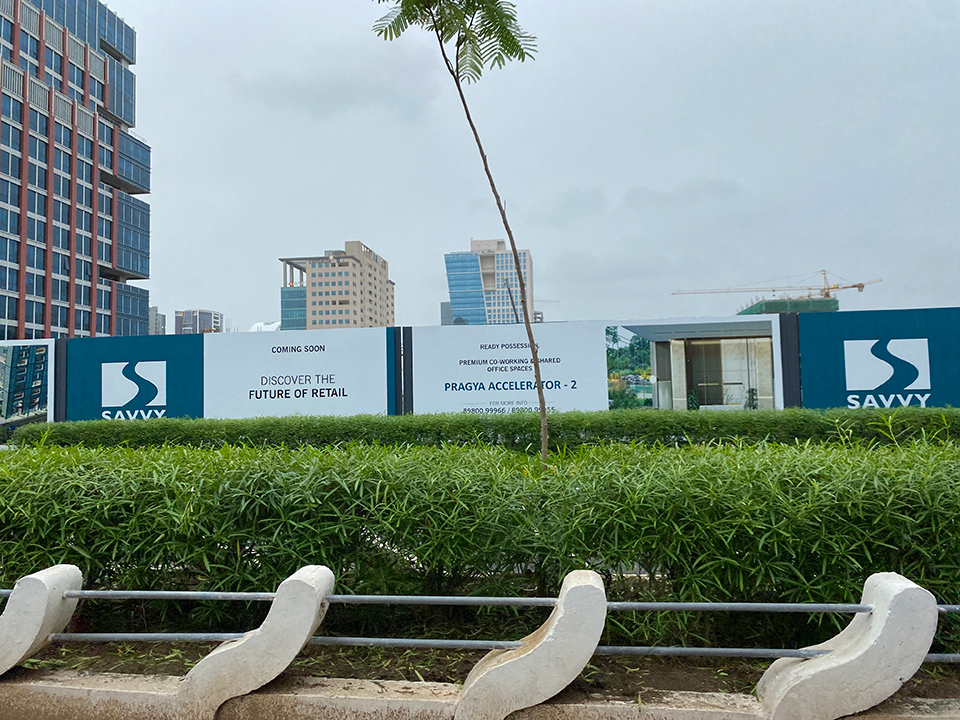
Rajaraman insists colleagues are working hard to make the zone more liveable, pointing to plans to build restaurants and high-end residential apartments next to the river. “That will happen over the next two, three years,” he promises. “Improving the overall infrastructure, the social infrastructure and the general feeling of wellbeing is very important.”
However, no amount of good civic planning can overcome the fact that Gujarat is hardly the heartbeat of India’s financial services industry and is one of just five ‘dry’ Indian states. “It’s an important initiative, but the ban on alcohol is a significant disincentive,” an investment banker in Mumbai tells me later that week, his brow crinkling.
But growing pains aside, there is plenty to recommend Gift City to local and foreign lenders and investors. Its website is clarity itself, explaining to would-be partners how to secure a licence and what benefits are on offer. The zone is well organized and is designed with intent and to last. Rajaraman points to the fact that the zone aims to emulate the world’s best financial cities and hubs.
“Gift City is benchmarked against Singapore, Dubai and London,” he says. “We wrote our regulations over the last four years, looking at what those cities do and do not do.
“The idea is to create an environment where people will feel comfortable, because the global investor has got a foot everywhere and he wants to be in a place that works for him,” he adds.
Investors can profit from a range of tax benefits. Anyone employed by a firm located inside the zone is exempt from paying income tax for 10 years. Service providers are exempt from the nationwide goods and services tax, which ranges from 5% to 28%. Interest income on loans disbursed to local units is non-taxable, with interest from specific bonds listed on local exchanges taxed at 4%.
Shah, who joined Gift City the week it opened 16 years ago and prides himself on being the second-ever employee, points to cheap cost of floor space. “Rental costs here are around $1 per square foot per month,” he says. “If you go to Singapore, it’s $200; in London it’s more than $500.”
Talent gap
What about talent – is it easy to attract financial professionals to Gift City? Around 350 to 400 financial professionals are reckoned to be employed by firms in the zone, a drop in the ocean compared to London, Singapore or Mumbai.
Rajaraman is aware of the disparity. He says IFSCA has created a talent working group that is “brainstorming” with several universities, including IIM Ahmedabad, to “figure out the gap between what talent is available and what talent is required. That is a long-term process.” Success may well depend on convincing more of Mumbai’s financial community to relocate, fully or partially, to Gujarat, and on inducing more NRIs to return home from Dubai, Hong Kong and Singapore.
Like China, its future great-power rival, India cannot generate enough internal capital to meet its growing needs. “We will need foreign investment,” says Rajaraman. “And that is why Gift City will play such an important role” in the country’s future. It acts as a vital conduit, enabling foreign capital to flow into India, and in turn for local money to gain access to the outside world.
India isn’t going to fully open its capital account anytime soon. Unlike China, it doesn’t have its own Hong Kong, an offshore financial centre that Beijing controls and uses to ferry money to and from the rest of the world.
But Gift City can and increasingly does play that role for India. Rajaraman harks back on more than one occasion to an old and rather clunky strapline – ‘onshoring the offshore’ – that the authorities once used. While seldom used today, it is a reminder that the zone is in India, yet not in India. As the chairman points out: “We are a tax haven.” And it is a rare example of a working onshore tax haven.
Every month it seems, Gift City’s remit expands a little more. In July, the Reserve Bank of India approved legislation permitting Indian residents to open foreign currency accounts in Gift City. Real-time dollar settlement should be available by early 2025.
In the first week of August, IFSCA issued a draft paper the proposes allowing fund managers to launch retail schemes without having to appoint a fiduciary representative. The schemes would be able to invest in Indian or foreign, listed or unlisted securities, money market instruments, mortgage-backed securities and more. For a set of regulators once wary of nurturing financial innovation and careful to restrict retail investors, it’s a brave new world.
So is Gift City on track? Its chairman thinks for a moment before responding. “We don’t set targets,” he says. “Our idea is to create an ecosystem and constantly benchmark it to the rest of the world so foreign investors will be happy.
“The proof of the pudding is in the numbers,” he adds. “Am I significant in India’s growth story? That is the question. If I’m not significant, it is not worth doing. We are trying to [ensure] our contribution to the Indian economy is significant.”