A legal case filed in New York on June 20 took a novel approach to recovering losses on Credit Suisse AT1 bonds held by French asset manager Axiom and German fund Assenagon.
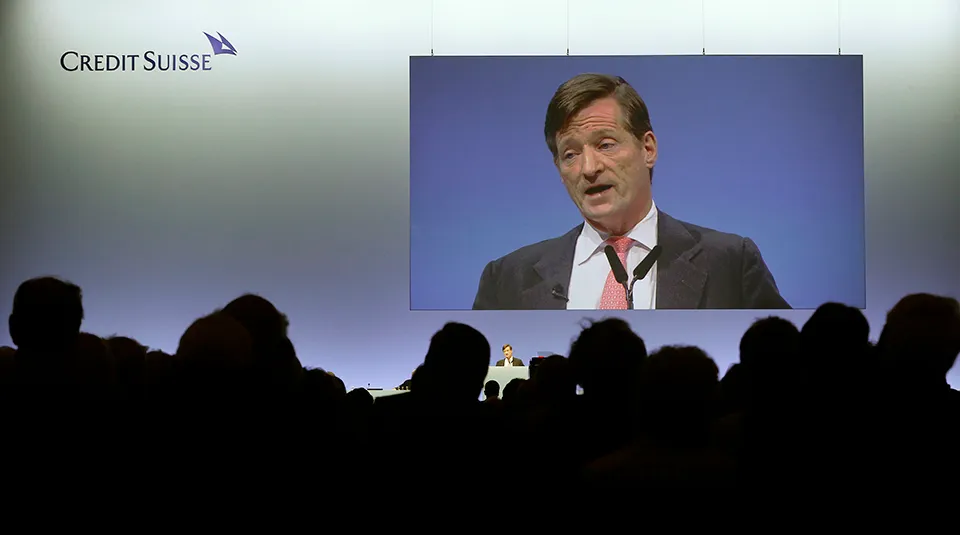
The case seeks to blame former Credit Suisse chief executive Brady Dougan and 17 other veteran managers and directors of the bank for losses on the bonds, which were wiped out by Swiss authorities when the merger with UBS took place on March 19.
Quinn Emanuel, which bills itself as the largest law firm in the world devoted to business litigation and arbitration, had already announced that it is representing a key Credit Suisse AT1 bondholder group in seeking compensation for losses.
The suit on behalf of Axiom and Assenagon from DiCello Levitt, a US law firm with less of an international profile than Quinn Emanuel, could complicate attempts by other bondholders to do a deal with UBS or Swiss regulators.
The case seeks to tie the losses on bonds to: ‘A culture that had originated with Credit Suisse’s New York-based investment banking operation, where reckless and self-serving executives chased short-term returns’
The case against Dougan et al is a fine example of the pugnacious approach to lawsuits taken in the US, including by government bodies such as the Department of Justice.
The case seeks to tie the losses on bonds to: “A culture that had originated with Credit Suisse’s New York-based investment banking operation, where reckless and self-serving executives chased short-term returns (and bonuses) from overly risky deals and went to any length – including, at times, unethical and illegal lengths – to acquire and retain high revenue customers.”
Connections of the veteran Credit Suisse managers to New York are repeatedly stressed in an attempt to convince a court in the city’s eastern district to accept the case and give it class action status.
“While Credit Suisse began as a conservative Swiss private bank, the vast majority of the people who were responsible for its demise were not staid Swiss bankers, but, rather, sharp-elbowed New York investment bankers,” the case says.
Target list
A glance at the list of bankers on the case’s target list confirms that they are not all New York investment bankers, regardless of how sharp their elbows might be.
Two of the last three CEOs of Credit Suisse – French national Tidjane Thiam and his Swiss successor Thomas Gottstein – make the list, for example.
And even Dougan, who did indeed spend much of his career as an investment banker in New York, might point out that he is from Illinois.
Dougan declined to comment on whether he views the case as a serious threat and both Axiom and its lawyers were unavailable to elaborate on whether they think they have much hope of recovering their losses from former Credit Suisse managers who happen to have US addresses.
The suit tries to tie the bankers to New York in some fashion and helpfully lists a US address for all of its targets except the noted Portuguese tennis lover Antonio Horta-Osorio, who had a brief ill-starred stint as chairman of Credit Suisse in 2021.
Students of property choices by bankers will be intrigued to learn that Dougan owns a residence in Bedford, a chic town in upstate New York. Jim Amine, one-time investment banking head at Credit Suisse, owns an apartment at 720 Park Avenue, while former markets head Tim O’Hara can be located just off Park Avenue a little further uptown on 91st Street.
Former asset management head Robert Shafir has a penthouse in the slightly more Bohemian but still very expensive West Village in downtown Manhattan, while David Miller, another former investment banking chief, owns a place on a pleasant tree-lined street in Brooklyn, not far from the court where the case against Brady Dougan et al was filed – which might be handy if the case ever goes to court.