
In the Middle East, sustainability is about adaptation, not just to the increasingly stark evidence of climate change but also to the global demand for a more diversified energy mix to lessen fossil-fuel extraction.
The paradigm shift is pushing the region to transform itself quickly and for First Abu Dhabi Bank (FAB), the Middle East’s best bank for sustainable finance, this transformation is yielding impressive results.
According to Dealogic, FAB topped the sustainable bonds and loans bookrunner league table in the Middle East in 2022, with 13 transactions worth a total $1.64 billion and an 8.39% market share.
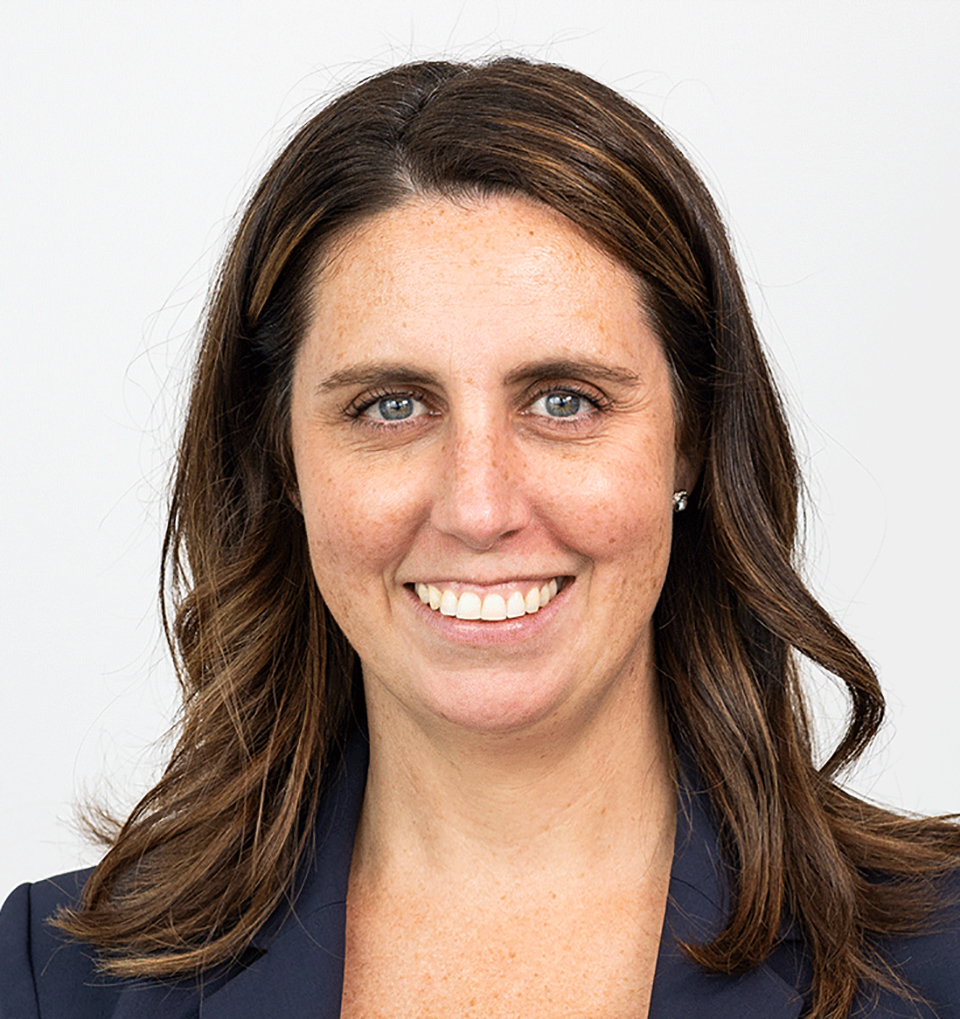
“Building on the momentum for COP28 later this year and 2023 being named the ‘Year of Sustainability’ in UAE, First Abu Dhabi Bank is committed towards helping our clients align their ESG strategy with their funding strategy and assisting them in their transition journey,” says Sarah Pirzada Usmani, managing director and head of sustainable, asset and project finance at FAB.
FAB spent 2022 looking inwards and investing in its own operations to integrate sustainability throughout the business. A year after having announced a group-wide environmental, social and governance (ESG) strategy, FAB bolstered this with the establishment of a board risk and ESG committee, as well as a range of training programmes.

The bank has delivered over 10,000 hours of mandatory ESG training to raise employee awareness in key business lines, particularly on the risk assessment side.
FAB introduced ESG-related key performance indicators for the board and senior management teams of the group. These include targets on pay ratios and employee turnover, as well as having 30% of women in senior management by 2025.
“Women now occupy 22% of board seats in group subsidiaries, versus 15% in 2021,” says Usmani.
The point, she adds, is to have strong operational mechanisms that can help deliver a material sustainable finance goal in less than seven years.
In 2022, the bank set itself a $75 billion sustainable finance goal and interim emissions reduction targets in three key sectors: 15% for oil and gas, 15% for aviation and 64% for power generation, compared with a 2021 baseline.
By volume, the sustainable finance goal might not seem particularly large compared with existing targets amongst the large international investment banks, but the speed at which it is catching up to global standards sets FAB apart.
In 2022, the bank had already facilitated $9.1 billion of sustainable finance. Around 51.4% of FAB bond and private placement issuances were labelled green or sustainable last year and its ESG/sustainability loan and allowance portfolio increased by 14.2% from the previous year and represents 4% of the bank’s total loan and allowance portfolio.
It has been present in many of the region’s biggest deals in the awards period, especially in its energy portfolio, where FAB finds the bulk of its financed emissions. It was joint regional green coordinator, mandated lead arranger and bookrunner in Neom’s $5.852 billion green hydrogen senior secured loan with Air Products and Acwa power.
Women now occupy 22% of board seats in group subsidiaries, versus 15% in 2021
Sarah Pirzada Usmani
“First Abu Dhabi Bank is proud to have supported this landmark transaction for the world’s largest green hydrogen project, which is in line with our sustainable finance ambitions and demonstrates our commitment towards ESG and in support of our clients Acwa Power, Air Products and Neom,” adds Usmani.
FAB was also sole ESG coordinator, joint bookrunner and mandated lead arranger for Abu Dhabi National Oil Company for Distribution (Adnoc Distribution)’s first sustainability linked loan worth $1.5 billion.
The bank stood out due to its ability to leverage its Islamic finance expertise to drive the number of sustainable transactions it works on in areas where the ESG agenda has not yet matured. During the awards period, FAB structured and led two of Acwa Power’s equity bridge murabaha facilities of $221 million and $213 million for its Bash and Dzhankeldy wind projects in Uzbekistan. This project supports the country’s energy transition and increases the share of renewable energy in its energy mix to 25% by 2030.
As with any bank engaging in sustainability linked loans (SLLs), FAB is subject to reputational risk when it comes to setting key performance indicators. For example, Majid Al Futtaim (MAF)’s $1.251 billion sustainability linked multicurrency revolving credit facilities, for which FAB was sole sustainability coordinator and agent, attracted some criticism over the materiality of its KPIs in comparison with the environmental impact of the assets themselves.
But countering these criticisms, Usmani notes that MAF’s sustainability credentials have been recognized by third parties and the company maintains its ‘Green Star’ status from the Global Real Estate Sustainability Benchmark.
MAF has also accepted a penalty-only structure under the SLL with FAB, which serves as a demonstration of MAF’s commitment towards sustainability.