
Moribund primary equity capital markets and a rising interest rate environment meant that investment banks were tested more than ever in the past 12 months as they sought to give clients the options they needed in spite of poor conditions.
Morgan Stanley did this better than any bank in the US over the period under review. Not surprisingly, given that the firm is the world’s best investment bank this year, Morgan Stanley also takes the US award for best investment bank.
Morgan Stanley considers advice, particularly for M&A, to be the heart of its investment bank. Therefore, it is unsurprising that it is Morgan Stanley’s M&A mandates that most often catch the eye. And whether it was the bank’s support for Elon Musk in his pursuit of Twitter, a $41 billion deal that will be the yardstick for take-privates in the future, or the $30 billion spin-off of GE HealthCare or the $17 billion sale of Citrix to private equity buyers Vista Equity Partners and Evergreen Coastal Capital, the bank was notable for its leading involvement in the deals that everyone was talking about.
Many banks like to say they offer differentiated advice. But Morgan Stanley walks the walk – and not only that, it performs best when markets are toughest.

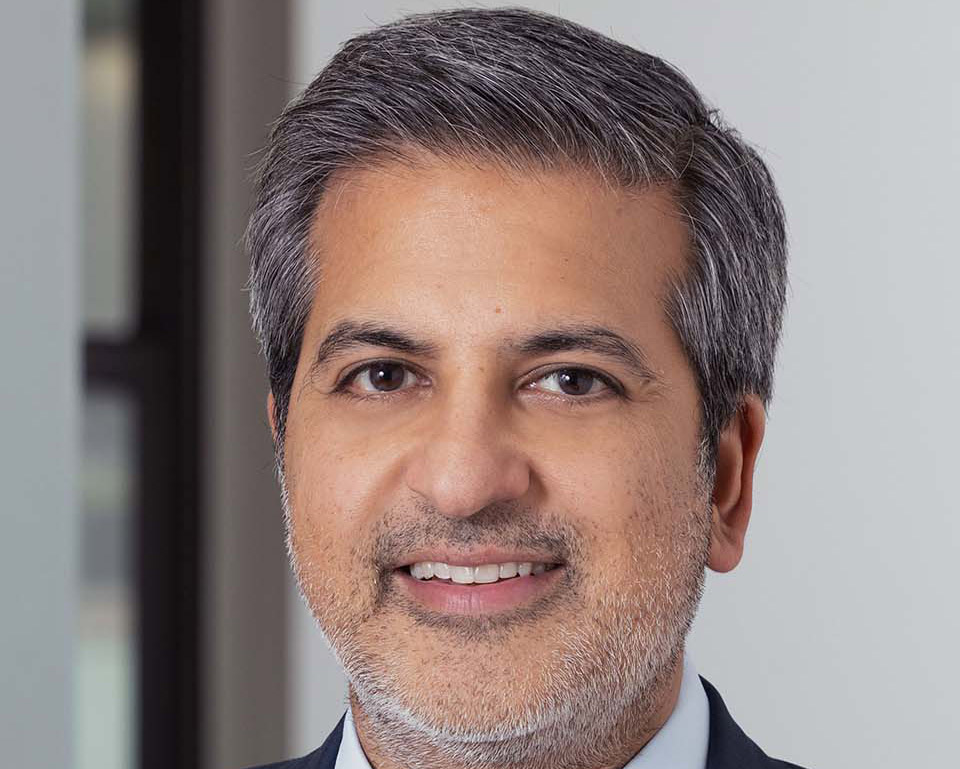
“This has been a Morgan Stanley kind of market,” says Mo Assomull, Morgan Stanley’s head of global capital markets, “with a lot of volatility where companies, especially those going through transition or repair, need good, integrated advice from stable and experienced teams of market and industry experts.
“So, for example, IPO volumes were down 60%, but we were still confident in launching and pricing the Mobileye IPO.”
Mobileye Global, an Israeli autonomous driving technology company, listed on Nasdaq in October 2022, and its $990 million deal was the second-largest listing on a US exchange during the awards period. Morgan Stanley was joint lead bookrunner and stabilization agent.
The biggest IPO was for Corebridge Financial, which completed its $1.7 billion listing on the New York Stock Exchange one month before Mobileye’s deal. Morgan Stanley was lead active bookrunner.
In equity-linked, the bank completed some intricately structured and executed deals, including the biggest deal in 2022, the $1.8 billion convertible bond for semiconductor company Wolfspeed in a volatile period in November. It was also sole placement agent for a $401 million pre-IPO convertible private placement for security operations company Arctic Wolf, a deal that used a proprietary Morgan Stanley structure that sets the conversion price at a premium to the company’s eventual IPO.
Morgan Stanley doesn’t play a volume game in debt capital markets, but it still ranks a creditable sixth in US-marketed bond issues excluding agency and self-led deals, and seventh for all deals from US borrowers, again excluding self-led.
But in keeping with its advisory mantra, the firm is more interested in providing tailored solutions than doing more deals than anyone else. In that spirit, it was lead left bookrunner, billing and delivery agent, and diversity and inclusion coordinator on the $10 billion debut bond from Meta.
IPO volumes were down 60%, but we were still confident in launching and pricing the Mobileye IPO
Mo Assomull
It was also global coordinator and one of the billing and delivery agents on the $8.25 billion six-tranche bond from GE HealthCare that came as part of that company’s spin-off from General Electric, which Morgan Stanley was also advising.
The bank also gets involved in syndicated lending, particularly in the leveraged loan market – although in a volatile period this has been a complicated business at times. Among the firm’s more notable deals were the $594 million first lien term loan and $900 million of senior secured first lien notes for Spirit AeroSystems, which it led alongside launching a tender offer for some of Spirit’s existing debt.
It was also lead left arranger on an $850 million term loan B for Hub International, executed as a single day drive-by, not often seen in loans but a useful way of countering extreme volatility.
Backing the bank’s expertise in primary markets is its formidable sales and trading franchise in both fixed income and equities. The bank continues to impress particularly on the fixed income side for the way in which it has grown share consistently, despite having cut costs heavily in 2015.