COUNTRY INDEX

|
AUSTRIA |
|
Best Bank: UniCredit Bank Austria |
|

The award for Austria’s best bank goes to UniCredit Bank Austria, reflecting its exceptional financial results and its clear strategic understanding of its place in the Austrian market.
Showing impressive financial and commercial momentum, the bank has bounced back decisively from 2021, when its performance was impacted by high restructuring and early retirement costs, and 2020’s big impairment costs. Its net operating profit grew by 30% in 2022 thanks to good progress on the business side, as well as higher deposit margins leading to an 8% growth in revenues.
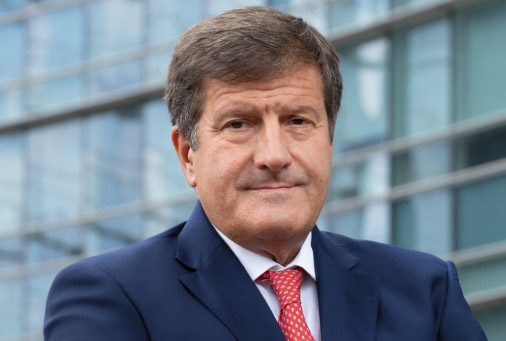
Austria is one of the countries that is performing best under UniCredit chief executive Andrea Orcel’s 2022 strategic plan, unveiled in late 2021, which involves a higher capital allocation outside Italy and a bigger focus on costs in countries such as Austria. The outcome so far has been good. UniCredit Bank Austria, whose supervisory board is chaired by Gianfranco Bisagni, reported a net profit of €823 million in 2022, recording a sustainable cost reduction of 7% in 2022 and a cost-to-income ratio of 53%.
Meanwhile, on the corporate and investment banking side, the bank has completed important work in sustainable finance in Austria. It advised the Austrian sovereign on issuing its first green bond in May, and issued the country’s first green covered bond. On the retail side, it partnered with Krone Sonne and Energie Burgenland to offer financing for households installing solar panels.

|
BELGIUM |
[index] |
|
Best Bank: KBC |
||
|
Best Investment Bank: BNP Paribas Fortis |
||
KBC has had a very good year in Belgium. Income grew by 12% to reach €2.8 billion, mainly driven by higher reinvestment yields and loan volume growth, which was partly offset by lower margins on the loan portfolio.
Inflationary pressure combined with higher bank taxes put pressure on costs, but the KBC’s cost-to-income ratio remained decent at 53%. At group level, this translated into an excellent net profit for 2022 of €2.7 billion, up 5% from 2021. The Belgian business accounted for 64% of those net profits, roughly €1.76 billion. As of December 2022, return on equity stood at 13%.
The bank remained cautious following Russia’s invasion of Ukraine, even though its direct exposure is limited. It has set aside $400 million of reserves to mitigate the impact of high oil and gas prices on inflation and economic growth, paired with the risk of a spillover effect on its own and clients’ financial operations.
In June 2022, KBC became the first European bank to roll out its own digital coin, the Kate Coin, named after the customer-facing bot it launched in 2021. It was also busy on the sustainability front, investing €1.5 million in real estate startup Setle, which promotes sustainable housing renovation.
BNP Paribas Fortis is Belgium’s best investment bank this year. It took the top position in the equity capital markets league table during the awards period, from second last year, with a 20% market share, having completed six transactions worth a total of €457 million.
It was also top of the debt capital markets league table with 15 deals worth €5.38 billion all together, for a 13.3% market share. It is neck and neck with US rival JPMorgan on the M&A side. Key deals in which BNP Paribas was involved included Elia’s €590 million rights issue in June 2022, where BNP Paribas Fortis acted as one of two global coordinating banks as well as settlement agent.
The bank was also adviser on the €2.4 billion demerger of DEME from CFE and its listing on Euronext Brussels, and adviser to Brookfield on its €1.3 billion takeover of Befimmo.

|
CYPRUS |
[index] |
|
Best Bank: Bank of Cyprus |
||
If this award was judged on share price alone, it would be no surprise that Bank of Cyprus is the country’s best bank once again. By the end of the first quarter its shares had risen by 176% year on year and 52.5% year to date, making it one of the best performing bank stocks in Europe. This must be particularly satisfying for chief executive Panicos Nicolaou, who received and rejected three all-share takeover proposals from US private equity firm Lone Star between May and September last year.

The last of these proposals was for €1.51 a share, valuing the bank at €674 million. On March 31, this year, Bank of Cyprus’ share price was €2.60, 72% above Lone Star’s last offer.
Deposits grew by 8% year on year to €19 billion in 2022. The bank also had a record year for lending, with €2.1 billion of new loans, up 17% year on year. The positive outlook is very much tied to the Cypriot economy, which saw real GDP growth of 5.6% in 2022 and tourist activity recover strongly – arrivals hit 80% of pre-pandemic levels. Growth is expected to decelerate in 2023, however, and the economy is highly sensitive to uncertainties in the macroeconomic environment across Europe.
Total non-performing loan exposures in the Cypriot banking sector remain stable at €2.7 billion, or 10.5% of gross loans in November 2022, versus 11.1% at the end of 2021. Private debt has continued to decline, reflecting deleveraging since the start of the financial crisis and stood at 80% of nominal GDP at the end of December 2022.
For Bank of Cyprus, last year saw the completion of its turnaround with the sale to Pimco of the €555 million portfolio which the vast majority were of non-performing loans that makes up Project Helix 3. The deal was capital accretive, with a net positive impact on the bank’s capital ratios of around 50 basis points. The bank’s robust common equity tier-1 ratio of 15.4% and liquid assets of c.€12.5 billion stood alongside a net loan-to-deposit ratio of 52% at the end of 2022.
The bank completed a staff reduction programme in 2022 costing €101 million. The estimated annual saving of this is expected to be around €37 million, with an estimated payback period of 2.7 years. It has also reduced the number of branches on the island to 60. In October last year, Bank of Cyprus became the first bank on the island to join the Partnership for Carbon Accounting Financials and is following the recommended methodology for the estimation of the financed Scope 3 emissions.

|
DENMARK |
[index] |
|
Best Bank: Nordea |
||
|
Best Investment Bank: Danske Bank |
||
Danske Bank’s strategic review in early 2023, as well as a $2 billion settlement of historic regulatory claims in the autumn of 2022, could well herald a new period of strength for the firm in the years ahead. And Jyske Bank’s acquisition of Handelsbanken Denmark, which closed in the fourth quarter of the year, also looks set to change the competitive landscape as it beds down.
But for the moment, it is regional powerhouse Nordea that maintains its hold on Euromoney’s award for Denmark’s best bank.
Nordea was able to complete the roughly €300 million acquisition of Topdanmark Life from Topdanmark Forsikring in late 2022, a deal that brings it a Danish life insurance and pensions business, rounding out its offering in that segment in the Nordic region. It also brings in some €11 billion of additional assets under management.
Nordea’s revenues rose about 10% overall in Denmark for the awards period, taking into account net interest income and fees across its main business lines.
Deposits in its personal banking, business banking and large corporates and institutions divisions rose 16% in Denmark, with particular growth in large corporates and institutions. Lending across the same divisions was essentially flat year on year.
Danish economic conditions are becoming more challenging. House prices are falling and the market is stuttering as rates rise, household spending is dropping and GDP is expected to shrink a little in 2023 before growing again in 2024. The picture for banks is tough; the next 12 months may show the importance of scale in a worsening economic environment.
Nordea also continued to perform strongly in investment banking, topping the volume rankings in equity and debt capital markets once again and featuring on the biggest deals in the market. It vies for the top spot in Danish capital markets activity with Nordic rival Danske Bank, which, for its increased deal flow in DCM, is Denmark’s best investment bank this year.
In DCM, Danske leads the rankings including its own issuance and ranks second to Nordea excluding it. But on the latter basis, Danske more than doubled the number of transactions it worked on in the period, increasing its market share at a time when most other leading franchises saw declines.
The bank worked on the biggest bond issue in the period, a €2.2 billion three-tranche for medical devices company Coloplast – a debut bond to take out the bridge financing for its purchase of Atos Medical.
A €2 billion senior preferred bond from Danske Bank itself, which included a green tranche, was the second-biggest deal from the country and came on the first day of business in 2023.
The bank also helped lead a green issue for Ørsted in June 2022 – the first of four from that company in the awards period. Formerly known as Dong, Ørsted specializes in renewables, particularly wind energy.
Excluding five of its own bonds, Danske worked on another seven of the 20 biggest Danish deals in the year.
ECM activity in Denmark plummeted 70% in the year, but getting on the business that does happen still matters. Danske ranked top alongside Nordea both in terms of volume and number of transactions, each with a 22% market share.
The bank was on all four of the biggest deals, all accelerated bookbuilds, the biggest of which was the $236 million capital increase for vaccine company Bavarian Nordic.
In M&A advisory, Danske worked on two of the biggest transactions: advising insurer Codan Forsikring on the $2 billion acquisition of its Danish business by Alm Brand, which closed in May 2022; and advising Noble Corporation on its purchase of Maersk Drilling for $1.7 billion, which closed in October.

|
FINLAND |
[index] |
|
Best Bank: Nordea |
||
|
Best Investment Bank: Danske Bank |
||
After moving its headquarters to Finland from Sweden in late 2018, regional banking group Nordea continues to perform well in what is now its home market.
Revenues rose 2% across all of Nordea’s regional operations in 2022, with revenues in Finland rising by 6%.

The loan business in Finland grew by 2% to €68.9 billion and, encouragingly, Stage 3 loans (those that are considered impaired) were down by 9%. That is welcome news given that Nordea continues to forecast a mild recession for the Finnish economy in 2023.
Under chief executive Frank Vang-Jensen, who has led the bank since late 2019, Nordea tries to be a responsible corporate citizen. It continues to promote its financial skills programme, which has reached more than 190,000 young people in Finland, as well as its financial training for senior citizens.
It has also launched a Fearless Founders programme in the country, which aims to close the gender gap at growth companies.
Digital remains an important area of focus. Mortgage applications now involve digital self-service and chatbot guidance through to final discussions with an adviser.
A new version of the group’s mobile banking app is attracting more than 100 million logins a month, while mobile users were up 6% year on year in 2022.
Nordea has also launched a new digital cash-management solution in its online corporate banking platform, Corporate Netbank, specifically aimed at small and medium-sized enterprises, with the scheme piloted in Finland in 2022.
In investment banking, the firm continues to rank well, in second place for bond issues excluding self-led deals and the top-ranked mandated lead arranger for syndicated loans in the country.
The bank’s own bond issues also continue to attract strong interest, as did a $1.5 billion accelerated bookbuild of Nordea shares that was sold by Sampo in April 2022, the biggest equity deal in Finland in the awards period and one in which the bank took the opportunity to buy back some 40 million shares.
Average quarterly return on equity was 15% through the awards period, with the full-year 2022 adjusted figure coming in at 13.5%. Its common equity tier-1 (CET1) ratio stood at 15.7% at the end of the first quarter of 2023, fully four percentage points above its regulatory requirement.
Finnish regulators are imposing a 1% systemic risk buffer from April 1, 2024, to be met from CET1, but Nordea expects to have sufficient headroom for this not to affect its capital return plans.
It was not a vintage year for investment banking activity in Finland, a market that usually features plenty of the kind of private equity activity that has been difficult to complete as the global economic environment deteriorates.
The market remained competitive, however, with Bank of America a particularly active foreign name and Barclays again a strong performer in debt deals for the Finnish sovereign and a number of key financials. And last year’s winner Nordea was another strong contender.
But as well as winning in its home market, Danske Bank this year also takes the title as Finland’s best investment bank by virtue of its continued leadership in debt capital market volumes, when banks’ own issuance is discounted, as well as its presence on some of the larger strategic transactions.
Equity capital markets activity dried up in Finland. There was only one substantial transaction, a $1.5 billion sale of shares in Nordea Bank that Danske was not present on. That deal’s five international bookrunners are tied for first place in the rankings with just that transaction.
There was, however, an uptick in the number of M&A transactions completed, even though the dollar volume of business fell by 21%. DCM volumes were broadly flat.
The advisory rankings were dominated by the $8.1 billion acquisition of food delivery company Wolt Enterprises by DoorDash, with only Qatalyst Partners and Goldman Sachs reaping the rewards.
But strip that out and Danske led the way on the remainder of the business, with eight transactions that included advising Fortum on the second biggest deal of the year, the $1.1 billion sale of its 50% stake in district heating company Fortum Oslo Varme to a group led by HitecVision, a European energy investor.
As a borrower, Finland brings the biggest deals in the bond market, and this year saw it complete three deals of $3 billion or more. Danske worked on two of the three, as well as billion-plus deals for Municipality Finance and corporate Neste.

|
FRANCE |
[index] |
|
Best Bank: BNP Paribas |
||
|
Best Investment Bank: BNP Paribas |
||
It is no surprise that BNP Paribas is both the best bank and best investment bank in France this year. Under the leadership of chief executive Jean-Laurent Bonnafé, the bank has delivered an outstanding financial performance across the board over the past 12 months.
At year-end 2022, loans outstanding in its French business rose by 4.8% compared with 2021, and were up across all customer segments. Deposits were also up by 4.8% versus the previous year. Revenues were up 6.6% at €6.68 billion, while net interest income rose by 4.9%. Gross operating income totalled €1.98 billion, up by 15.7% on 2021. BNP Paribas’ domestic local private banking business attracted net asset inflows of €6.2 billion, mainly through external client acquisition.

While inflation put pressure on the French banking sector’s operating efficiency and cost of risk, the sector delivered a strong performance in 2022, an election year for the country, which saw the re-election of Emmanuel Macron as president.
In the first quarter of 2023, however, French banks faced added competitive pressure as the government decided to increase the rate on the popular Livret A regulated savings scheme by 100 basis points to 3%. And things may get tougher in the year ahead. BNP Paribas itself has faced public scrutiny this year over a French prosecutor’s investigation into its alleged involvement in “cum-cum” transactions, a type of trade used to evade taxes on dividend payments, alongside three other large banking groups. The bank is also facing litigation from climate campaigners over its continued financing of fossil fuels.
In the capital markets, BNP Paribas remains the partner of choice for large transactions in France. The bank topped the equity capital markets bookrunner league table with a 17.44% market share, having completed 21 transactions worth a total of $2.12 billion. It was also number one in M&A, with a 38.1% market share, according to Dealogic.
Landmark debt capital market deals that the bank worked on included Energie de France’s €3 billion triple-tranche bond in October 2022, on which BNP Paribas was joint global coordinator. It was also global coordinator for L’Oréal’s €3 billion inaugural triple-tranche bond.
On the sustainability side, the bank acted as global coordinator and documentation agent for SPIE’s sustainability-linked refinancing of its €1.2 billion syndicated loan. The company also completed a sustainability linked financing framework for future financing with the help of BNP Paribas.

|
GERMANY |
[index] |
|
Best Bank: Deutsche Bank |
||
|
Best Investment Bank: Deutsche Bank |
||
Deutsche Bank delivered its best financial results for 15 years in 2022, achieving a 65% increase in pre-tax profit to €5.6 billion and a return on tangible equity of just under 10%. It generates well over a third of its revenues in its home market, benefiting from rising rates that boosted business banking earnings, while at the same time containing credit costs on a diverse and high-quality loan book.
Germany continues to account for just under half the bank’s loans, which are skewed towards residential mortgages. It continues to improve operating efficiency at home, switching eight million Postbank customers, representing €65 billion in business volume, onto the Deutsche bank IT platform in 2022.
The private bank also secured €2 billion of net investment inflows in 2022 and grew revenues in Germany by 10% in 2022.
The bank still maintains two brands, offering simpler transaction services to the retail customers of Postbank and more advisory services to the wealthier clients of the Deutsche Bank brand. It closed 110 retail branches in 2022, transformed others into a more self-service style and opened six private banking centres.
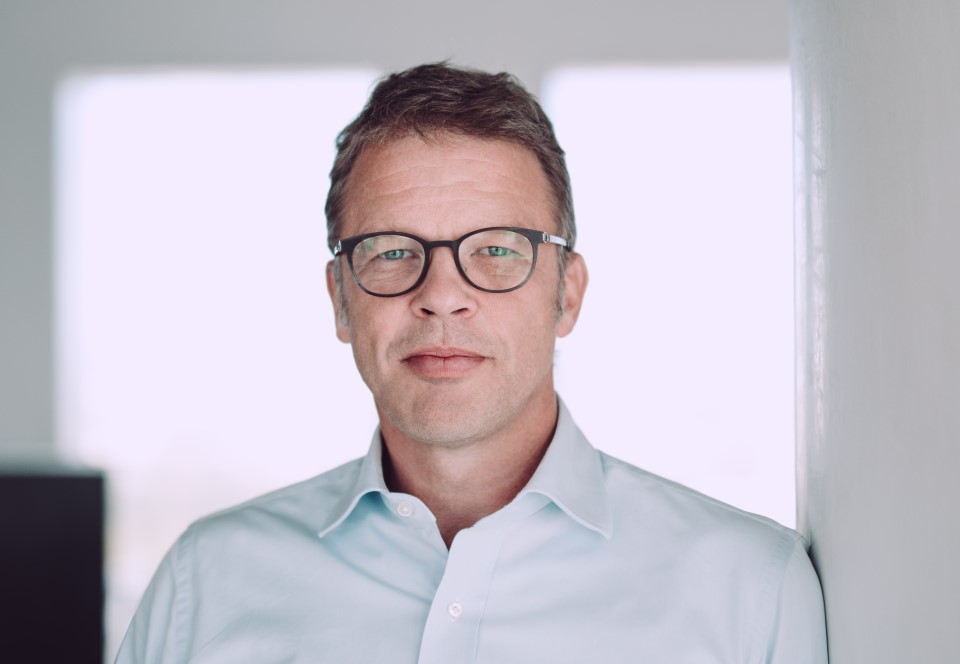
The bank’s senior management feels that the firm has come through the first stage of transformation under the leadership of Christian Sewing, appointed as chief executive in 2018, and is now entering a new growth phase based on exporting its German Hausbank model.
Deutsche Bank is also the best investment bank in Germany. A prime example of its capabilities was its role as sole financial adviser to a consortium comprising Adia and GIP on the acquisition of a 72.5% stake in German rail logistics firm VTG from Morgan Stanley Infrastructure Partners and Joachim Herz Stiftung. The deal was the second-largest European transport infrastructure transaction in 2022 and demonstrates Deutsche’s leadership in infrastructure M&A advisory following successful deals in 2021 – including BASF’s wind park acquisition and subsequent sale to Allianz Capital Partners.
The bank was also an adviser to RWE on its €6.8 billion acquisition of Con Edison Clean Energy Businesses in the US. It was underwriter, bookrunner and facility agent on the acquisition bridge loan and then advised on the subsequent €2.4 billion mandatory convertible issued to Qatar Investment Authority.
Deutsche acted as joint global coordinator and joint bookrunner for Ionos on the German web hosting company’s €389 million initial public offering in February 2023. The deal was the first European tech IPO in a year and the first European IPO of 2023.
Deutsche also arranged large bond deals for Adidas, Siemens and many of the German Lander.

|
GREECE |
[index] |
|
Best Bank: Piraeus Bank |
||
|
Best Investment Bank: UBS |
||
Greek banks are finally getting through the clean up of legacy bad debts and, helped by rising rates, delivering improved profitability and shareholder returns, as well as stronger capitalization.
Piraeus Bank exemplifies these trends and wins the award as Greece’s best bank this year. It is not just that it has brought non-performing exposures down from 13% of loans in 2021 to 6.8% by the end of 2022, it has also grown customer deposits by €3 billion year on year, expanded its book of performing and new credits, all while cutting total operating expenses by 5% in 2022.
It now claims to bank 5.7 million customers, 65% of the population with access to banking in Greece. With net interest income growing by 35%, that allowed it to achieve a near 10% return on tangible equity in 2022. It used retained earnings to improve its fully loaded common equity tier-1 ratio by 300 basis points to 11.5%. Analysts at Deutsche Bank characterize this as an “outstanding improvement”.
Piraeus Bank has invested heavily in developing a wide array of digital banking services. In 2022, the bank made it easier for clients to book online appointments, manage cash transactions and digital wallets, and to use auto insurance facilities. This resulted in a more than 20% increase in mobile users and a 16% increase in transactions.
UBS wins the award for Greece’s best investment bank, in large part thanks to its work with the domestic banks. In December 2022, it was exclusive financial adviser to Piraeus Bank on the €500 million Project Sunshine leasing non-performing exposures portfolio sale to Bain Capital Credit. And in February 2023, it advised Piraeus Bank on its mandatory tender offer for Marfin Investment Group.
UBS was also joint financial adviser to National Bank of Greece on the €455 million sale of its diversified insurer, Ethnik Hellenic General Insurance, to CVC. And it advised Eurobank, another of the big four Greek banks, on the sale of its Serbian business, Eurobank Direktna, to AIK Banka Beograd.
UBS has led on bond deals for the three biggest Greek banks. It advised the smaller Pancreta Bank on a €100 million capital increase, as well as HSBC on the sale of HSBC Greece to Pancreta Bank.
But its biggest deal, closing in September 2022, was advising the Hellenic Republic Asset Development Fund on the €733 million privatization sale of a 65% stake in DEPA Infrastructure to Italgas, in the largest gas network transaction in mainland Europe in 2022.

|
ICELAND |
[index] |
|
Best Bank: Islandsbanki |
||
Islandsbanki, Iceland’s second-biggest bank by assets and revenues, posted a strong financial performance over the awards period, making it the country’s best bank for the second year in a row.
It has continued the strong progress it has made since its IPO in June 2021, with revenues rising 20% during the awards period. Pre-provision profit climbed 34% and return on equity is trending comfortably above the bank’s 10% target, at a quarterly average of 12.2%.
Loan growth has been strong at 10%, driven by lending to retail and to small and medium-sized enterprises. And that growth is not driving an increase in risk so far: the bank’s Stage 3 loan ratio fell six basis points to 1.75% over the period and – more strikingly – Stage 2 loans fell from nearly 10% at the end of 2021 to just 3% at the end of the first quarter of 2023.
The bank is progressing well in digitalization. New digital sales hit 87% in the first quarter of 2023, close to the 90% target the bank set 12 months earlier.
There are also strategic moves afoot. In February 2023, Islandsbanki announced discussions of a merger with Kvika banki, a deal that would increase its assets by about 20%. Presenting first-quarter results, Islandsbanki chief executive Birna Einarsdóttir said that Kvika was a good match because of cost synergies and the opportunity to expand the bank’s product offering into areas such as insurance.
However, the macroeconomic picture for Iceland is challenging. Inflation peaked at 10.2% in February, but the central bank continues to raise rates, most recently in late May by 1.25% to 8.75%.
It has also not been an unblemished period for Islandsbanki, which has a pending regulatory settlement hanging over it after a probe found possible legal violations during a sell-down of the government’s stake in the bank in March 2022 – a deal that attracted much political and public debate. The government still owns 42.7% of the bank.

|
IRELAND |
[index] |
|
Best Bank: Bank of Ireland |
||
|
Best Investment Bank: Citi |
||
Bank of Ireland had a landmark year in 2022. Not only did it return to full private ownership, following the sale by the Irish state of its remaining shareholding in September 2022, but it also completed two key acquisitions, which gave a boost to assets under management, loans and deposits. It also welcomed a new group chief executive as Myles O’Grady took over from interim head Gavin Kelly in November last year.

The bank’s performance has been helped by the departure of Ulster Bank and KBC Bank Ireland from the Irish market, which allowed it to add customers. Around 450,000 new accounts were opened in 2022, 60% more than the previous year.
Growth has not come at the expense of performance. The bank grew total income by 11% year on year in 2022, generating an underlying profit before tax of €1.2 billion. Non-performing exposures fell by 35%, from 5.5% in 2021 to 3.6% in 2022. The bank generated a return on tangible equity of 10.6% for the year.
A key development during the awards period was the acquisition of wealth management and capital markets firm Davy, which has boosted assets under management at Bank of Ireland by around 75% to roughly €39 billion – €18.4 billion of assets were added following the deal. The bank’s savings and investment offering now spans the mass market, mass-affluent and high net-worth segments.
The KBC Bank Ireland portfolio acquisition was also completed in February 2023. This saw €7.8 billion of loans and €1.8 billion of deposits transferred to Bank of Ireland from KBC. The deal increases its mortgage book by a third.
Ireland’s best investment bank, Citi, topped the M&A league table for the awards period, with a 43% market share. With HSBC, Citi advised Dublin-based global aircraft lessor Goshawk Management on the largest M&A deal in Ireland last year, its $6.7 billion acquisition by Japanese aircraft lessor SMBC Aviation Capital. The combined business has a portfolio of over 700 owned and managed aircraft, with additional orders from Boeing and Airbus for over 240 new technology narrow-body aircraft.
Bank of America topped the debt capital market league tables in Ireland during the awards period. Goldman Sachs dominated the equity capital market space this year, working on four deals worth $620 million and ranked second in the M&A league tables behind Citi.

|
ITALY |
[index] |
|
Best Bank: UniCredit |
||
|
Best Investment Bank: UniCredit |
||
UniCredit swept the board in Italy this year, winning both the bank and investment bank categories. This is testament to the progress that has been made under the UniCredit Unlocked industrial plan established last year that has seen the bank deliver its best results for a decade, with consistent growth over eight quarters.

At €3.7 billion, net profit in Italy was up 20% year on year, thanks to a 15% improvement in net interest income. Revenues in the country were up 7.3% to €9 billion. There has been a material improvement in loan loss provisions, while non-performing exposures stand at just 2.5% of the loan book. UniCredit’s cost-to-income ratio in Italy also fell by 3.8 basis points to 43.5% during the year.
The bank, under chief executive Andrea Orcel, has worked hard to streamline processes and improve efficiency. Its long-term strategy of moving from ‘being digital’ to ‘living digital’ does not come at the expense of the physical network: it has continued to invest in its domestic branches, renewing 440 of them in 2022, bringing the number of revamped shopfronts to 52% of the total.
Of particular note is its work to support Italy’s domestic corporate customers. The PNRR Bandi e Incentivi platform, set up in partnership with PwC Italy, is one example of this, helping Italian companies to consult on EU tenders and access Next Gen EU funds.
UniCredit is also focused on helping local communities. One initiative, the UniCredit per l’Italia programme, has made €5 billion available to finance a moratorium for domestic companies and customers faced with rising costs of energy and raw materials. It has also provided €3 billion to support the suspension of instalment payments on loans to businesses and households and a postponement of charges for private customers.
The bank also maintained its dominance on the investment banking side. It topped the debt capital markets league tables again with a 19.4% market share against second-ranked Intesa SanPaolo’s 12.8%. It was a lean year for Italy’s equity capital markets, but UniCredit was on most of the big deals, including the €1.1 billion Saipem SpA rights offer in July and Industrie DeNora’s €507 million IPO in June.

|
LUXEMBOURG |
[index] |
|
Best Bank: BGL BNP Paribas |
||
BGL BNP Paribas positioned itself as the strongest commercial bank in Luxembourg in 2022.
It reported good results, with consolidated net profit (€408.1 million), net banking income (€1.69 billion), gross operating income (€835 million) all increasing by 4% year on year.
BGL BNP Paribas also managed to increase its deposit market share slightly to 7.6%, while maintaining its solid 10% share of the loan market. Return on equity stood at 10.2%.
Beyond the numbers, the bank also made good progress on its digitalization strategy. It provided a number of new solutions last year, including account aggregation that incorporates accounts held by customers in different financial institutions; a fully digital student loan, AidFi, accessible via a QR code issued by the ministry of higher education and research; and an Invest Click product with online subscription to help newcomers gain access to investments.
Staying true to a group-level commitment to sustainability, BGL BNP Paribas launched a new impact loan where the interest rate is tied to environmental, social and governance objectives. This is designed to support and encourage Luxembourgish companies in corporate social responsibility and transition.
The bank’s partnership with French sustainability ratings agency EcoVadis has made it the first to offer sustainability-linked loans to small and medium-sized enterprises in Luxembourg.

|
NETHERLANDS |
[index] |
|
Best Bank: ING |
||
|
Best Investment Bank: Rothschild & Co |
||
ING remains the Netherlands’ best bank this year, demonstrating resilience despite the impact of the war in Ukraine on the Dutch economy. At group level, the bank reported net profit of €1.09 billion in the fourth quarter of 2022, up 15.2% on the same period in 2021.

At home, ING reported net interest income of €804 million and €442 million in profit before tax in the fourth quarter of last year.
Net core lending grew by €400 million in the fourth quarter, reflecting higher mortgage volumes and an increase in business lending. The bank continued to grow its customer base, onboarding 585,000 new primary clients in 2022.
ING has also made progress on digitalization.
“We continued to execute on our strategy and delivered strong results, as well as made significant progress in a number of areas, including providing seamless digital services using our strong scalable tech and operations foundations,” says chief executive Steven van Rijswijk.
In the Netherlands, 52% of new customers were digitally onboarded in the fourth quarter of 2022, up from 39% in the same quarter of 2021. Around 97% of customer interactions now take place via the app, and customers in the Netherlands are now able to manage their inheritance process fully digitally.
Rothschild & Co’s M&A track record in the Netherlands makes it the country’s best investment bank this year. Boasting an impressive 40% market share, it completed 19 transactions worth a total of over $41 billion, which is much higher than the $7.1 billion advised on during the previous awards period.
Among the key deals, Rothschild advised Signa and Central Group on its £3.8 billion purchase of Selfridges Group, arranging a total of seven separate facilities in an operating company/property company structure. It also recorded a strong performance in independent debt advisory and restructuring, with 13 transactions totalling $3 billion.
Rothschild served as independent financial adviser to Dutch insurance group ASR on its €594 million accelerated bookbuild in relation to ABN Amro’s €500 million share buyback.

|
NORWAY |
[index] |
|
Best Bank: DNB |
||
|
Best Investment Bank: DNB Markets |
||
It was another strong year for DNB, Norway’s biggest bank, with revenues rising 24% and pre-provision profits before tax up 33% in the 12 months to April 2023. The bank once again claims the title of Norway’s best bank.
Chief executive Kjerstin Braathen, who has been in post since 2019, recently completed the acquisition of digital bank Sbanken. The deal strengthens DNB’s position in the Norwegian economy and gives it a useful boost in Bergen.
DNB’s profitability is strong, with a 14.5% return on equity in the full year 2022, compared with 10.7% the previous year. Even better, return on equity was 17.5% in the last quarter of 2022 and the first quarter of 2023. Costs are falling, with the bank’s cost-to-income ratio at 34% in the most recent quarter, down from 43% for the full year 2021.
Capital is still good despite falling a little since the 2021 acquisition of Sbanken, before which DNB’s common equity tier-1 (CET1) ratio had reached 19.4%. It now stands at 18.6%, up about 60 basis points in the last year.
This strength will stand the bank in good stead if fears of the country’s Financial Supervisory Authority proved justified. In a report in June 2023, the regulator said that high household debt and commercial property prices were key vulnerabilities. It expects banks’ CET1 ratios to take a severe hit under its own stress scenario.
Asset quality at DNB has been improving, with the bank’s overall proportion of impaired loans falling from 1.8% to 1.4% over the awards period. And while DNB’s price-to-book multiple of 1.18 times is down from 1.39 one year ago, it is still at an enviable level by international standards.
DNB Markets, DNB’s investment banking business, is largely unthreatened by rivals in Norway’s debt markets, although it faces stiff competition from regional and international firms in advisory and equity capital markets.
But a good year in those areas, combined with the perennial strength of its debt franchise, again make it Norway’s best investment bank.
DNB itself accounts for a substantial portion of the biggest issues in Norway, issuing seven of the top 20 deals. But it also works on the Norwegian sovereign’s transactions, a plethora of covered bonds from highly active local issuers and some of the largest corporate deals.
In M&A, DNB’s acquisition of Sbanken, completed at the start of the awards period, accounted for a $1.4 billion chunk of the bank’s advisory credit. But stripping that out still saw an increase in DNB’s deals from 14 to 23, putting it above rivals and still ranked in the second tier by dollar volume.
DNB Markets wasn’t involved in the biggest deal of the year – the $12.5 billion sale by Sweden’s Lundin Energy of its oil and gas business to Norway’s Aker BP – but it was on seven of the 20 largest transactions, including the $2 billion acquisition of a majority stake in SalMar by aquaculture firm NTS, where it was adviser to NTS.
At just under $5 billion, Norwegian equity capital market volumes were about half that each of the previous two years, but DNB Markets still secured roles on many of the largest deals.
These included the country’s biggest equity deal, a $527 million accelerated selldown of shares in Vår Energi by Eni and HitecVision in June 2022, for which DNB was one of the four global coordinators.
It also featured on two deals helping raise capital for Borr Drilling, a $275 million primary sale in August 2022 and a $250 million convertible bond in January 2023.

|
PORTUGAL |
[index] |
|
Best Bank: Banco Santander |
||
|
Best Investment Bank: BNP Paribas |
||
Banco Santander had its best year ever in Portugal last year, achieving a net profit of €606.7 million, up from €298.6 million in 2021. It is the largest privately owned bank in the country with market share in loans of around 18%, split between a 20.8% share in mortgages and 16.4% in loans to corporates. The bank has a 13.9% market share in deposits.

Santander reinforced its position in the Portuguese mortgage market over the last year, with mortgage production up by 15%. New lending now stands at 23.1% of the market, meaning that almost one in four new loans granted in Portugal is originated by Santander.
This growth has been accompanied by efficiency and the bank had the best cost-to-income ratio in the market last year at 37.6%. It is also very well capitalized, with a common equity tier-1 ratio of 16.2%, well above regulatory requirements. It is rare among European firms in achieving a return on equity (12.3%) above its 11% cost of equity. Therefore, it is no surprise that Santander’s Portugal chief executive, Pedro Castro e Almeida, is to take over from António Simões as regional head for Europe at the bank in September this year.
The Portuguese economy is still dealing with the impact of Covid-19, and much of Santander’s activity in the country over the last year reflects this. In September 2022, it signed a protocol with the European Investment Bank to support small and medium-sized enterprises and mid-caps in Portugal with a credit line of €820 million.
It has also arranged three new financing lines totalling €250 million with the European Investment Fund directed at companies that operate in business areas with special relevance in Portugal, such as sustainability, education and culture.
Santander’s consumer credit and loans businesses grew by more than 50% in 2022, a reflection of the digital transformation of existing contracting processes. The bank had 1.1 million digital customers by the year end, representing 62% of the total. The firm remains mindful of all its customers, however, and in June it launched Superlinha Senior, a dedicated customer service line for non-digital customers over 70 years old. With no pre-recorded messages, around 200,000 customers unfamiliar with digital channels can get help in day-to-day banking without having to go to a branch.
In a quiet year for equity capital markets, BNP Paribas worked on the two main deals that took place: the $1 billion accelerated bookbuild for Energias de Portugal in March this year and the €53 million rights offer for Greenvolt Energias Renovaveis in July 2022.
It also ranked number two in the M&A league table for the year, largely thanks to having advised TagEnergy on its €450 million buyout by Impala SAS last April.

|
SPAIN |
[index] |
|
Best Bank: CaixaBank |
||
|
Best Investment Bank: HSBC |
||
CaixaBank consolidated its position as Spain’s best bank in 2022 after closing the biggest merger in the history of the Spanish banking sector with Bankia.
It now has the most extensive branch network in Spain; at 3,800 branches it is double the size of the nearest competitor. Reflecting a commitment to maintaining services in areas where other banks are cutting back, it is present in over 2,200 municipalities, twice as many as its closest competitor, and is the only bank in 470 towns.

It also runs 17 mobile branches – the so-called ofimóvil branch in a bus – to provide services to 626 municipalities.
Under the leadership of Gonzalo Gortázar, chief executive since 2014, CaixaBank has also become the leading digital bank in Spain, with a digital customer base of 11.2 million at the end of 2022, as well as 4.6 million customers who connect daily to the CaixaBankNow digital banking platform.
Partly for this reason, the European Central Bank chose CaixaBank to work on the prototype of the digital euro.
CaixaBank is also the domestic market leader in long-term savings, mutual funds, life insurance and pensions. The merger with Bankia and the purchase of Mapfre’s stake in Bankia’s insurance business, should allow for further growth in insurance.
CaixaBank secured net inflows of €3.73 billion in long-term savings products in 2022, increasing its leading market share by another 25 basis points up to 29.7%.
HSBC wins the award as Spain’s best investment bank after leading the largest M&A transaction and largest equity capital markets deal to close in the awards period. It acted as lead financial adviser to Cellnex on its €10 billion acquisition of CK Hutchinson’s European tower portfolio.
The complex deal, completed in November 2022, covered thousands of sites across the continent and was three years in the making. HSBC was able to add value to the buyer through its closeness to the seller and its ability to engage in continued dialogue with both sides over the process, including around valuation and the risks and financial implications of various possible transaction structures.
Consideration was in cash and shares, and HSBC was one of two joint global coordinators on a €857 million secondary accelerated bookbuild in Cellnex shares. It concurrently led an €1.1 billion equity hedge for CK Hutchinson, which received Cellnex shares in partial consideration for its UK towers.
HSBC is good at cross-border deals with complex financing. It acted as coordinating lead arranger, underwriting bank, joint swap market risk execution bank and deal contingent hedge provider for Spanish construction company Ferrovial on the financing for the $9 billion redevelopment of terminal one at New York’s JFK airport.

|
SWEDEN |
[index] |
|
Best Bank: SEB |
||
|
Best Investment Bank: Citi |
||
It has been a tough time for Swedish banks. The turmoil of recent months at property company Samhällsbyggnadsbolaget i Norden (SBB) – which replaced its founding chief executive in June 2023 after the firm’s credit rating was cut to junk and amid falling confidence in the real estate sector – has shaken the country’s economy and its currency.
Fortunately, the performance of Sweden’s biggest bank, SEB, has continued to be strong, earning it the title of Sweden’s best bank once again. It is perhaps a measure of its resilience that it is now tasked, alongside JPMorgan, with advising SBB on its options.
Revenues at SEB rose 21% over the awards period, with pre-provision pre-tax profit up 29%.
The bank has focused on a number of initiatives over the past year, including stepping up support for small and medium-sized enterprises in Sweden and in the Baltic region. It has also been able to benefit as regional rivals stepped back in custody, allowing SEB to take a firmer hold on that business.
Chief executive Johan Torgeby, who took the helm in 2017, has been with the bank for 15 years. He talks more about sustainability and transition nowadays, but his focus on digital solutions remains just as strong as it was when he began. Sometimes the two come in tandem: the bank has rolled out digital tools to help customers lower their energy bills, for example.
The bank has what it calls an innovation studio, SEBx, which in 2022 launched the first Nordic product based on banking-as-a-service, for Humla, a fintech that will now develop services on SEBx’s cloud-based platform. Demand from others has been strong enough that the bank has set up a whole new unit, SEB Embedded, to cater to it.
For the group as a whole, profitability has been good, with a return on equity of 13.5% for the full year 2022 and 18% in the first quarter of 2023. Costs are modest, with a cost-to-income ratio comfortably below 40%. And the bank’s capital position is stronger than many peers, with a common equity tier-1 ratio of 19.2% at the end of the first quarter of 2023, up from 19% at the end of 2022.
The credit portfolio is not yet showing worrying signs of stress, despite a tough environment. The ratio of impaired loans to total loans fell marginally from 0.4% to 0.3% over the awards period. In absolute terms, impaired loans fell 20%, despite loan growth of about 7%.
Given the worsening economic outlook, it helps that SEB is the least exposed of the three big Swedish banks to the commercial real estate sector. And in retail mortgages, the bank’s loan-to-value multiples average out at about 57%, hardly the stuff of nightmares.
Sweden’s investment banking and capital markets landscape is a highly competitive one in which some domestic and regional firms have particular claims on specific businesses: Nordea is the biggest lender, SEB is bookrunner of the most bond issues and Carnegie dominates in equity capital markets.
But for an impressive all-round performance that also reflects its status as the most active international bank in the market with local experience stretching back more than 40 years, Citi is Sweden’s best investment bank this year.
The bank was on four of the eight biggest completed M&A transactions, helping it to second place in the Dealogic rankings for the awards period. This included the biggest transaction, the $22.5 billion acquisition of Swedish electric car maker Polestar Performance – which was advised by Citi alone – by Gores Guggenheim, a special purpose acquisition vehicle in June 2022.
A few months later, the bank was one of two advisers to Philip Morris on the take-private of Swedish Match in a $1.8 billion transaction. It also advised EQT on the sale of a stake in Swedish fibre company GlobalConnect to Abu Dhabi’s Mubadala Investment Company, showcasing its multi-regional expertise.
Equity capital markets transactions were sharply down, and some of the biggest deals were capital raisings. Citi was the only non-domestic bookrunner on the $875 million rights issue for Beijer Ref, a cooling technology firm, which took place in March 2023 and was the biggest deal in the period under review.
In debt capital markets, Citi worked on additional tier-1, senior non-preferred and tier-2 deals for Swedbank, a green senior non-preferred deal for Nordea, as well as deals for Handelsbanken and SEB. In the corporate sphere, the bank led hybrids, perpetuals and senior deals for issuers including Telia, Securitas and Volvo.

|
SWITZERLAND |
[index] |
|
Best Bank: UBS |
||
|
Best Investment Bank: UBS |
||
UBS already served more than 90% of large Swiss corporations and over 30% of Swiss households as the country’s leading universal bank before the extraordinary rescue takeover of Credit Suisse in March. That deal, announced at the end of our awards period and completed in June, confirms UBS as Switzerland’s best bank.

The takeover has attracted controversy for the Swiss Financial Market Supervisory Authority’s decision to write down to zero $17 billion in face value of Credit Suisse additional tier-1 bonds. But Credit Suisse was no longer viable. If it had tried to open on Monday March 20 and then gone into insolvency, the Swiss banking industry, maybe even the Swiss economy, would have crashed.
It is just as well for Switzerland that UBS stood ready to take its old rival over and that the country’s regulators gave it a waiver on competition grounds.
New chairman Colm Kelleher drove the deal through, securing a loss-sharing agreement from the Swiss government and liquidity from the Swiss National Bank. He then promptly re-hired former chief executive, Sergio Ermotti, to manage this new transformative acquisition.
It remains to be seen how UBS will manage the Swiss business of Credit Suisse. Combined, the new UBS has commanding shares of deposits and loans in its domestic market far ahead of its closest challenger, Raiffeissen.
UBS shareholders certainly won’t be complaining. UBS had already managed to grow profits in its mainly Swiss personal and corporate banking business in 2022 by 9% compared with the previous year, when its results had been flattered by releases from loss reserves.
UBS also claims the prize as Switzerland’s best investment bank. It was lead financial adviser to Swiss duty-free and travel shopping company Dufry on its acquisition of Autogrill to create a global sector leader with SFr14 billion ($15.6 billion) in annual revenue.
The transaction required first negotiating the purchase of a 50.3% stake from Edizione, the holding company of the Benetton family and then a mandatory tender offer for remaining shares.
UBS was also exclusive financial adviser to Swiss packaging company SIG Combibloc on its €1.4 billion acquisition of Scholle IPN in the US. It also provided a fully underwritten bridge facility and acted as joint global coordinator and joint bookrunner on a SFr213 million accelerated bookbuild to finance the deal.

|
UNITED KINGDOM |
[index] |
|
Best Bank: Lloyds Banking Group |
||
|
Best Investment Bank: Rothschild & Co |
||
Charlie Nunn, who has been chief executive of the UK’s best bank since 2021, announced a new strategy for Lloyds Banking Group in the first quarter of 2022. It didn’t receive much attention as it was announced on the same day that Russia invaded Ukraine. And the new strategy is really the old strategy with a slight shift in the focus beyond cost discipline and scale efficiencies towards investing in growth and doing more for the bank’s market leading 26 million customers.
Lloyds has done well for years with its multi-brand approach, serving different customer demographics through the Lloyds Bank, Halifax, Bank of Scotland and Scottish Widows channels run off a single IT platform. It has set out to build on its leadership in mortgages, provide more insurance products and unsecured loans to consumers, build a mass-affluent offering, extend coverage of small and medium-sized enterprises, and do more with large corporates.
So far, so good. The group grew revenue in 2022 by 14% with a 4% increase in other revenue beyond the net interest income on which it traditionally depends. Lloyds remains the UK’s largest digital bank and, by continuing to invest in personalization and digitalization, saw a 15% increase in daily log-ons in 2022 while growing its digitally active users by 8% to 19.8 million.
In the UK, Numis Securities topped the equity capital markets league tables in the 12-month awards period, suggesting it will be a smart acquisition for Deutsche Bank. Barclays led in debt capital markets. But Rothschild & Co wins the award for the UK’s best investment bank. In part, that reflects the sheer number of M&A transactions the firm advised on, with its 89 completed transactions, almost twice as many as JPMorgan with 45 and Goldman Sachs with 42.
Rothschild has a longstanding relationship with Meggitt, the UK supplier of components and sub-systems to the aerospace and defence markets, having acted as its retained adviser for over 20 years, providing regular valuation reviews, advice on M&A, shareholder interactions and debt refinancings.
It advised Meggitt on the £6.3 billion recommended cash offer from Parker Hannifin of the US, which represented a 71% premium to the share price prior to disclosure. Rothschild guided the company through consideration of a competing offer and a UK government public intervention notice, as well as negotiation of guarantees from the acquirer. The deal closed in September 2022.
While the big universal banks struggle to provide advice on restructurings, owing to the inherent conflict of usually being creditors to companies, Rothschild is a leader in what could be a growing business, as well as in debt advisory to UK companies – a new complement to its traditional strength in equity advisory.