FX: Triennial BIS survey has market players mulling settlement risk and attractions of listed products

As the industry digests the results of the latest BIS triennial FX survey, Euromoney canvasses opinion on the implications of the key findings.

Turnover in over-the-counter (OTC) FX markets averaged $7.5 trillion per day in April, according to the latest triennial survey by the Bank for International Settlements (BIS), an increase of 14% from its April 2019 survey.

The period of data collection coincided with heightened volatility due to changing expectations about the path of future interest rates in advanced economies, rising commodity prices and geopolitical tensions after the Russian invasion of Ukraine. It is also possible that the actual figure was even higher, since pandemic restrictions were in place in several reporting jurisdictions, including China and Hong Kong.
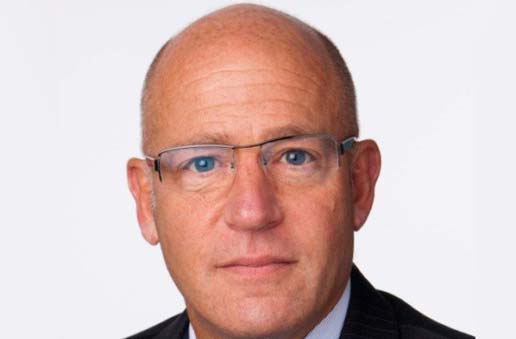
Jerome-Kemp-Baton-Systems-516.jpg
Jerome Kemp, Baton Systems

Jerome Kemp, president of Baton Systems – a fintech focusing on post-trade processing – reckons the trading volume poses important questions about settlement risk, specifically the growth in trading in non-CLS settled currencies. There has been a particularly noticeable jump in renminbi trading, which has increased by more than 50% since 2019.

“This has amplified the need for on-demand settlement to reduce the possibility of a trade moving against a counterparty and impacting their ability to settle,” he says.

Responses

Swissquote Bank has responded to increased market volumes and volatility by deepening its credit-review process for granting settlement limits to include more mark-to-market swings risk, especially in more volatile currencies such as the Turkish lira, explains Maxime Mordelet, institutional digital asset and e-forex liquidity manager.

“We also have increased our margin factors for longer-term swaps in most illiquid pairs and become a CLS third-party member, which reduces our credit risk and centralizes it with our CLS partner UBS,” he adds.

Ed-Moya-Oanda-713.jpg
Ed Moya, Oanda

Chaos in the FX markets made the decision to hedge risk relatively easy, according to Ed Moya, senior market analyst at Oanda.

King dollar was mostly a one-way trade this year, but there were a few times when traders were confident that the peak in the dollar was in place,” he says. “Companies can’t afford to risk their profits playing the FX market, so currency risk management has been a top priority.”

FX options accounted for 4% of global turnover, down from 5% three years ago. Mordelet notes that almost all banks are now pricing vanillas through their single-dealer platforms or via external multi-dealer platforms.

“The story is different for illiquid pairs, including non-deliverable options or more sophisticated pay-offs,” he adds. “The reason for this is that option market-making desks cannot simply hedge with risk reversals or flies [butterfly spreads] because the liquidity is not always there, so it is more complicated to price this on a 24-hour basis.”

Regulatory landscape

It is difficult to attribute this fall in options’ market share to pricing complexity, considering that other similar asset classes such as equities and futures have well-functioning electronic options markets.

“The difficulty with FX options really comes down to the US regulatory landscape, which treats OTC FX options as swaps under Dodd-Frank,” explains Eric Donovan, global head of institutional FX at StoneX Group. “This means that only an ‘eligible contract participant’ can trade them and generally only a registered swap dealer can serve as a market maker.”

Eric-Donovan-StoneX-562.jpg
Eric Donovan, StoneX Group

On the question of whether the increasing cost of trading and margin pressures in bilateral OTC FX markets supports the case for using listed alternatives for FX derivatives trading, Swissquote Bank’s Mordelet reckons there is increasing demand for listed products.

“Using listed products like futures is an effective strategy for reducing credit risk and swap rolling cost, although it generally requires more capital to engage,” he adds. “It should only be used if it reduces cost of trading, meaning liquidity is better than the OTC alternative.”

Regulatory initiatives such as uncleared margin rules (UMR) and the standardized approach for counterparty credit risk (SA-CCR), as well as hikes in interest rates, have caused a notable shift in how firms view securities and collateral. As a result, there is a compelling case for using listed alternatives, as firms are more conscious of the cost of placing securities or cash in suboptimal locations, according to Kemp at Baton Systems.

However, Oanda’s Moya observes that traders will need to pay a premium to use the most liquid FX derivatives, which is why they might hesitate to use alternatives.

Donovan at StoneX Group says listed FX derivatives have failed to gain serious traction because they generally carry the same or higher margins as bilateral activity and the exchange fees tend to be very high. Contract sizes are small, there is no flexibility on quoted size conventions or expirations and physical settlements are cumbersome.

“Since the early days of Dodd-Frank, there has been speculation that FX markets would move toward exchanges, but that has not happened,” he says. “One of the exchanges would need to take the lead on rolling out a true institutional-grade FX product line rather than the current suite of commodities futures and options that have been refitted with underlying FX pairs.

“So far, there doesn’t seem to be much appetite from the exchanges to do this.”