COUNTRY INDEX

|
AUSTRIA |
|
Best Bank: Erste Bank |
|

Low interest rates, coupled with the highly competitive nature of the local financial sector, have weighed heavily on Austrian banks’ profit margins in the past few years. Austria’s best bank, Erste Bank, has navigated these challenges, even while it introduced new digital features and pushed harder on sustainable finance.
The net profit of the Austrian part of Erste Bank, together with its associated local savings banks, rose 71% to €812 million in 2021. This increase was mainly to do with lower impairments, but there was also a 5.8% rise in net fees and commissions, coupled with flat operating expenses. Net interest income was also slightly higher. While the cost-to-income ratio fell, return on allocated capital was in double digits.

Erste Bank, led in Austria by Gerda Holzinger-Burgstaller, introduced fully digital customer onboarding in the business segment in the first half of 2021. It also launched GP Tom, in a partnership with Global Payments. The app allows customers to turn Android smartphones into contactless sales terminals, with functions such as refunds and tipping. The bank also launched a remote advisory centre in September 2021 offering video calls on mortgages, pension planning, investments and more.
In sustainable financing, the group issued its first sustainability bond in May 2021: a €500 million senior preferred benchmark bond, funding subsidized sustainable housing projects in Austria. It joined the UN’s Principles for Responsible Banking and the Net Zero Banking Alliance, and boasts being the first financial institution to commit to the European Commission’s Green Consumption Pledge, in October.

|
BELGIUM |
[index] |
|
Best Bank: BNP Paribas Fortis |
||
|
Best Investment Bank: BNP Paribas Fortis |
||
BNP Paribas Fortis has had an excellent year in Belgium. Profit before tax for the 2021 year was up a full 32.3% to €3.8 billion. Gross operating income was up 14% year on year to €3.84 billion and net income was up by 29.5% to €2.59 billion. Revenues have benefitted from higher commission income, a lower cost of risk and efficiency gains. The bank now boasts a fully loaded common equity tier-1 ratio of 18% with a liquidity coverage ratio of 192%.
The year saw the bank buy the remaining stake in Belgian postal service Bpost that it didn’t own, and the operation should be fully integrated into the bank by 2024. This will greatly boost retail banking capability. The two have been operating a joint venture for 25 years and now have a seven-year commercial partnership whereby BNP Paribas Fortis will continue to distribute financial services through the Bpost’s network. The acquisition adds €8 billion of loans to the bank’s portfolio, with large positions in consumer lending and mortgages.
In payments, the bank took over the acquiring portfolio of Ingenico from Worldline in November via its acquiring specialist Axepta BNP Paribas Benelux. The acquisition makes BNP Paribas Fortis the number two player in payment services in Belgium, where there has been a 20% increase in card transactions in the last two years and a threefold increase in contactless payment to 50% of the market.
The bank is, unsurprisingly, focused on sustainable initiatives, which include the promotion of hybrid or fully electric vehicles through its vehicle leasing subsidiary Arval, and the promotion of sustainable products to retail and mortgage clients. It also promotes sustainability linked loans for enterprises, such as the €500 million credit line for Umicore, on which it acted as sustainability coordinator.
BNP Paribas Fortis had an equally good year in investment banking, where it was ranked number two for equity capital markets in the country behind JPMorgan, with a 13.6% share of the €4.6 billion market during our awards period. In DCM, BNPP was far ahead of the pack with 22 deals with a value of €5.3 billion, again taking 13.8% market share of the much larger €38.7 billion total volume. Second ranked Deutsche Bank had a 7% market share.

|
CYPRUS |
[index] |
|
Best Bank: Bank of Cyprus |
||
Bank of Cyprus has spent years dealing with its non-performing exposures, so the prospect of any pandemic-related setback to the improvement in asset quality is a constant concern. The bank has had another very productive year in this regard, however, with its NPL ratio down to 6.5% at the end of the first quarter of 2022, compared with 30% at the end of 2019. Robust new lending is adding to the momentum, and the performing book increased by 2% in in the first quarter of this year, with record new lending of €618 million.
The picture is still dominated by NPL portfolio sales, but the bank saw 65% improvement in profit before non-recurring items in the first quarter of 2022, with an underlying return on tangible equity of 6.7%. The jumbo €1.3 billion Project Helix 2 real estate loan sale was completed in June 2021, and the bank reached agreement in November 2021 for a further sale of a portfolio of NPLs with a gross book value of €568 million, as well as real estate properties with a book value of around €120 million at September 30, 2021. Both were sold to Pimco. A further sale, Project Sinope, was agreed last December and covers a portfolio of NPLs with gross book value of €12 million, together with a €600 million portfolio of properties in Romania.
Profit after tax of €21 million for the first quarter of 2022 versus €8 million in the same period last year reflects this progress. The bank’s common equity tier-1 ratio is a respectable 15.2% and it has surplus liquidity of €6.4 billion. In June, the bank issued €300 million of senior unsecured notes, its first MREL (minimum requirement for own funds and eligible liabilities)-compliant deal.
Bank of Cyprus remains exposed to the island’s tourism sector, which makes up 12% of its gross lending. While the impact of the pandemic on Cyprus’s economy is not expected to be long-lasting, the bank needs to diversify revenue streams to maintain its positive momentum.

|
DENMARK |
[index] |
|
Best Bank: Nordea |
||
|
Best Investment Bank: Nordea |
||
Nordea bestrides the Nordic region like a colossus and is strong in all four markets. Despite its headquarters now being in Finland, it makes more money and employs more staff in Denmark, its biggest individual country operation.
It is smaller than domestic rival Danske Bank, but it continues to set the benchmark for banking in the country.
Operating income rose 19% in 2021, with operating profit more than doubling. All business segments performed well, with personal banking income up 9% in the year, helped by deposit margins; large corporates and institutional income was up 8% and business banking up 6%.
In personal banking, Nordea has been busy building its Danish mortgage book, where a lower risk-weight floor than in other markets helped drive up return on capital at risk for the division 12 percentage points in 2021.
The bank generates 26% of its group personal banking income from Denmark, second only to Sweden with 35%.
The bank has further developments on the way, having announced the acquisition of life and pensions company Topdanmark Life in a deal that should close later this year, bringing it some €12 billion of assets under management and another 225,000 customers.
Moves like this fit well with the bank’s aim to identify profitable areas for growth and to build scale in retail savings – Denmark is the second biggest life and pension market in the region.
In investment banking, Nordea has a well-balanced business in Denmark. In the 12 months under review, the bank gained share in equity and debt capital markets, as well as in M&A advisory, according to Dealogic, and worked on some notable deals as it pursues its new focus on prioritizing capital-light activities. Denmark accounted for about 24% of income in Nordea’s large corporates and institutions segment in 2021, while consuming 17% of capital.
Private-equity sponsor deals are the bread and butter of Nordic investment banking, and Nordea’s highlights in Denmark include advising CVC on its acquisition of building materials firm Stark Group from Lone Star for €2.5 billion.
The bank was also an adviser to GN Group, a hearing technology firm with applications in everything from healthcare to gaming, on its DKr8 billion ($1.2 billion) acquisition of gaming technology firm SteelSeries from Axcel, another regional private equity firm.
In ECM, Nordea was one of the banks on the biggest Danish deal of the year, the DKr5.3 billion rights issue for Alm Brand, an insurer, but has also been present on a slew of accelerated bookbuild capital increases for the likes of vaccine company Bavarian Nordic and FLSmidth, a provider of sustainability solutions to the mining industry.

|
FINLAND |
[index] |
|
Best Bank: Nordea |
||
|
Best Investment Bank: Citi |
||
Nordea’s home market since it moved its headquarters there in 2018, Finland has once again proved fertile ground for the Nordic regional firm as chief executive Frank Vang-Jensen continues his mission to focus the bank on its four home markets and cut exposure elsewhere. The bank has divested operations in Poland, Luxembourg and the Baltics, and is exiting Russia.
The bank’s operating profit in Finland rose 27% in 2021. At group level, the bank posted a return on equity of 11.2% in 2021. It was in 2019 that Vang-Jensen unveiled the bank’s new turnaround strategy of a tighter geographic focus and efficiency – and all its targets for 2022 were met in 2021. The new target is for return on equity of above 13% by 2025, putting it among the very best in Europe.
The bank continues its strong focus on sustainability, working with the European Investment Fund to provide cheaper green corporate loans in Finland and Sweden in an initiative that began in 2021. And sustainability-linked loans issued by the bank stood at €3.5 billion at the end of 2021, more than double the level 12 months earlier.
In corporate responsibility, Nordea is also active in fostering financial inclusion in Finland, and did not allow the Covid pandemic to jeopardise its work with school students, immigrants, marginalized groups and senior citizens in its various initiatives aimed at strengthening financial skills and entrepreneurship.
Citi is one of the most active international investment banking franchises across the Nordic region, and it particularly distinguished itself in Finland over Euromoney’s awards period, ranking second in both equity capital markets and M&A advisory, as well as being the third-ranked bookrunner in syndicated loans.
The bank has been advising Finnish clients for more than 40 years, and its experience shows. Its leap in advisory market share was in large part due to its work advising Fortum on its sale of 50% of Stockholm Exergi to a group of European institutional investors, a deal that was Finland’s largest in the period under review, at SKr29.5 billion ($3.5 billion).
But it was also able to bring its international connectivity to bear on smaller transactions too. It advised Finnish cargo-handling machinery manufacturer Cargotec on its €380 million sale of US-based software company Navis to Accel-KKR, and was the sole adviser to Huhtamäki when the Finnish food packaging company bought Turkey’s Elif for €360 million, a deal where Citi also handled the bridge loan.
The bank also was also bookrunner on a string of equity offerings, including two sales of Nordea stock by Sampo, of which the first – totalling €1.7 billion – was the biggest accelerated bookbuild in Finland since 2008. And in debt it has made a particular play in the area of sustainable finance, leading a green perpetual deal for Citycon, an issue of green non-preferreds for OP-Pohjola and a sustainability-linked revolver for Kone.

|
FRANCE |
[index] |
|
Best Bank: Societe Generale |
||
|
Best Investment Bank: BNP Paribas |
||
Though it is smaller than its two great domestic rivals, BNP Paribas and Crédit Agricole, Societe Generale nevertheless wins our award as the best bank in France thanks to an impressive financial performance delivered to shareholders and a winning product offering for clients from its French retail bank.
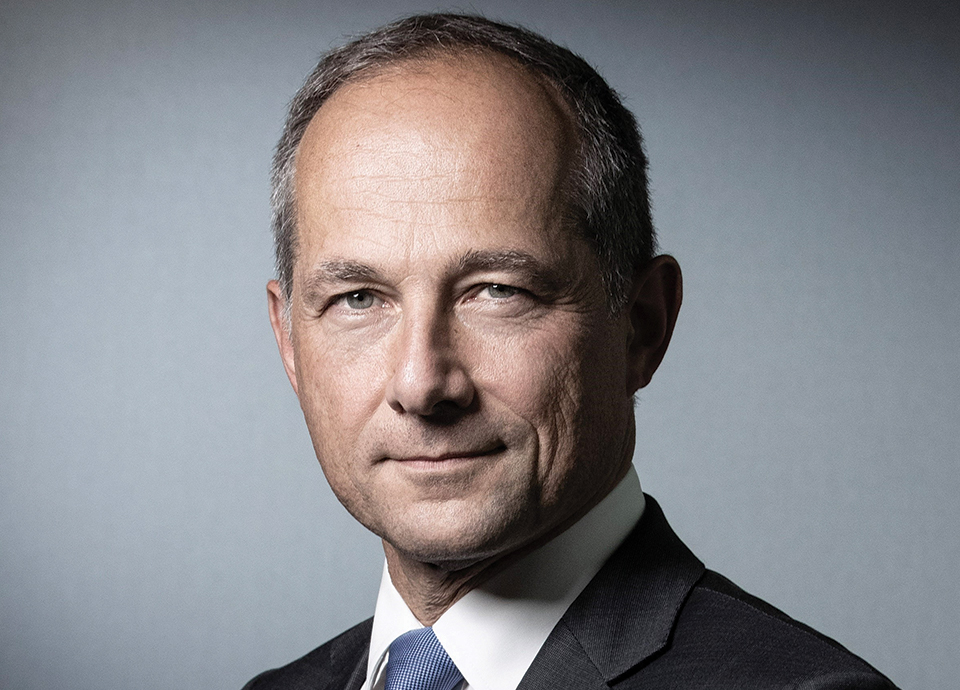
Societe Generale, under chief executive Frédéric Oudéa – who has recently announced his departure – reported markedly higher net interest income, fees and commissions and overall revenue from French retail banking than its two domestic rivals, though it has a higher cost-to-income ratio than Crédit Agricole. But in recent quarters Societe Generale has also recorded a lower cost of risk in this business, leading to much higher post provision operating profit in French retail banking.
Its online bank, Boursorama, had a particularly strong year in 2021 acquiring another 800,000 clients to bring its total to 3.3 million by the end of the year. After ING decided to quit the retail market in France last December, it negotiated a deal with Boursorama to offer its products to ING’s French customers. Bain & Co reports that Boursorama has the highest net promoter score of any French bank.
BNP Paribas is the best investment bank in France. It has long been a lead arranger of loans and debt and equity capital markets financing for French companies. In recent years, it has built strength in M&A advisory as well.
Last year, it advised French utility Veolia on the acquisition of water management company Suez. The two old rivals had fought hard over the takeover in the months since Veolia first acquired a large stake in the smaller company. To win the deal and get it past competition authorities, Veolia agreed to the disposal of certain municipal water and solid waste assets in a company called New Suez to a consortium of mostly French institutional investors – Meridiam, GIP, CDC Group and CNP Assurances. That allowed the takeover of Veolia’s favoured strategic assets to go ahead and created a global competitor in ecological transformation with annual revenues of €37 billion.
BNP Paribas was also lead financial adviser to French media group Vivendi on the spin-off through a listing in Amsterdam and distribution to Vivendi shareholders of 60% of the stock in Universal Music Group.
BNPP leads the rankings of bookrunners on ECM deals for French issuers ahead of second-placed SG CIB. The €19 billion Vivendi/Universal Music deal was the highlight transaction of the year.
And it heads the DCM bookrunner rankings, ahead of second-placed Crédit Agricole CIB. Notable financing deals also include sustainability-linked revolving credit facilities for L’Oreal and Elis.

|
GERMANY |
[index] |
|
Best Bank: Deutsche Bank |
||
|
Best Investment Bank: Deutsche Bank |
||
Commerzbank always deserves consideration for its important role in the German economy as a leading bank for Mittlestand companies, claiming to be the hausbank to 28,000 of these.
But the best bank in Germany this year is Deutsche Bank, which provides business banking services to approximately 800,000 clients in its home market through its corporate bank, covering small corporates and entrepreneur clients as well as the country’s largest businesses.
Euromoney’s own customer survey shows Deutsche to be the top-ranked provider of cash management and payments services to German companies ahead of another key local rival, UniCredit. This is a vital area where new technology is changing the competitive landscape. Recognizing this, in the third quarter of 2021, Deutsche acquired Better Payment Germany GmbH, a payment service provider based in Berlin, to expand its product range and increase market share in payment processing and acceptance.
Deutsche also heads the Euromoney country ranking as the top provider of trade finance to German companies, ahead of Commerzbank and UniCredit.
And it is the domestic leader in syndicated loans, across traditional financing for large companies, acquisition financing and lending to real estate companies and the new market in environmental, social and governance loans.
Deutsche was ESG coordinator, bookrunner and facility agent on Knorr-Bremse’s €750 million ESG-linked loan; mandated lead arranger on Fresenius Medical Care’s €2 billion sustainability-linked revolving credit facility and on Bosch’s €3 billion sustainability-linked revolver.
As a retail bank, it is the clear market leader, now combining the mass market appeal of the old Postbank brand with the heritage Deutsche Bank offering of advisory fee-earning services to more affluent retail clients.
Both the leading German banks are in the midst of restructurings although Deutsche is further along in its and showing better results to shareholders.
Deutsche’s return on tangible equity for 2021 was 4%, though the core bank’s return on equity in 2021 was 6%. That compares with a 4.2% operating return on tangible equity at Commerzbank for 2021 but just 1% on a net basis.
For the first quarter of 2022 Deutsche achieved an 8.1% RoTE. And that was after a 28% increase in bank levies taken in the first quarter. If they were split evenly across the year, first quarter RoTE would have been 11.2%.
“We delivered our highest quarter of net profit since 2013,” chief executive Christian Sewing says. “And we believe this puts us on a good trajectory to meet our 2022 goals.”
Something remarkable happened in the year to March 31, 2022, in investment banking in Germany. A local outfit fought its way past the US-based global bulge-bracket firms, topped the rankings as lead adviser on announced M&A deals while also rising from eighth the year before to a respectable fifth in the Dealogic equity capital markets rankings.
The same firm, Deutsche Bank, also extended an already commanding lead in DCM.
Three years on from the start of restructuring its investment bank and the exit from equity trading, when it fell behind JPMorgan and Goldman Sachs in revenue earned from investment banking in Germany, Deutsche reclaimed top spot in 2021.
The bank claimed that it could maintain a position in ECM by continuing to advise corporations and private equity owners, even as it withdrew from secondary markets. And by offering access to issuers, the bank has maintained access to important investors not only within Germany – a given for a bank of its size and influence – but also among international investors looking to gain exposure in the country.
So, it sole generated a €375 million cornerstone order from Qatar Investment Authority on the €2.3 billion capital raise by Siemens Healthineers. Deutsche was joint bookrunner, subscription agent, settlement agent and listing agent on that accelerated bookbuild.
It was joint global coordinator on Lufthansa’s keenly anticipated €2.2 billion rights issue in October 2021 and joint global coordinator on Tui’s €1.1 billion rights issue, as companies hard hit by Covid raised new capital.
Deutsche was also the top bookrunner for initial public offerings of German companies, for example acting as global coordinator on both the €842 million IPO of fashion e-commerce retailer About You and on the €200 million Spac IPO of European Health Company.
The bank is even still in the block business, leading transactions such as the first secondary placement of Synlab shares since the company’s IPO, a €222 million sale from a group of leading investors; and another €74 million secondary placement of shares in Auto1 for a pre-IPO investor.
Its leadership in domestic M&A was even more impressive. Deutsche was sole adviser on the take-private acquisition of Zooplus, the online pet food retailer, by Hellman & Friedman and EQT. It also advised Deutsche Wohnen on the biggest deal of the year, its €25.8 billion acquisition by Vonovia, completed last October.
In DCM, Dealogic data shows Deutsche increasing its market share at the top of the bookrunner rankings to 11.52%, far ahead of second-ranked UniCredit with 7%. Last year. the two banks occupied the same spots, Deutsche then having an 11.02% market share and UniCredit 7.65%.

|
GREECE |
[index] |
|
Best Bank: Eurobank Ergasias |
||
|
Best Investment Bank: Morgan Stanley |
||
In 2021, the four big Greek banks enjoyed a welcome turnaround, growing loans and pre-provision income and reducing cost of risk. That was a much-needed relief after a decade struggling with the aftermath of the eurozone crisis.
Eurobank Ergasias leads the way and is Euromoney’s best bank in Greece. Its chief excutive is Fokion Karavias.
Its core operating profit in 2021 was 65% higher than in 2020, thanks to growth in commission income and a reduction in loan loss provisions.
Most importantly, it became the first of the four systemic banks to report a single-digit non-performing exposure (NPE) ratio of just 6.8%, a milestone for the Greek banking system.
That is down from 14% at the end of 2020 and reflects the success of the so-called Mexico transaction: the sale of 95% of mezzanine and junior securitization notes on a multi-asset NPE portfolio of €5.2 billion in nominal value loans, bonds and other assets.
At the same time, strong core operating profitability and the execution of capital-accretive transactions, including a synthetic securitization of performing loans and the sale of its merchant acquiring business to Worldline, built Eurobank’s fully loaded Basle III common equity tier-1 ratio to 13.6%, up from 12% at the end of 2020.
It was able to grow both new loans, disbursing €7.8 billion throughout the year, and deposits, attracting €5.8 billion of stable funding.
Corporate customers appreciate its services, ranking Eurobank as the top supplier of cash management services in Greece in Euromoney’s most recent survey. It also ranks top in our latest survey of trade finance providers in Greece.
Marking an impressive treble, Eurobank is the top ranked Greek bank among leading providers of private banking and wealth management services to the country’s affluent consumers.
Following a close contest with last year’s winner, Citi, this time Morgan Stanley wins the award as best investment bank in Greece.
In what was a quiet year for equity capital markets and mergers and acquisitions, Morgan Stanley led the league tables in DCM by some margin in both number of deals and volume of transactions.
Much activity centres on Greek banks, where the firm has long been active. At the end of last year, those banks, most rated below investment-grade, came under regulatory pressure to boost their bail-inable debt. Morgan Stanley was sole bookrunner and sole de-risking adviser on €400 million of B3/B+ rated senior preferred bonds with a two-year, non-call one maturity for Alpha Bank, underwriting the full amount.
Morgan Stanley was also sole financial adviser and structurer to National Bank of Greece on the sale to a consortium including Bain Capital, Fortress Credit and doValue of 95% of the mezzanine and junior notes securitized again the €6 billion so-called frontier portfolio of 198,000 loans from 86,000 borrowers secured on 74,000 properties.
This was the biggest trade under the country’s Hercules Asset Protection Scheme, and it helped National Bank of Greece bring its NPE ratio down from 30.9% in the first quarter of 2021 to 15%.
Morgan Stanley also advises the state Hellenic Financial Stability Fund on its divestment programme for Greek banks and, as part of this, was bookrunner on a €1.38 billion capital increase for Piraeus Bank that helped bring that bank’s NPE ratio down to 12.5% from over 40% at the end of 2020.

|
ICELAND |
[index] |
|
Best Bank: Islandsbanki |
||
In recent years, Iceland’s best bank award has gone to reliable performer Landsbankinn, but this year it is newly listed Islandsbanki that takes the crown by virtue of its strong financial improvement over the period under review.
The bank’s financial performance has been partly overshadowed in recent months by a domestic debate that erupted in the wake of the Icelandic government’s second sale of Islandsbanki shares in March 2022. Further sales of the 42.5% remaining government stake are now on hold until enquiries by the country’s central bank and national audit office have been completed.
But Euromoney’s award is given to Islandsbanki itself for its performance as a bank, not to the government or to ISFI, the state body responsible for handling privatizations. And as such, it is richly deserved. As well as its adept management of the country’s biggest IPO in June 2021 – a deal that was widely seen as successful – Islandsbanki has clocked up strong financials in the 12 months under review.
Revenues rose 13% to IKr51.1 billion ($385 million), a bigger increase than rivals, and its 27% jump in pre-provision pre-tax profits is stellar in comparison with peers. Average return on equity, while lagging competitor Arion Bank, was up 6.6 percentage points to 14.9%, the biggest increase, while its cost-to-income ratio fell by 6.2 points, again the best in the sector.
The bank, Iceland’s second biggest by assets, has benefited from its conservative approach to risk, says CFO Jón Guðni Ómarsson. Digitalization and the upgrading of systems has also been a core effort over the period, he adds, noting that the bank has replaced all its core deposit, payments and loan infrastructure. The focus is now on the front line and increasing the services the bank offers to customers.
A big part of that has been the development of the bank’s digital sales platform in personal banking, which in the first quarter of 2022 accounted for 75% of new sales. Next year the bank hopes to get that to 90%.

|
IRELAND |
[index] |
|
Best Bank: Bank of Ireland |
||
|
Best Investment Bank: Citi |
||
Investors don’t like surprises. When Credit Suisse announced at the end of April that it had recruited Francesca McDonagh to be chief executive of its EMEA region, shares in the troubled Swiss bank barely moved.
But they fell 12% at Bank of Ireland, where McDonagh has been chief executive since 2017 and overseen an impressive transformation.

In a statement, McDonagh said that while she left bank of Ireland with “a heavy heart”, she is proud of “all that we have achieved”.
Five years ago, McDonagh and her team set out to transform the bank’s culture, systems and business model. “The benefits of this transformation have never been clearer than over the past two years as we navigated the pandemic, while also agreeing two significant acquisitions,” McDonagh stated.
These were of KBC Bank Ireland’s (KBCI) performing loan portfolios and deposits and J&E Davy (Davy), the country’s most renowned stockbroker.
The KBCI portfolios acquisition will increase Bank of Ireland’s share of the stock of mortgage credit outstanding in Ireland from around 20% to 28% and give it a route to deploy excess liquidity into earning assets.
The Davy business will strengthen the range of services available to high net-worth and mass-affluent customers. Davy also brings to the group a leading capital markets business in Ireland.
While analysts don’t expect to see any change in strategy, integration of these two strategic acquisitions will now fall to a new leadership team. McDonagh is the classic good leaver and will stay on until September 2022. The process to find her successor started immediately.
Shareholders are entitled to worry though, given that her former chief financial officer, Myles O’Grady, also resigned last September to join Musgraves, the family-owned Irish grocery group.
McDonagh mentioned that restrictions on bankers’ pay made it hard to retain talent.
Thank goodness then that Bank of Ireland is well on its way to a full exit of the government from its share register. The state’s ownership halved in the six months to February 2022, falling to just below 6%, leaving it with a smaller stake than some leading fund managers. The expectation is that it will sell down its remaining stake this year, making Bank of Ireland the first of the country’s large lenders to return to full private ownership.
Euromoney’s award to Bank of Ireland as the country’s best bank for the period from the end of March 2021 to end of March 2022 reflects the good work of McDonagh and her team.
In 2021, the bank delivered its best financial performance since the financial crisis, reporting underlying profit before tax of €1.4 billion. Operating profit pre-impairment showed strong growth, coming in 53% ahead of the worst year of the pandemic in 2020 and, perhaps more tellingly, 25% higher than in 2019.
Bank of Ireland’s 2021 return on tangible equity was 12.7%. That’s impressive given that fully loaded common equity tier-1increased by 280 basis points over the year to 16%.
McDonagh’s biggest achievements have probably been in upgrading the bank’s technology and taking it into the digital age. Investors will hope this and its recent acquisitions leave it well placed to benefit from other banks retreating from the country.
Analysts at Berenberg say: “We continue to believe that Bank of Ireland’s revenue growth and cost control are underappreciated by consensus.”
Citi remains the best investment bank in Ireland, even though it has slipped a little in the announced M&A adviser ranking and in equity capital markets. But it still heads the table of advisers for completed M&A deals, while also maintaining leadership in DCM.
This across-the-board strength is enough to see off challengers such as Davy in the equity markets.
In 2021, Citi acted as lead financial adviser and joint financing bank to AerCap on its landmark acquisition of Gecas from General Electric for $30 billion, creating the world’s largest aircraft lessor. Citi led $23 billion of capital markets financing for Aercap to finance the acquisition.
Citi also acted as financial adviser and sole financing bank to ICON on its milestone $12 billion purchase of PRA Health Sciences. Citi was sole underwriter, bookrunner and mandated lead arranger on the company’s $6 billion acquisition financing package to support the transaction.
In another memorable deal, Citi acted as exclusive financial adviser to Ardagh on the combination of its metal packaging business with Gores Holdings V, a special purpose acquisition company, to create the independent public company Ardagh Metal Packaging. This was the biggest corporate carve-out via a Spac to date.
Alongside raising the acquisition finance to go with these corporate deals, Citi was also joint active bookrunner for Ireland’s €3.5 billion 10-year benchmark bond issued through the National Treasury Management Agency in January 2022.
The deal saw strong demand from a diversified investor base, with the total order book in excess of €27 billion.

|
ITALY |
[index] |
|
Best Bank: UniCredit |
||
|
Best Investment Bank: Mediobanca |
||
Chief executive Andrea Orcel took the helm at UniCredit in April 2021, right at the beginning of the period under consideration for these awards. While his rejection of a potential purchase of Banca Monte dei Paschi di Siena dominated the early part of his tenure, there has been plenty of other news from the Italian lender – much of it good.
Firstly, and most importantly, a good performance. Full-year 2021 underlying net profit exceeded guidance at €3.9 billion with an underlying return on tangible equity for the year of 7.5%. Asset quality remains sound, with a group gross non-performing exposure ratio of 3.6%.

Total revenues also beat guidance at €18 billion – up 4.8% year on year. Fee income of €6.7 billion was up 12.1% year on year.
One of Orcel’s first moves was to put in place a new organizational structure in May 2021 that cut the size of the executive committee by almost half, to 15. This focus on streamlining has been reflected throughout the bank. The number of committees has been cut from 230 to 99 and the total number of hours spent in committees in Italy has been reduced by 55%. There has also been an approximately 30% reduction of organizational units.
In early July, Orcel assumed responsibility for running UniCredit’s Italian business himself.
The bank has a new digital division in recognition of the importance of technology to the future of banking.
The bank has signed an agreement with Microsoft to digitize 100,000 Italian small and medium-sized enterprises and established a task force dedicated to the Italian National Recovery and Resilience Plan.
The UniCredit Unlocked strategic plan was launched in December 2021. This targets a return on tangible equity of around 10% by 2024. It has also committed UniCredit to net zero emissions by 2030, part of a broader environmental, social and governance commitment. The bank has reduced its greenhouse gas emissions by 32% since 2017 and contributed €36 million to corporate citizenship, philanthropic initiatives and the education of 123,000 young people. The UniCredit Foundation has also donated €2.4 million in Covid-19 relief funds, provided over €1 million to social solidarity projects and over €1 million to support research, study and scholarship grants. It has also contributed €650,000 in matched gifting to support employees’ charitable contributions.
UniCredit had a very good year in investment banking too, topping the debt capital markets ranking with 13.53% market share. However, our best investment bank for Italy in 2022 is again Mediobanca, which worked on a series of key transactions over the awards period.
It was ranked third for all announced M&A during the period, behind JPMorgan and Goldman Sachs with a 47.8% market share from 42 deals. These included the $1.8 billion acquisition of A2A SpA-Power Generation Assets by Ardian SAS and the €1.7 billion buyout of Luminex Corp by DiaSorin. It is also advising the Benetton family and Blackstone in their bid to take control of Italian infrastructure group Atlantia. Mediobanca tops the ECM ranking with a 14.48% market share from eight deals. Total ECM volume during the period under review was €6.7 billion.

|
LUXEMBOURG |
[index] |
|
Best Bank: Banque Internationale à Luxembourg |
||
Banking is the biggest contributor to the Luxembourg economy and the total assets of the country’s 140 banks are far larger than the country’s GDP. But most engage in funds administration and other forms of securities services for international asset managers, as well as in international private banking.
Only a handful of competitors provide retail and business banking services to the local population and Luxembourg corporations.
Banque Internationale à Luxembourg wins the award as best bank this year after a strong performance in 2021, when it increased net profit to €135 million, 34% up on the 2020 result.
By the standards of European banks, a 9.2% return on equity is impressive.
The bank managed to grow loans by 6.1% and deposits by 4.6%, while achieving a 14.15% common equity tier-1 ratio even as its balance sheet expanded. That is up from a 13.55% CET1 ratio in 2020. For good measure, it grew assets under management by 5.2%.
This is eye-catching because, like most of its local rivals, BIL is in the middle of a multi-year restructuring to overhaul its IT. The bank continued to invest last year in a new core banking system, staff recruitment and to meet regulatory requirements. That led to a 6% increase in expenses in 2021. But revenues grew 15%, helped by some divestments, including part of its stake in Bourse de Luxembourg.
Marcel Leyers, chief executive of BIL, stated that this strong performance “acknowledges our long-term commitment towards our retail, private and corporate banking clients and it confirms our major role in financing the economy”.
Some 70% of BIL’s revenues come from serving the local market, with domestic retail and business customers also providing 76% of the bank’s deposits.
Moody’s upgraded the bank’s baseline credit assessment in 2021 by two notches in recognition of both its strong asset quality and stable funding thanks to this focus on the local market.
It remains to be seen how this may shift as the bank continues with its plans to focus more on catering to European wealth clients seeking to invest in China and Chinese wealth clients coming the other way.
BIL was founded in 1856 as the country’s first public limited bank. In 2018, Legend Holding, the Chinese investment company listed in Hong Kong and most renowned for ownership of Lenovo, acquired a majority stake. The bank now has a rep office in Beijing. As part of this effort to build bridges between China and Europe, it plans to grow its wealth management business in Europe with a focus on entrepreneurs, starting in Luxembourg.

|
NETHERLANDS |
[index] |
|
Best Bank: ING |
||
|
Best Investment Bank: BNP Paribas |
||
ING is named the best bank in the Netherlands this year, despite the impact that its exposure to Russia has had on provisioning since February 24. This is a reflection not only of good underlying financial performance but also of the progress the bank has made in diversifying its sources of income. It achieved net core lending growth of €30.6 billion last year, together with a 17% rise in fee income. This has been driven by expansion in the range of investment products on offer and by efficient digitalization.
The strategic decision to exit retail markets where it will struggle to achieve sufficient scale is a sensible one. In June ING decided to exit retail banking in France, following earlier retail exits from Austria and the Czech Republic.
Russia’s invasion of Ukraine at the end of our period under consideration has certainly clouded the outlook for ING for the next 12 months. When the invasion took place, the bank revealed roughly €700 million of loan exposure to sanctioned entities and individuals and has taken on an additional €987 million in net loan loss provisions to reflect this. It also has €5.3 billion in loans to Russian borrowers, around 0.9% of its total group loan book.
ING’s commitment to sustainability is to be lauded and the bank has been a leader in the transition to clean energy. In March, it announced an aim to grow new financing of renewable energy by 50% by the end of 2025 and that it will no longer provide dedicated finance to new oil and gas fields. These steps are aligned with the International Energy Agency’s Net-Zero Emissions by 2050 Roadmap.
BNP Paribas tops the equity capital markets league table in the Netherlands for the period under review by a substantial margin. It worked on five deals with a total value of $1.8 billion for a 30.1% market share. Closest rival Morgan Stanley inked $771 million of business for a 12.9% market share. The French bank worked on accelerated bookbuilds for automaker Stellantis and fitness group Basic Fit, also leading convertible debt issuance for the latter firm.

|
NORWAY |
[index] |
|
Best Bank: DNB |
||
|
Best Investment Bank: DNB Markets |
||
An excellent 12 months at DNB, Norway’s biggest bank, was capped off by the eventual approval of its NKr11.1 billion ($1.25 billion) acquisition of Norwegian digital bank Sbanken. The route to completion was not entirely smooth, with Norway’s Competition Authority at first rejecting the deal despite the ministry of finance’s approval. That rejection was reversed on appeal and Sbanken became part of DNB as of March 30, 2022.
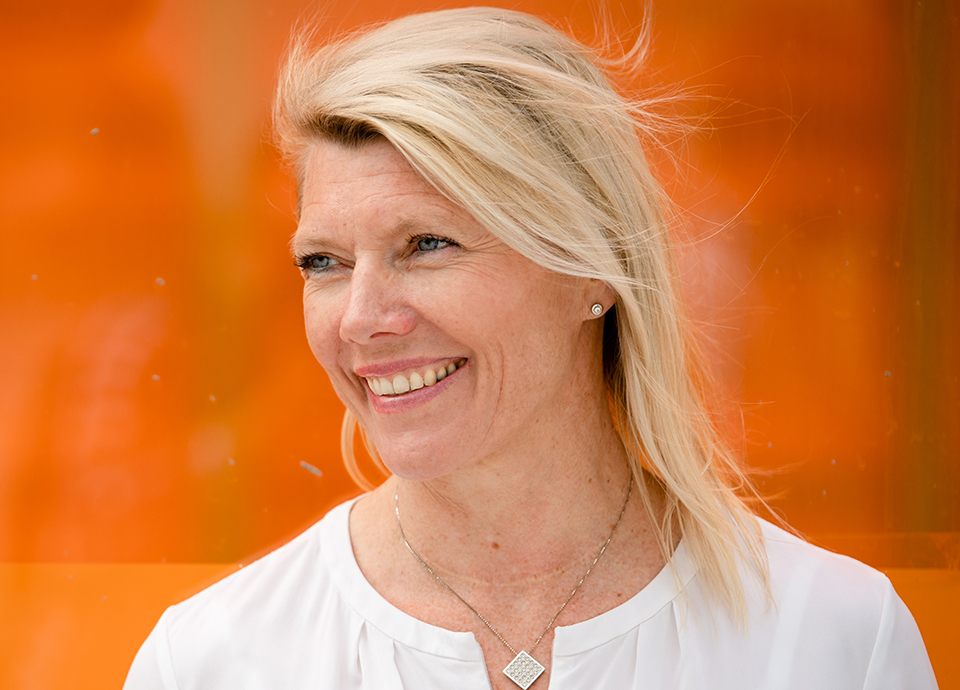
Sbanken adds some NKr1.7 billion of annual revenue, about 3% of DNB’s revenues in the last four quarters, as well as boosting deposits and loans by about 5%. More importantly, it gives the bank an even stronger position in digital retail banking and mutual funds in the country without worsening asset quality; practically all of Sbanken’s loan book is low loan-to-value residential mortgages.
Kjerstin Braathen, who took over as chief executive of DNB in 2019, has presided over a strong period of growth. DNB’s revenues rose 6.5% in the 12 months of the Euromoney awards period, with pre-provision profits up 8%. Return on equity averaged over 11% for the period, up two percentage points from the previous 12 months.
Deposits have been steadily rising over the period, standing nearly 13% above where they were at the end of the first quarter of 2021. Loans are up 9%. Most promising of all is that Stage 3 loans – those that are considered impaired – are down nearly 18%, and big reversals in impairment provisioning have led to a 40% drop in Stage 3 reserves. Not for nothing does CreditSights view DNB’s asset quality as “robust”.
Capital is also strong, with its common equity tier-1 ratio standing at 18.1% at the end of the first quarter of 2022, down from its year-end peak of 19.4% mostly as a result of the Sbanken acquisition. Efficiency is impressive, with an extraordinarily low cost-to-income ratio of 39.4% in the first quarter of 2022, beating even the bank’s ambitious target of 40%.
The bank’s capital markets and investment banking division, DNB Markets, has also had a strong year under Alexander Opstad, its group executive vice-president, and was the most well-rounded player in a small but surprisingly competitive market.
For the period under review, it ranked third in equity capital markets, top in DCM, sixth in M&A advisory and top in syndicated loans, according to Dealogic data. Industry volumes were down year on year in Norwegian ECM and DCM, but M&A tripled and DNB was able to double its market share.
In DCM, the bank has been active in sustainable bond issues, arranging deal volumes that rose 130% in 2021. Its sustainable finance prowess also extended to advisory, where it was one of the most active firms in deals relating to energy transition.

|
PORTUGAL |
[index] |
|
Best Bank: BPI |
||
|
Best Investment Bank: JPMorgan |
||
BPI is not the largest bank in Portugal by a long way, but it shows every sign of trying to get there. In 2021 it grew assets to €41.4 billion from €37.3 billion in 2020 and it is now the fourth largest bank in the country. It grew profit, gross income, commissions income and total number of customers faster than any other bank in Portugal last year.
The bank now has an 11.1% share in the loan market, with a domestic network of two million customers. Consolidated net profit grew from €105 million in 2020 to €307 million in 2021, while recurring net profit in Portugal reached €200 million versus €84 million in 2020.
Wholly owned by CaixaBank since 2018, BPI has focused on the drive to digital banking; 80% of individual digital customers are now regular users of the bank’s app, which posted an increase of 75,000 active users in 2021. Some 70% of savings product, personal loan and non-financial product sales are made digitally. This is a seven-percentage point increase year on year.
Last year, the bank launched a 100% digital treasury product offering up to €25,000 loans on an immediate basis. It also launched a new digital brokerage service called BPI Broker that offers monitoring and trading of securities on local and global stock exchanges. Other digital initiatives cover financial planning, mortgage simulation, and insurance and vehicle purchase offerings.
BPI grew its loan portfolio by €1.8 billion (7.1%) year on year and now has a 13.2% share of the mortgage market. It retains a strong commitment to social responsibility and in March 2021 launched an internal platform that offers volunteering opportunities throughout the country to employees, retirees and their families, which so far has 2,100 registered members. The platform allowed staff to support more than 13,000 vulnerable people in areas such as financial literacy, entrepreneurship, capacity building of institutions, maths tutoring, and support for the elderly and the homeless.
JPMorgan is ranked third for debt capital markets activity in Portugal over the awards period, having worked on nine deals with a total value of €1.5 billion. This gives it a 10% market share just behind Crédit Agricole with 12.4% and BNP Paribas with 10.9%. It has been active in M&A throughout the year, topping the rankings with €1.5 billion of business from four completed deals. It advised CVC on the acquisition of supermarket group Sonae MC – Modelo Continente in July last year and Onex Renewables on its purchase of a 221-megawatt wind portfolio from EDP Renovaveis in the same month.

|
SPAIN |
[index] |
|
Best Bank: CaixaBank |
||
|
Best Investment Bank: Santander |
||
Spain is home to some of Europe’s best banks, but it is a challenge to compare the financial results of their efforts in their domestic market.
Take Santander. Exclude the corporate centre, and Europe contributed just 28% of group profit in 2021. Of that, Spain delivered about one third, while providing closer to half of revenues in Europe. Spain, which delivered a 6.33% return on tangible equity in 2021, is not a big part of this group which managed an 11.96% RoTE overall.
CaixaBank is different. Exclude BPI in Portugal and its equity investments in Erste, Telefonica and others, and most of Caixa’s banking and insurance income comes from Spain. That division delivered a 6.7% RoTE, so not much above Santander even though it is much bigger.
Scale has clear advantages in banking, and in 2021 Caixa made strong progress with the integration of Bankia, even though this increased costs and hurt its efficiency ratios.
CaixaBank was able to complete the full integration of the teams, technology platforms and the commercial model in just eight months after the legal merger took place.
From November 2021, the bank focused on branch and core staff reorganization, so that by the end of the first quarter of 2022, 80% of the branch integration was done and 90% of those set to leave had departed.
That should allow the bank to deliver some big cost savings over the rest of this year.
Spain remains a competitive banking market. CaixaBank’s ability to win customers and retain them distinguishes it as the best bank in Spain.
With some 19 million customers in Spain out of 21 million in total for the whole group, CaixaBank has industry-leading market shares. It has a 43% market penetration in retail banking and is the main bank for 32% of Spanish citizens. It also has a 44.4% penetration among microenterprises, 44.3% among self-employed workers and in business banking, CaixaBank has a 23.7% share of loans to companies.
The bank combines a successful integrated bancassurance model with an omnichannel distribution platform. It has the biggest branch network in Spain and a higher proportion of customers use its digital channels than at any other bank.
But there’s one important area where it is not the leader – investment banking. Santander is the best investment bank in Spain. It stands at the top of the league table for advisers on M&A deals announced during our review period. It also tops the debt capital markets league table and comes in at number three in ECM.
The bank is also a leader in project finance in Spain with a clear expertise in renewable energy projects.
Project Archimedes is a standout example. Santander CIB (SCIB) acted as global coordinator on the refinancing of Q-Energy’s recently acquired Concentrated Solar Power portfolio of 120 megawatts with €732 million of hybrid finance. Santander acted as lender and swap provider with the highest exposure in the bank tranche and led the structuring and bookrunning of the institutional tranche. Furthermore, Santander was the hedge coordinator, closing the first environmental, social and governance-linked derivative in Spain.
Another notable debt transaction was the €750 million liability management exercise for Telefonica in which it led the issue of new hybrid bonds to finance the repurchase of outstanding liabilities.
In M&A, the bank advised Ferrovial on the sale of its real estate business in Poland, Vortex Energy on the disposal of 49% of renewable player Ignis Energia, and Northland Power on the acquisition of a wind and solar portfolio in Spain from Helia Renovables. In ECM, SCIB was global coordinator on Acciona Energia’s €1.3 billion IPO.

|
SWEDEN |
[index] |
|
Best Bank: SEB |
||
|
Best Investment Bank: Carnegie |
||
A terrific return on equity of 13.9% for the full year 2021, dipping only slightly to 13.4% in the first quarter of 2022, reflects the strong performance of Sweden’s biggest bank, SEB, which retains its crown as the country’s best bank.
With revenues rising faster than costs, the bank posted an underlying profit increase of 8% in the four quarters of the awards period. Presenting the bank’s strategy update at the end of 2021, chief executive Johan Torgeby was able to reflect on plenty that had gone well, even if he is now having to negotiate the introduction of a Swedish bank tax that SEB thinks will impact it to the tune of SKr1 billion ($100 million) in 2022.
Operating income rose 6% in the 2019 to 2021 period, with costs only up 2%. Profit before credit losses was up 9%. And among the 20-bank group of Nordic and European peers that it benchmarks itself against, SEB entered 2022 with the best return on equity, the best cost-to-income ratio, nearly the best common equity tier-1 ratio and nearly the lowest credit default swaps (CDS) spread.
Household and corporate lending volumes in Sweden grew steadily in 2021, helping net interest income rise. Commission income hit a record in 2021, driven in particular by the bank’s large corporates and financial institutions division, while assets under management increased 27%. The bank’s capital position remains very comfortable – at the end of 2021 it was operating with a buffer of 590 basis points above its regulatory requirement.
The bank has an ambitious SKr900 million investment plan for 2022, building in custody, investment banking, family office coverage and in countries such as Austria, Switzerland and the Netherlands, as well as spending on technology and compliance.
Carnegie’s primary focus is on equity capital markets and M&A advisory, and in Sweden it does more of that than anyone. While it ranked second in ECM by aggregate deal value, and 10th in M&A on the same measure, it completed more deals than any rival – nearly double its closest competitor in ECM.
Its operations span the Nordic region and reach beyond it, but Sweden is where its heart is, with the country accounting for 59% of its SKr5.2 billion operating income in 2021, a total that had leapt 60% year on year.
Unsurprisingly, its deal roster spans the best of names and the most notable deals in the country. And Carnegie doesn’t just get on deals – it leads them. It was global coordinator on 65% of all Swedish IPOs in the period under review, including on most of the biggest. They included the SKr15.4 billion IPO of Storskogen, a company that acquires and compounds small and medium-sized enterprises.
And Carnegie showed itself able to support not only companies seeking to list but also those tapping market windows quickly: it was a bookrunner on the largest ECM deal in the period, the SKr23.3 billion accelerated capital raise for EQT.
In M&A, Carnegie’s biggest completed deal was its mandate to advise property company Klovern on its acquisition by Corem, a SKr52.4 billion offer.
Since 2015, Carnegie has been carving out a niche for itself in high-yield DCM and broader debt advisory, advising on deals in the awards period that include numerous debut issuers.
One of those, Humble, had done its first issue in January 2021, but came to market several times over the course of the year, including through a deal in the summer that saw Carnegie advise on a bond loan renegotiation while also helping it raise SKr700 million in acquisition financing.

|
SWITZERLAND |
[index] |
|
Best Bank: UBS |
||
|
Best Investment Bank: Credit Suisse |
||
The Swiss cantonal banks, regional banks, PostFinance and Raiffeissen all provide stern competition for the big two Swiss banks in their home market. And both UBS and Credit Suisse are turning to partnerships with fintechs to make sure they don’t get left behind. Credit Suisse has created its own CSX digital bank, an app offering a free account that had 125,000 clients at the end of the first quarter of 2022. It is ambitious to grow this brand, offering a free SFr50 ($51) opening balance to individuals signing up for new accounts in May and June.
However, UBS is the best bank in Switzerland. With 2.6 million personal clients, it serves one third of Swiss households. Importantly in a country with over 800,000 millionaires, UBS came top for Switzerland overall in Euromoney’s 2022 private banking and wealth management survey and topped the ranking for serving high net-worth individuals in Switzerland.
In 2021, it introduced green mortgages brokered via key4, the first Swiss real-estate platform. UBS began offering Swiss retail clients preferential interest rates on home-improvement loans to support energy-efficient renovations.
UBS also serves 100,000 Swiss corporate and institutional clients, including around 90% of the country’s large companies.
Last year, UBS launched a project with local fintech start-up Yokoy to provide new cash-management services to corporate clients, ranging from automated generation of expense reports to validation of supplier invoices.
Credit Suisse scored an impressive one, two, three to head the league tables for advising on announced M&A deals, arranging equity capital markets transactions and bond deals for Swiss clients. It is the best investment bank in Switzerland this year.
Credit Suisse advised Roche on its landmark agreement to acquire from Novartis its stake in the company. The SFr19 billion transaction marks the end of Novartis’ investment in Roche after having acquired a 33.3% stake in the early 2000s. This marked the largest Swiss corporate deal since 2017.
To part-finance the transaction, Roche returned to the Swiss franc bond market after an absence of four years with an innovative SFr3 billion offering, the largest bond deal in a decade. Credit Suisse acted as joint lead manager and bookrunner.
The transaction was structured to target the deepest pockets of demand in the Swiss franc market. It combined a nine-month tranche aimed at money-market investors with two anchor tranches in five-year and nine-year maturities and a long-dated 15-year tranche for insurance and pension fund accounts.
Credit Suisse also led one of the biggest cross-border acquisitions into the country, advising Australia’s CLS on its SFr10.9 billion purchase of Vifor Pharma. The transaction represents the third largest cash tender offer ever made in Switzerland.
Credit Suisse makes much of the potential links between its private banking and investment banking operations. It showcased this by advising AP Moller Holding, the family office for Denmark’s Maersk family, on its acquisition of Unilabs, the leading European diagnostic services provider, from funds advised by Apax.
In ECM, Credit Suisse helped Jacobs Holding to reduce its outstanding stake in Barry Callebaut, the largest independent manufacturer of chocolate and cocoa products globally, with the execution of multiple secondary accelerated book build offerings, including the largest deal in Switzerland last year, a SFr1.1 billion offering in April.
Last April, Credit Suisse was also joint global coordinator on the SFr848 million IPO of PolyPeptide, when demand from Credit Suisse private-banking clients alone covered the book. Then in November, it led a further SFr171 million secondary ABB for the company’s largest shareholder, Drapnir Holding, to take advantage of PolyPeptide’s strong share-price performance since the IPO.

|
UNITED KINGDOM |
[index] |
|
Best Bank: Lloyds Banking Group |
||
|
Best Investment Bank: Barclays |
||
Lloyds Banking Group remains the best bank in the UK, delivering strong returns to shareholders thanks to a market leading cost-to-income ratio that reflects the work of previous generations of senior management.
The bank runs multiple brands, including Halifax, Bank of Scotland, Scottish Widows, MBNA and Schroders Personal Wealth among others, all off an efficient IT platform.
For 2021, Lloyds reported a return on tangible equity of 13.8% coming off a high common equity tier-1 ratio of 17.3%.
The country’s two leading banks – Lloyds and Barclays – have very different business mixes. But after a great year of record profitability for investment banking, Barclays managed a 13.4% RoTE off a CET1 ratio of 15.1%. The two have similar net interest margins (254 basis points at Lloyds; 252bp at Barclays). So, the difference comes down a cost-to-income ratio of 56.7% at Lloyds for 2021, slightly ahead of its recent average. That compares to 66% at Barclays.
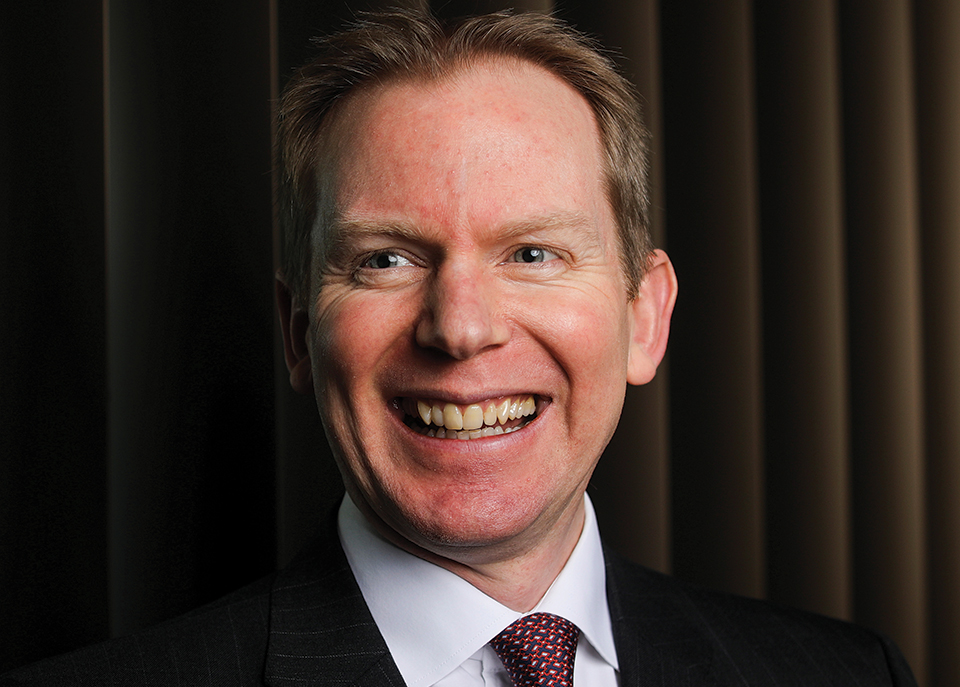
It will be hard for any group employing lots of investment bankers to come anywhere near a retail bank’s efficiency. And when it announced results for the first quarter of 2022, Lloyds had edged its cost-to-income ratio back down to 52.3%.
Of course, such efficiency from scale requires ceaseless investment in technology. The bank’s latest strategic plans envision an incremental £4 billion of investment over the next five years.
In 2021, Lloyds realized the return on previous investments by safely migrating 45 million customer records, workloads and models to the Google cloud platform. It also achieved cost savings from decommissioning thousands of legacy applications and services. And it migrated some 120,000 customer accounts onto a pilot of its new bank architecture.
While it continues to pay for past misdeeds, for example at HBOS Reading, Lloyds’ new management team, under chief executive Charlie Nunn, knows that with 26 million customers, the bank is heavily dependent on the UK economy.
Its self-proclaimed purpose of helping the UK prosper equates to helping Lloyds prosper. This is not an altruistic organization. It is a bank. Last year, it strove to deal with corporate and small and medium-sized enterprise borrowers struggling to cope with the lingering impacts of the pandemic, while it expanded mortgage lending.
This year, the UK is in the middle of a cost-of-living crisis. While rising rates should be a near-term benefit to that healthy net interest margin, the impact on asset quality from the Bank of England’s response to higher inflation remains to be seen.
On the bank’s first-quarter 2022 earnings call, Nunn said Lloyds is already contacting customers it thinks may be impacted.
He said: “We encourage customers, where affected, to get advice early and talk to us.”
Let’s hope staff are ready for what is coming.
Barclays is the best investment bank in the UK. Indeed, it is one of few European banks capable of competing with the big five US based firms that dominate global investment banking, thanks to the old Lehman business.
It tops the debt capital markets ranking for bookrunners of bonds from UK borrowers, ranks fourth in ECM and comes in sixth, just below the top US banks, in M&A.
It is a sign of how competitive the market is in the UK that the local champion only just clutches this award. But the other firms don’t compete in the top tier across each of those three categories.
And Barclays worked on some important deals.
It was lead financial adviser and corporate broker to National Grid on its sale of a 60% equity interest in its UK gas transmission and metering business NGG to a consortium of investors, including global asset manager Macquarie Asset Management, one of the world’s largest infrastructure managers, and British Columbia Investment Management Corporation, one of Canada’s largest institutional investors.
The transaction, which implies an enterprise value of £9.6 billion for NGG, continues the repositioning of National Grid’s portfolio towards electricity assets, benefitting from long-term structural UK investment in decarbonization as part of the Net Zero transition.
It was sole sponsor, joint financial adviser and joint corporate broker to Rentokil Initial on its $7.4 billion acquisition of Terminix Global Holdings. The transaction brought together two complementary businesses to create the global leader in pest control and hygiene and wellbeing, and the leader in the pest control business in North America.
Barclays also remains prominent in UK IPO activity and acted as joint global coordinator on the large Semiconductor IPO of £856 million for Alphawave IP Group. It was also lead financial adviser on the £8.3 billion direct listing of Wise – the first direct listing of a technology company on the London Stock Exchange.
Its leadership in sterling debt markets is almost a given. It is worth noting that as our awards period drew to an end when Russia invaded Ukraine, Barclays stepped up to support its UK issuer base through the attendant volatility.
On March 16, with tensions escalating, Barclays worked with UK real-estate investment trust Segro on a €1.15 billon offering that was increased in size after attracting north of €7 billion of demand.
Just over a week later, Barclays worked with the GSK Consumer Health spin-off Haleon to deliver €9 billion-equivalent in funding across 12 tranches and three currency markets, attracting hundreds of new investors.