
COUNTRY INDEX
LATIN AMERICA
CENTRAL AMERICA AND CARIBBEAN
LATIN AMERICA

|
ARGENTINA |
|
Best Bank: Santander Argentina |
|
|
Best Investment Bank: Goldman Sachs |
|

The agreement between the IMF and the Argentine government over a refinancing of the country’s $45 billion debt averted financial crisis in the country in the past year.
However, the likelihood is that the rosy forecasts for fiscal consolidation, which are embedded in this agreement, won’t be met in the run-up to the next presidential election. Therefore, it is very much a case of crisis postponed rather than averted, and the banks in Argentina are hunkering down against the twin threats of burdensome financial regulation and likely recession after next year’s presidential election.
In the past 12 months it has paid to be a big, diversified player. Negative real rates, together with inflation approaching 50% a year and strict caps on the yields of government and central bank debentures mean that banks can’t simply profit from buying securities – as has been the case in previous risk-off periods.

Our best bank in Argentina this year is Santander Argentina, the private bank with the leading market share in corporate banking (10.2%), consumer loans (10.6%) and private-sector deposits (10.5%). Under chief executive Alejandro Butti, it achieved real growth in its revenues: 56% in its top line, while profits grew 22%, though costs were up because of the inflation environment, which caused return on equity to fall to 6.3% in inflation-adjusted terms.
Meanwhile, Goldman Sachs continues its strong run in Argentina and was the best investment bank operating in the country in the past year. Goldman participated in all the equity transactions that took place: it was underwriter on Mercardo Libre’s $1.6 billion block trade; Globant’s $295 million follow-on; as well as working on Meli Kaszek Pioneer Corp’s $288 million special purpose acquisition company (Spac) IPO.
The US firm was also active in some of Argentina’s most transformative M&A transactions, including acting as exclusive financial adviser to AT&T on its sale of Vrio Corp and Insud Pharma on its sale of a 55% stake in its biotech arm, mAbxience, to Fresenius.
The US bank was also involved in debt transactions, such as being sole bookrunner on ACI Airport Sudamerica’s $247 million exchange offer and it participated in syndicated loans and warehouse facilities for Argentine clients.

|
BOLIVIA |
[index] |
|
Best Bank: Banco Mercantil Santa Cruz |
||
On the face of it, Bolivia’s first international bond for five years, printed in February this year, was a success. But look more closely and there are issues with the trade that are symptomatic of the stresses playing out in the country’s economy: there was very little demand from foreign investors and the deal had to be structured to attract a strong local bid to get it over the line.
Apparent stability – the economy has very low inflation – is being paid for by rising fiscal deficits as the government’s policy of fuel subsidies gets ever-more expensive, which is also causing the central bank’s reserves to fall at an alarming rate. The situation looks untenable.
The few banks in the system, therefore, are keeping an eye on the challenging macroeconomic situation, and it is Banco Mercantil Santa Cruz (BMSC) that has best navigated the past year.
The bank didn’t want to grow its exposure as credit conditions deteriorated, so it held its market share in loans and deposits steady in the past 12 months (at 14% and 15.1% respectively). Instead, it focused on generating efficiencies from its customer base.
The bank increased its digital participation rate to 92.8% in February 2022 thanks to a new website that offers better functionality. This led to an impressive 26 percentage points improvement in its efficiency ratio in one year, from an admittedly still-high 62.7% at the end of 2021. This improved efficiency boosted nominal profits (by 72%) and return on equity improved to 3.57% – all while pre-emptively increasing provisions for a potential increase in delinquencies (the bank’s non-performing loans stayed steady at 2.1% in 2021) should the economy hit the expected difficulties in the coming 12 months.

|
BRAZIL |
[index] |
|
Best Bank: BTG Pactual |
||
|
Best Investment Bank: Itaú BBA |
||
If you have spent any time in Brazil recently you will probably have seen an advert for BTG Pactual. It is not the first mass publicity campaign the bank has conducted, but it is the first that presents BTG as a retail bank, albeit one being positioned as the choice for Brazil’s wealthier individuals.
The adverts portray BTG not as a wealth manager, not an investment bank, not even as a digital asset platform for the mass-affluent banking segment, but as a provider of current accounts.
The bank’s tilt from asset management, corporate and investment banking into retail banking had a breakthrough year in 2021.
The launch of a transactional retail product and the increase of its stake in Banco Pan creates a bank that has full depth and breadth in retail.
![RSallouti2021a[1].jpg](https://altmedia.euromoney.com/dims4/default/297b59d/2147483647/strip/true/crop/3197x2131+0+0/resize/800x533!/quality/90/?url=https%3A%2F%2Faltmedia.euromoney.com%2F74%2F20%2F9f0b17b444538485ef3a82f2d280%2Frsallouti2021a1.jpg)
Its growth has been strong: net income increased by 72% to R$2.1 billion ($442 million) and revenues by 56% to R$4.4 billion in the year to the end of March 2021. Return on equity was 21.5%.
However, BTG – led by chief executive Roberto Sallouti – still keeps its retail cards close to its chest.
The bank doesn’t break down the retail business statistics from the broader digital asset management platform. So, how much of the first quarter’s $52 billion of net new money is what would be considered traditional retail money? Bankers hint at big growth in this area, but no statistics quite capture the pace of retail expansion.
One way of cutting through all the noise of multiple segments being reported as one – and identifying the impact of the retail business – is by looking at the reported retail funding data.
Since June 2020, BTG has increased its retail funding from R$6.9 billion to R$29.6 billion – it now accounts for 19% of total funding excluding Banco Pan.
In the past two years, deposits have jumped from 35% of BTG’s funding base to over 50%.
It is still early in BTG’s retail journey, but already the impact on its balance sheet is big, so while 2022 will be a landmark year for BTG as a retail bank, it isn’t mission accomplished.
Investment banking activity surged in Brazil as 2021 progressed and Itaú BBA had a very strong year in its local market. From domestic debt issuance (Itaú led 317 deals – nearly double second-placed Bradesco BBI) to international bonds (first by number of transactions and a very close second in volumes) the investment shop – led by Roderick Greenlees, global head of investment banking at Itaú BBA – was kept busy re-profiling Brazilian debt stacks as the ice thawed in the local and international markets.
As well as sheer scale (the bank pushed local capacity with a R$4.2 billion debenture for Claro), Itaú demonstrated innovation, too, with a $1.2 billion sustainability-linked bond for Braskem and a $1 billion SLB for Natura.
The bank also conducted large international deals for Petrobras and led on a $2.5 billion liability management tender for the state-controlled oil company.
Itaú had a similarly impressive performance in equity capital markets with a 66% market share of deal volume from Brazilian issuers. The bank was a bookrunner in eight of the year’s top 10 deals.
The bank participated in more deals than any other firm and was a very close second to BofA Securities in terms of volume, leading $3.5 billion of equity issues during the qualification.
The consistency of Itaú BBA means that it also came second in the league tables for M&A transactions by leading on deals in the past year including being the financial adviser to Hapvida in its merger with NotreDame Intermédica in the largest M&A transaction in the country. It was a deal in which vertical integration promises to transform not only those companies – with huge cross selling and synergies expected – but also the entire healthcare system in the country.
BBA was also the exclusive adviser to Votorantim for its $4.4 billion corporate reorganization when incorporating CESP, EBanx’s $430 million sale of a minority stake to Advent and to Compass on its acquisition of a 51% stake in Gaspetro.

|
CHILE |
[index] |
|
Best Bank: Santander Chile |
||
|
Best Investment Bank: Scotiabank |
||
When you’re the biggest bank in a country, you have a good chance to be the most efficient – scale matters, particularly in providing cheaper funding than your competitors but in also offsetting risk in liabilities.
Throw in a market-leading digital strategy and you have Santander Chile, Euromoney’s best bank in Chile. Chief executive Claudio Melandri is delivering on the bank’s 2023 digital strategy and Santander now has the highest net promoter score (NPS) in the market, 60.

The bank has shrugged off turbulent political times in Chile, while the global commodity boom is helping with the macroeconomic environment.
It now has a larger share of loans than Banco de Chile, 17.9% versus 17%, and even edges out its nearest competitor in market share of deposits (17.9% versus 17.7%).
Santander is also the market leader in a range of metrics including those that matter most: net interest margin (4.2%), return on equity (22.7%) and an efficiency ratio of 36.6%.
The bank points out that this strong performance was achieved despite it booking higher provisions – its conservative stance to risk in the face of a global pandemic and idiosyncratic national risks has seen the bank’s coverage ratio rise to a record high of 270%.
Scotiabank takes the award for the best investment bank in Chile this year – an achievement that recognises the momentum the bank has made in its capital markets business since it bought BBVA’s Chilean subsidiary in 2018.
The acquisition doubled the bank’s share of corporate banking (to 13.8%) and greatly expanded its client base.
It has capitalized on this in the 12 months to March 2022, leading more than $22 billion in international bonds from Chilean issuers, as well as $650 million-equivalent in local markets.
This has made the bank the leading overall DCM adviser in Chile.
As well as its success in generating scale, the bank advised on some of the most important transactions, including Interchile’s $1.2 billion inaugural green bond. Scotiabank was the global coordinator and green structuring agent on this, the largest green project bond in Latin America, and was also a joint bookrunner on the sovereign’s landmark sustainability-linked bond transaction.
Scotia was also very active in M&A – it advised KKR on its acquisition of a 60% stake in Telfonica Chile’s fibre-optic business – the largest transaction in the country’s telecommunications industry last year.
Scotia also advised Brookfield on its sale of toll road assets, as well as being the financial adviser to Inversiones Galletue and Blumar in their 100% sale of Friopacifico, the largest cold-storage provider in Chile.
It also advised Mantos Copper on its $3.3 billion merger with Capstone Mining.

|
COLOMBIA |
[index] |
|
Best Bank: Banco de Bogotá |
||
|
Best Investment Bank: BofA Securities |
||
Vigorous growth was the story of the Colombian banking market last year, with all the main lenders producing impressive sets of results driven by double-digit GDP growth in the country.
Competition for the award in Colombia this year was therefore fierce but Banco de Bogotá – last year’s winner – takes the trophy again this year, fending off strong challenges from Bancolombia and Davivienda in particular.
It did this by marrying fast-paced growth with market-leading profitability.
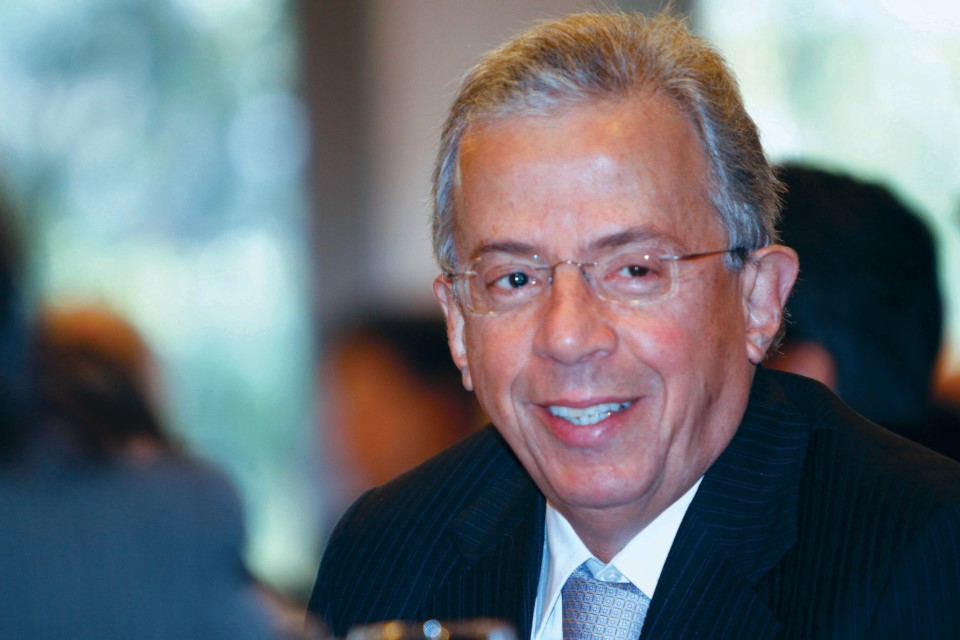
In 2021, Banco de Bogotá, led by chief executive Alejandro Figueroa, focused on an enhanced client-centric approach to stay at the forefront of an increasingly competitive market.
As well as focusing on improving products and services, the bank invested in a new generation of data analytics to help cross-selling and to boost share of wallet from existing clients.
The result – overlaid on arguably the system’s best digital platform – was a set of record results. Net income exceeded $1 billion, with total assets and loans growing by 11.6% and 15% respectively (to $58.4 billion and $39.2 billion).
That growth was achieved with improved credit performance – non-performing loans fell 62 basis points to 2.7%. This enabled a reduction in provisioning, which – along with cheaper funding thanks to an 11.2% increase in deposits – boosted profitability.
With a net interest margin of 4.9% and an efficiency ratio of 48.5%, the bank yet again posted a return on equity that was head and shoulders above the competition, at 19.4%, as was return on assets of 4%.
The fast pace in GDP growth wasn’t matched with a corresponding leap in investment banking activity in Colombia over the past year. Caution seemed to remain the watchword for the country’s corporates as they emerged from the pandemic.
BofA Securities takes the investment bank award thanks to a rounded portfolio of capital markets and advisory work – though there was noticeable strength from BTG Pactual in advisory and Citi once again dominated debt products.
Nevertheless, BofA ran Citi close in second place and played a pivotal role in some of the most noteworthy transactions during the qualification period.
The team – led by Ricardo De Bedout, head of investment banking in the Andean region – also secured the largest share of underwriting fees, according to Dealogic.
The bank was left-lead bookrunner on the Nasdaq-listed $130 million IPO for LatAmGrowth special purpose acquisition company (Spac) in January 2022 – executed successfully amid challenging market conditions.
BofA was also the exclusive financial adviser to Grupo Orbis on the sale of its outstanding shares to Akzo Nobel, which was one of the largest acquisitions of a publicly traded company in Colombia in recent years.
The bank was exclusive adviser to Grupo Sura with regards to the multiple unsolicited tender offers launched for the company – an interesting example of a defence advisory assignment for one of the country’s largest conglomerates.
And it chalked up an impressive array of DCM mandates, including debt issuances for ISA and Gran Colombia Gold (both inaugural international issuances), as well as for the Republic of Colombia, GeoPark, Davivienda and Millicom.

|
ECUADOR |
[index] |
|
Best Bank: Banco Pichincha |
||
Ecuador’s economy bounced back from the Covid pandemic over the past 12 months, registering GDP growth close to 4% in 2021 – and the pace of recovery continues to increase thanks to higher revenues from oil and other tax revenue.
So, while the country’s debt burden continues to be an overhang for the banking sector, at least in the near term banks are seeking to expand loan portfolios again.
Banco Pichincha, led by president Antonio Acosta Espinosa, is building from a position of market strength and was the outstanding bank in the country in the past 12 months.
Pichincha recorded one of its strongest-ever years: its loan portfolio grew by 21% in 2021 (with non-performing loans actually falling), while the bank also grew its obligations to the public sector by nearly $1 billion.
The use of surplus liquidity that the bank accumulated during 2020, combined with an aggressive cost control policy, saw the bank improve its efficiency ratio to 62.1% from 65.1% in 2020.
Overall, the bank’s operating margin grew to 11.6% in 2021 and net income doubled from $50 million to $102 million. Return on equity more than doubled in the year, to 8.1% from 4%.

|
MEXICO |
[index] |
|
Best Bank: BBVA |
||
|
Best Investment Bank: BBVA |
||
When Citi announced that it was going to sell its large Mexican retail bank earlier this year it was telling that BBVA’s name was left out of the many discussions around likely buyers. This was not just because its dominant market position would lead to potential antitrust issues but also because, as many analysts were keen to point out, the acquisition isn’t necessary. BBVA is already the biggest and the best bank in Mexico.
It is also still growing organically – BBVA increased its market share in total credit in the Mexican system by 25 basis points to 23.7% in 2021 – with its commercial portfolio growing by 5%. The bank is also tilting towards higher margin business – small and medium enterprises have been the fastest growing part of its corporate business, while in retail, the bank grew consumer loans (unsecured) and credit cards by 7.6%. All the while non-performing loans continued to trend down, falling 127bp to 1.7%.
BBVA also grew deposits by 10.6% in the past year – a growth in total market share of 102bp to 23.6%, according to the country’s banking regulator, the CNBV.
The competitive advantage of this funding base helped drive net profits up by 52.8%.
The bank increased its return on equity to 22.2% (up from 16.8% in 2020) and return on assets jumped 71bp to 2.4%. BBVA has squeezed even more efficiency out of its operating leverage and recorded an efficiency ratio of 36.7%.
The story of the Mexican banking market in the coming year will undoubtedly be the acquisition of Citibanamex, but whichever bank wins that auction will have a hard time matching BBVA in terms of operating excellence, even if the Spanish firm may face a new challenger of scale in the future.
Banks that dominate M&A advisory work were almost absent from debt and equity capital markets leadership in Mexico over the past 12 months.
Usually such a bifurcation between M&A and DCM is the result of balance sheet-generating DCM mandates, but the ability of BBVA to claim second place in both Dealogic’s ECM and DCM league tables complicates such a simplistic reading of the data.
The main focus of much debt and equity activity in the past year was local markets and local investors, and this gives a natural advantage to the dominant local players. BBVA wins the investment bank award in large part for its strong performance in debt and equity deals. It was lead bookrunner in a range of CERPI (investment project fiduciary securitization certificates) issuance – including EXI’s Fibra E IPO for Ps22,519 million ($1.15 billion), the largest Mexican IPO since 2018.
BBVA also led on a wide range of DCM transactions, including bonds, project finance and emerging green structures. BBVA can also point to a portfolio of M&A transactions, but these are smaller deals within Mexico. Beyond local consolidation, M&A is still dominated by the international investment banks and it will be interesting to see if they can make headway into the domestic-focused DCM and ECM segments.
It will also be interesting to see if BBVA and Santander will be able to broaden their advisory offerings to compete on the cross-border mandates. Citi seemed best placed to marry the two sides but had a lacklustre year in 2021. It will be worth watching what, if any, impact the sale of Citibanamex will have on Citi’s investment banking franchise in the country.

|
PARAGUAY |
[index] |
|
Best Bank: Banco Itaú Paraguay |
||
First a plague and then a drought: Paraguay has had a tough couple of years that have dampened GDP growth and now war – albeit abroad – is adding an inflationary challenge. Prices are rising at the top of the central bank’s target band of 6%. Expectations are that this will drop to a more comfortable 4% in 2023, and while economic growth projections are being revised downward, they are still firmly in positive territory, with 3.7% GDP growth expected this year.
Despite the short-term challenges, Paraguay’s mix of low taxes and business-friendly regulations – coupled with the availability of cheap hydropower – has made it an attractive jurisdiction for foreign direct investment.
The biggest investor in the country in recent years has been Brazil, and it is a Brazilian-owned bank that is leading the banking market, too. On some important measures Banco Itaú Paraguay is now the biggest bank in the country – for example it has more deposits than any other – and has generated the highest revenue in the sector.
It is also the most profitable (its return on equity of 26.5% is the highest in the country), largely due to the fact it is the most efficient. Its efficiency ratio of 45.5% is the lowest of any directly comparable bank that includes mass retail.
Led by chief executive José Luis Brítez, Itaú has been growing its digital operations and its digital wallet in Paraguay, and a recent alliance with a local telecommunications company has increased the bank’s exposure to the lower socioeconomic population segments. Itaú created more than 500,000 of these wallets in 2021 and expects revenues from these new customers to grow in the coming years.
Itaú also recently launched an asset management division in the country.

|
PERU |
[index] |
|
Best Bank: Banco de Crédito del Perú |
||
|
Best Investment Bank: BofA Securities |
||
If you were running a bank with more than one-third of the market of total loans and deposits in a country and it had just witnessed a huge economic shock that was being compounded by waves of political upheaval, would you think the timing was right to take further credit and market risk? Gianfranco Ferrari, chief executive of Banco de Crédito del Perú (BCP) and now CEO of Credicorp, its parent group, certainly does, and has continued an aggressive strategy of market-share expansion.
BCP has gained on its two closest rivals and refuses to accede to the competition, as Ferrari believes the risk of the bank’s continued growth is controlled through product diversification. In 2021, BCP escalated its eco-factoring product and launched other green products, such as specific credit products for the financing of importation and acquisition of electric vehicles, as well as training more than 100 managers in sustainable finance issues.
The financial results speak for themselves. BCP’s total loan portfolio grew 14%, with non-performing loans a mere 0.54%, compared with a system average of nearly 4%. Core income grew 18.6%, helped by the bank’s proactive risk approach – provisions fell by 53.4% in 2021. Its efficiency was improved by greater penetration of digital adoption: it acquired 57% more clients using digital channels, and saw a 53% increase in transactions and a 34% increase in volumes.
Total return on equity was 23.5% – well ahead of the competition and proves that those thinking Credicorp could no longer rely on growth on its core engine of BCP in Peru were mistaken. It is little wonder that Ferrari has taken the top job now that the legendary Peruvian banker Walter Bayly has stepped aside.
Last year was a quiet year for investment banking in Peru, with no equity capital markets activity and precious few M&A deals closing during the period, although BTG Pactual has been notably successful in winning recent mandates and will be a bank to watch next year.
For BofA Securities, which has done well by having strength and breadth throughout the region, a country dominated by debt activity would seem to be an award beyond its grasp. Nevertheless, BofA pulled out a league-table winning performance in Peruvian debt – taking a 27.52% market share of deal volumes – comfortably ahead of second-placed JPMorgan, according to Dealogic.
BofA’s team in Peru – led by Antero Carrillo – was the only one to have led debt transactions in the mining sector following the presidential election, which is a reputational coup as an underwriter of sensitive issuance.
The bank was global coordinator on Minsur’s $500 million bond in October, which achieved the company’s lowest ever coupon, and BofA was also deal manager on its tender offer.
The bank was also global coordinator on the Republic of Peru’s €1 billion benchmark, issued last November and was a bookrunner on the sovereign’s $4 billion sustainable, three-tranche, dollar-denominated debt offering.
In M&A, BofA was exclusive adviser to Alicorp on its 100% sale of Pastificio Santa Amalia to Camil Alimentos for R$410million, and advised Petroperu on its transfer of a direct stake and operatorship in a hydrocarbon field to Altamesa.

|
URUGUAY |
[index] |
|
Best Bank: Banco Santander |
||
Banco Santander has wasted no time in bouncing back after the pandemic in Uruguay, and has consolidated its market leadership to report strong growth in all product areas. Santander is the country’s largest private bank, with a 16% share in deposits and a 22% share of system loans, and it dominates in many loan sub-segments – for example, it has a 40% market share in car loans. The bank, led by chief executive Gustavo Trelles, generated the highest profits in the banking system and had the best return on equity, 17%.
As well as sheer scale, Santander grew its profitability through strict cost control and the application of digital innovation. It targeted its payments system, Paganza, for an internal upgrade and went outside the bank to bolster its presence in the insurance market by buying Ecolicuá – Uruguay’s first online purchasing and comparison site for insurance.
The digital improvements underpinned cost control and the bank’s efficiency ratio fell to 51%, the best of all the country’s private banks.
CENTRAL AMERICA & CARIBBEAN

|
COSTA RICA |
[index] |
|
Best Bank: BAC Credomatic Costa Rica |
||
Costa Rica’s new president, Rodrigo Chaves, assumed office on May 8 this year and has inherited a complicated economic situation. The economy relies heavily on tourism and thus was hit hard by the Covid pandemic. Growth returned last year, with a bounce of 7.6%, but Costa Rica’s already complicated fiscal situation meant the country had to get support from the IMF. The austerity conditions imposed by the Fund have proved to be unpopular. But even though the economic problems are exacerbating poverty and unemployment (with rates of 24% and 14% respectively) the country is rich by the region’s standards, with an annual GDP per capita above $10,000. It is, therefore, an attractive jurisdiction for the region’s banks.
BAC Credomatic Costa Rica has been successfully targeting the country as a key part of its growth strategy and Costa Rica now accounts for 27% of the pan-Central American bank’s total loan portfolio and 25% of BAC’s deposits.
BAC senior management stresses that the bank’s operations in Costa Rica are profitable too, although the bank doesn’t give precise geographical breakdowns of profits. It does, however, highlight its Costa Rican bank is tilted to the higher-margin retail segment, with 60% of the bank’s business being consumer and the remaining 40% corporate banking.
In 2021, BAC grew its total assets by 5.6% to $7.5 billion, giving it a 15.2% market share – up 50 basis points – and net loans grew by 9.1% to $4.8 billion (a 17.4% market share, up 40bp). Meanwhile, deposits grew 5.4% to $5.9 billion and a market share of 16.3%, which is an increase of 10bp.

|
DOMINICAN REPUBLIC |
[index] |
|
Best Bank: Banreservas |
||
It is not hard to find state-owned banks in Latin America that are the biggest in their national banking systems, or such banks that are used by governments as fiscal tools to help fulfil their national development agenda. However, what is rare is to find an example of such a bank that is also successfully run on a commercial basis and outperforms the private banks within the country’s banking system.
Banco de Reservas de la Republica Dominicana – Banreservas – not only competes within the country’s active and profitable banking industry but also dominates it: in 2021 it grew total assets by 29% in a single year, taking its market share to 37% and close to the bank’s 38% share of deposits.
It also grew net profits by 63% to $284.1 million – more than any bank. Banreservas posted the best set of financial results in its 80-year history in 2021; return on equity grew to 32.3% and return on assets was 2.2%.
Increased profitability was partly due to the bank’s continued transition away from its public sector-financing origins. The loan book now has 71% exposure to the private sector. There was also a big improvement in the bank’s efficiency ratio at the close of 2021, standing at 54.2% compared with 70.5% the prior year. This rapid growth has been achieved while maintaining strong risk control – non-performing loans have fallen to 1.2% of the loan book, far below the market average of 2.8%.
Last year also saw further growth in the bank’s investment banking group, whose capacity to support key industries is a means to drive economic growth in the country. In 2021, it delivered financing at scale to tourism, construction and real-estate projects within the Dominican Republic.

|
EL SALVADOR |
[index] |
|
Best Bank: Banco Agrícola |
||
Banco Agrícola surprised observers with the speed of its recovery from the pandemic: the bank, led by chief executive Rafael Barraza, grew its client base to over 1.4 million El Salvadorians as the country’s experiment with crypto and digital wallets fizzled out and traditional banks retained their position at the centre of the country’s economy and financial industry.
Banco Agrícola retained its market leadership in terms of loans and deposits, with shares of 27.7% and 28.7% respectively, and generated 47.3% of the entire banking system’s profits.
Thanks to the rapid recovery of the country’s economy last year, Banco Agrícola’s net loan portfolio grew 6% to $3.4 billion, and conservative risk underwriting processes saw non-performing fall to 1.3% – the lowest ratio in the country.
Banco Agrícola remains well-provisioned, with a reserve requirement of 253.3% – a strong differentiator in the market and potentially an important one given the dark clouds beginning to loom over El Salvador’s economy: the country’s sovereign bonds are now trading well into distressed territory.

|
GUATEMALA |
[index] |
|
Best Bank: Banco Industrial |
||
According to Guatemala’s central bank, the country’s economy bounced back sharply from the Covid pandemic with GDP growth of 7.5% last year – the highest rate for over 40 years. The country’s best bank, Banco Industrial, certainly capitalized on this: its loan portfolio grew by 16.4%, deposits by 16.3% and total assets by 13.5%.
The bank, led by chief executive Luis Rolando Lara Grojec, had already enjoyed the largest market share in these areas, but outpaced the competition and now dominates with 29.3% of system loans and 26.1% of deposits.
Banco Industrial is growing particularly quickly in the higher margin segments, with a compound annual growth rate of 15.1% in consumer loans since December 2017, compared with 8.8% for corporate lending.
The rapid growth in consumer banking has been achieved by increasing revenues from existing customers more than attracting new clients – in December 2021, the bank boasted an average of 5.8 products per customer, a remarkable cross-selling success.
This clearly helps profitability, too, both in nominal terms (the bank generates 26% of the profits of the banking sector) and in its return on equity, which is the only one in the country above 20%, at 21.1%.

|
HONDURAS |
[index] |
|
Best Bank: BAC Credomatic Honduras |
||
In 2019, BAC Credomatic Honduras began to transform its branches to promote customer relationships, self-service and digitalization. The aim was to maximise the strong physical presence that the bank had built up in Honduras – where it now has 60 full-service branches, four in-store branches, 73 on-site branches and 17 drive-thru branches, as well as six fully digital branches and 478 ATMs. However, this investment is only now beginning to pay off, given the physical banking restrictions that remained in place well into 2021.
So, while this project will be a growth driver in 2022, digital innovation has been the engine of growth during the period under review. BAC Credomatic Honduras has added two completely new areas to its online services as a result of the pandemic, with automobile and real-estate loans becoming fully digital.
This has helped it increase the proportion of retail in the bank’s total loan portfolio – which now stands at 43% retail and 57% corporate loans.
Its financial results have been strong. Assets have grown by 8.9% to $4.9 million, which is a market share of 15.5%. Net loans grew by 9.1% to $2.4 billion (a 14.5% market share). Deposits grew even more strongly, with a 13.8% jump to $3.3 billion, and a 40-basis point increase in market share to 16.8%. In 2021, return on equity was 12.1% and the bank generated $44 million in net income.

|
NICARAGUA |
[index] |
|
Best Bank: Banco Lafise |
||
Banco Lafise took deliberate aim at growth in the small and medium-sized enterprise segment during the recovery from the pandemic – and particularly those SMEs operating in agribusiness. This was a bid to grow in line with the main driver of the Nicaraguan economy, which is also the country’s main employer. The strategy worked: the bank’s SME loan book rose by 26.2% in the year, compared with an overall growth in Lafise’s loan book of 6.7%.
The bank also introduced important new services for corporate clients last year. MiWeb is an e-commerce platform that enables clients to sell online, while PYME can also be integrated into client’s digital processes to help manage banking products such as payroll and cash management.
When combined with continued developments in retail digital banking – remittances have been a particularly strong growth area in this regard – the bank has managed to achieve market leadership in efficiency and profitability ratios.
Lafise improved its return on equity to 10.9% in 2021, up 270 basis points from 2020 and the best of all the leading banks in Nicaragua.

|
PANAMA |
[index] |
|
Best Bank: Banco General |
||
In 2021, Banco General completed its three-year plan, started in 2019, that its senior management, led by president Raul Aleman, managed to execute despite the turmoil of the pandemic.
The bank’s aim was to respond to growing local competition by becoming more client-centric and more innovative, particularly in the use of data. Ultimately, the aim was to defend its market leadership as well as to enhance efficiency and profitability.
It is safe to say that the mission has been accomplished. Banco General has maintained its leading position in private loans and mortgages, with 18.1% and 24.4% market share respectively, as well as a private-sector deposits market share of 27.8%.
Digital innovation saw better rates of onboarding in 2021 (helped by the pandemic), with 77% of the bank’s 1.4 million clients now online customers – up from 56% in 2019. The penetration of mobile banking is even higher, with 86% of clients now using this channel compared with 69% in 2019.
Banco General now has the best efficiency ratio in Panama – at 33.6% – and increased its net interest margin to 3.7%, while return on equity reached 15.3%.