The Middle East has seen the launch of several digital-only banks over the last few years, with Saudi Arabia, the UAE and, to a lesser extent, Bahrain leading the charge. The licensing of digital-only players reflects the digital innovation targets set out in national development strategies, such as Saudi Arabia’s Vision 2030 and the UAE’s Smart Dubai. In turn, this is driving fintech opportunities across the region.
Jump to:
“Today, growth strategies are generally focused on initiatives at ecosystem level to foster innovation and development of fintechs, whether that be regulatory sandboxes or innovation hubs and accelerators,” says Serena Sebastiani, director of financial services for PwC Middle East specializing in covering fintech and open banking.
Indeed, digital transformation spending by Saudi Arabia alone reached SR12 billion ($3.19 billion) in 2021, according to the kingdom’s Digital Government Authority.
Saudi’s proactive stance has led to the introduction of laws covering a variety of fintech activities, including an instant payment system known as Sarie and the Capital Market Authority’s (CMA) fintech lab, all of which has given the investment community the confidence and certainty to devote more capital to fintech startups.
As a result, Saudi Arabia witnessed a 37% rise in new fintech launches in the 12 months to October 2021, with the number of active fintechs increasing from 60 to 82. A record level of over SR1.3 billion in venture capital investment was placed in fintech companies.
With an increasing number of first-generation entrepreneurs competing with large financial institutions, Saudi fintech transaction values could top $33 billion by 2023, according to data provider Statista. There is ample room for growth in the size of funding rounds, with the average investment deal size at $2.7 million compared with the global average of $7.3 million.
Cashless society
Fintech Saudi, an initiative launched by the Saudi Arabian Monetary Agency (Sama) in partnership with the CMA, conducted a national fintech adoption survey in mid 2021 that found that e-payments activity was the biggest contributor to fintech adoption.
“A major target of Saudi’s Vision 2030 is to move towards a cashless society and increase the number of non-cash transactions to 70% in 2025,” the survey said. “The Covid-19 outbreak has led to an acceleration in cashless activity with digital payments increasing by 75% over the last year, whilst cash withdrawals from ATMs and other payment points have declined by 30% over the same period.”

The banking and finance industry in Saudi is stepping up its efforts to cater to this. Hot on the heels of STC Bank and Saudi Digital Bank, which both received licences in June 2021, Sama announced in February this year that it had approved a licence to launch the kingdom’s third digital bank – D360. All three banks have been granted universal digital licences and aim to cater to both the retail and wholesale markets.
D360 will start with an initial capital of SR1.65 billion. It counts Derayah Financial Company, which owns close to a 20% stake, and the kingdom’s sovereign wealth fund, the Public Investment Fund, as its key backers.
These firms will join a handful of incumbent Saudi banks that have also been prioritizing digitalization in recent years. National Commercial Bank announced a collaboration in August 2019 with Monsha’at to launch the kingdom’s first fintech accelerator programme, while in June 2021, Riyad Bank launched a SR100 million venture-capital fund targeting fintech investments.
Al Rajhi Bank, the Middle East’s largest bank by market cap ($121.7 billion) and the world’s largest Islamic bank by assets, has been investing heavily in its digital infrastructure for almost a decade. It joined forces with global banking software provider Temenos in February 2019 to help it undertake a complete core bank revamp.
In March this year, Al Rajhi announced that it will become the first bank in the kingdom to provide a digital guarantee service through the electronic financial services platform Etimad. The bank’s new service allows customers in the corporate sector to issue digital guarantees and link them to the beneficiary electronically.
What you’ll see being delivered is not only Saudi firsts or regional firsts but also some world firsts
Mike Cunningham, Banque Saudi Fransi
Meanwhile, Riyad Bank is also embracing a company-wide digitalization – it has launched an integrated digital wallet known as Bouki – as is Banque Saudi Fransi (BSF).
“We are currently undergoing our own digital banking transformation,” says Mike Cunningham, chief strategy and digital officer at BSF, the kingdom’s sixth largest lender with assets of SR215.8 billion.
“It is the worst-kept secret in Saudi Arabia that we’re working on our own digital challenger that will be launched to the public later this year,” says Cunningham. “It is already in stealth mode on a limited-release basis.
“We’re currently looking at our legacy systems in terms of technology, talent and ways of working, and how we can overhaul them to reinvent the way we deliver financial service products so that we really stand out from our competitors. What you’ll see being delivered is not only Saudi firsts or regional firsts but also some world firsts within our proposition; so, we’re pretty excited. In the same way that people talk about Monzo, Starling, NuBank – I want them to also talk about our digital bank.”
On April 19, BSF announced a new partnership with Backbase, an engagement banking platform provider, that will enable BSF’s retail customers to be onboarded instantly – either via the internet or mobile – and digitally apply for banking products and services.
Challenger banks
The UAE has also adopted a proactive approach to greater digitalization. In July 2021, Dubai launched a Chamber of Digital Economy, which is set to develop a digital-centric economic growth plan focused on attracting investment, international talent and entrepreneurs, as well as proposing digital economy-friendly policies and legislation.
Meanwhile, the UAE central bank has developed a regulatory framework to support the growth of digital banking that has led to a flurry of new challenger banks. Some of these have partnered with incumbent lenders in areas such as wallets, payments and robo-advisory, while others are delivering entirely new services or catering to customers not currently served by banks.
Crypto offers risk and potential
Cryptocurrency’s potential has yet to be fully realized in the Gulf, even though there are clear moves by several governments to embrace it.
“Within the GCC, the UAE and Bahrain show highly embracing, advanced attitudes on cryptocurrencies,” says Serena Sebastiani, director of financial services for PwC Middle East. “Protection of both retail investors and institutions will be at the forefront of their agendas, whether that be financial education and awareness, minimizing and providing insurance against hacking/price manipulation and preventing money laundering.”
In March, both the Bahrain and UAE central banks granted virtual asset licences to Binance, the world’s largest cryptocurrency exchange. The regulatory green light will allow Binance to provide crypto-asset trading, custodian services and portfolio management to customers.
Binance has been shifting its focus to the Middle East as its trading platform faces mounting scrutiny from regulators in at least a dozen other jurisdictions, mainly focused on concerns over the firm’s anti-money laundering (AML) practices and the investment risks posed to traders.
“Saudi Arabia is still quite hesitant when it comes to cryptocurrencies,” says Mike Cunningham, chief strategy and digital officer at Banque Saudi Fransi. “The regulators in Saudi see value in crypto, but from a CBDC [central bank digital currency] point of view, rather than as an alt coin. We’re looking at what we could do with crypto in terms of stable coin or central bank-issued coins as opposed to bitcoin and Ethereum. I don’t think there’s any appetite in the kingdom to start allowing banks to take deposits in bitcoin or other alt coins.”
Business-friendly
The UAE has been more willing to provide a business-friendly environment for crypto and blockchain-based businesses. The Abu Dhabi Global Market has issued guidelines and a regulatory framework for virtual assets, which includes providing a licencing regime for crypto-focused businesses.
The UAE’s Securities and Commodities Authority has also issued regulations and guidance on crypto assets, while the central bank’s 2023/2026 strategy includes issuing a digital currency.
Along with Binance, Dubai also granted a virtual asset licence in March to global cryptocurrency exchange FTX Europe, allowing it to set up regulated trading and clearing services in the emirate. The same month, cryptocurrency exchange Bybit, which has more than two million registered users, also received a licence and announced plans to set up its global headquarters in the emirate.
Singapore-based cryptocurrency exchange crypto.com has said it will establish its regional hub in Dubai.
“With many exchanges and crypto multinationals coming to the region, there is a real possibility that they could become global hubs,” says Khalid Howladar, chairman of MRHB DeFi, the world’s first ethical and faith-based decentralized finance platform. “Managing the risks of a new technology is nothing new. You need to ensure AML and consumer protection is in place but then let the sector innovate. There are far more risky products out there such as equity options, leverage structures etc. and yet they are regulated. However, the impetus is on regulators to maintain the human capital needed to keep up with the private sector, which is pretty tough.”
In February 2022, Zand, which has been granted a licence as the first fully independent digital bank in the UAE, announced that it had raised funding from a group of local and international financial institutions including global investment manager Franklin Templeton and India’s Aditya Birla Group. It is awaiting final regulatory approval from the central bank before launch.
Zand will target corporate customers, where it will focus primarily on supply-chain financing, including financing of small and medium-sized enterprises, as well as providing retail customers with products such as cards, loans, accounts and personal financial management. It will offer interest rates of around 2% on deposits – notably higher than the prevailing rates – in a bid to attract new customers.
In the same month, the UAE central bank gave in-principle approval to a new digital banking platform. State holding company ADQ and investment holding company Alpha Dhabi will own a combined 65% stake in Wio bank, which is using a legacy banking licence freed up by the merger of National Bank of Abu Dhabi and First National Bank in 2017.
The addition of these challenger banks will put them in direct competition with the incumbent banks, many of whom have launched their own digital offerings.
Dubai-based YAP, the UAE’s first digital finance app, was launched in March 2021 after partnering with the UAE’s RAK Bank to provide Iban and BIN sponsorship. It launched with the bold ambition of becoming a leader in the Middle East, Africa and south Asia.
In August 2021, Abu Dhabi Islamic Bank (ADIB) launched a digital-only bank specifically targeting Generation-Z customers. The bank plans to spend about Dh400 million ($109 million) on boosting its digital transformation and has already been delivering impressive results.
On the retail front, digital money transfers were up 88% in 2021, while its digital corporate banking daily transactions clocked a high of 21,000 in June 2021, a 95% annual increase. ADIB currently has more than 700,000 digital customers and plans to allow customers to open accounts remotely through facial recognition, becoming the first in the UAE to do so.
In December 2021, Dubai Islamic Bank, the UAE’s biggest Shariah-compliant lender, launched Rabbit, a ‘FunTech’ app, to help the unbanked in the UAE and other heavily populated markets gain access to the formal financial system.
The UAE market will serve as a prototype; the plan is to introduce the app to other markets including Pakistan and Kenya.
These banks join other incumbent UAE firms that have already established neobanks to capitalize on a growing digitally savvy and young demographic; the most notable examples include Emirates NBD’s Liv, Abu Dhabi Commercial Bank’s Hayyak and Mashreq Bank’s Mashreq Neo.
Liv has been a particularly successful example of this. Launched in 2017, the Liv app aims to help millennials enhance their finances as well as their lifestyle. To date, it has signed up nearly half a million customers in the UAE, 85% of whom are in the millennial age bracket. It expanded into Saudi Arabia in early 2020, where it has signed up around 75,000 customers. It is adding more than 15,000 customers a month across both markets.
Restrictive regulation
Given their young populations – around two-thirds of Saudis and Emiratis are under the age of 35 – coupled with the high smartphone penetration rate in both countries (the kingdom’s smartphone usage stands at 88%, almost double the global average), it is not difficult to see the lure of both the Saudi and UAE markets for digital banking.
Even so, new entrants are likely to face stiff competition. While both markets have undergone recent consolidation, they remain crowded: there are 31 licensed commercial banks in Saudi Arabia catering to a population of around 10 million; and 48 banks in the UAE serving a similar number of people.
Forcing neobanks to tie up with existing players and their legacy infrastructure will prevent competition and hence limit innovations
Khalid Howladar, MRHB DeFi
Differentiation will help to widen the playing field, but currently neobanks can only legally operate in the UAE by partnering with a traditional bank and using the latter’s licence in return for a revenue-share agreement.
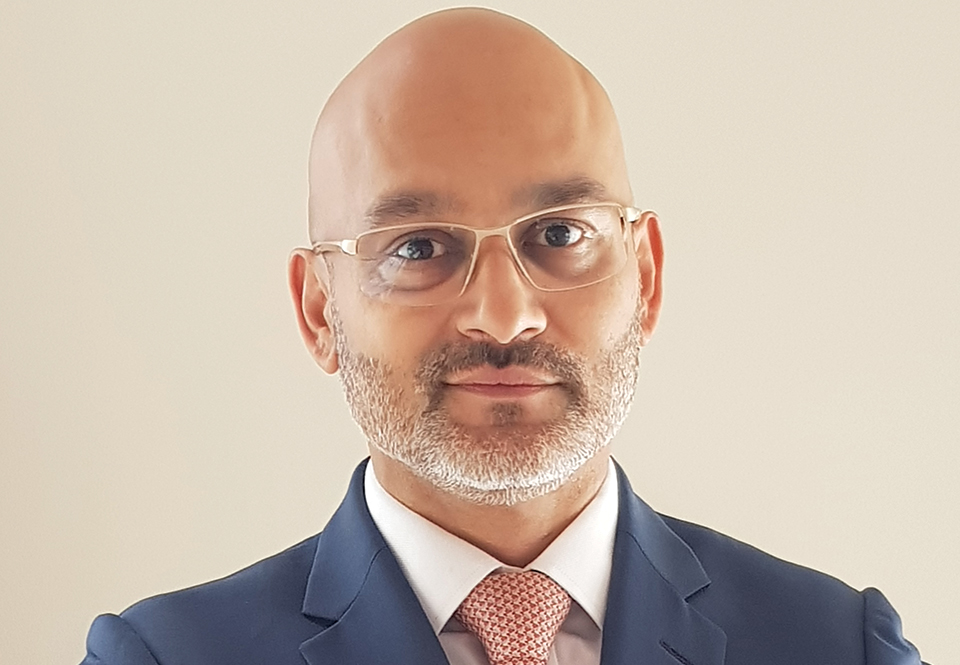
“Forcing neobanks to tie up with existing players and their legacy infrastructure will prevent competition and hence limit innovations,” says Khalid Howladar, chairman of MRHB DeFi, the world’s first ethical and faith-based decentralized finance platform.
Howladar also serves as a board member for a mix of fintech and crypto startups through his firm Acreditus Partners. Before this, he served as Moody’s global head of Islamic finance and head of the Gulf Cooperation Council (GCC) banking team for almost 15 years.
“It also prevents new players from becoming profitable unicorns in their own right when [they are] effectively captive to their partner,” adds Howladar.
These laws don’t apply in Saudi Arabia and Cunningham at BSF remains bullish on the future growth of the kingdom’s banking market, which he believes offers a unique proposition.
“Saudi Arabia is unlike other GCC countries, such as Qatar and the UAE, which have majority affluent populations,” he explains. “Saudi has ultra-high net-worths, high net-worths, and it has also got an unbanked demographic.
“Just like in Europe and the US, there are segments that are completely unserved or underserved – both from a retail and from a wholesale perspective. When you look at the SME [sector], while the gig economy isn’t yet a big thing in Saudi today, it is growing, and those people will need to be banked at some point in some way.
“Banks have always struggled with the lower end of SME as you don’t make much money out of them, given the traditional costly operating model of relationship managers and branches. Digital changes that game.”
Open banking
Banque Saudi Fransi is also looking at how it can embrace the kingdom’s growing fintech community to become an acquisition engine for new customers, further deploying its capital and building its balance sheet through deposits.
“We build lots of interesting tech that we monetize once for ourselves, but why can’t I sell that to other people?” Cunningham asks.
“Why can’t I give access to my payment rails to 50 different fintechs or allow them to set up a custody account?” he continues. “I could do their KYC [know your customer] for them and charge a fee, I could give them an API [application programming interface] to do their account opening and charge a fee. All of a sudden, I’ve grown the distribution capability of the bank by 50 times. Those companies that used to pose a threat to me are now working with me, as I’m the gateway into the Saudi financial system. We share in the spoils of it. It is a very defensive position for me against our competition.”
Sama has looked at the best implementations and regulations around the world to inform the design of their own sandbox
Mike Cunningham, Banque Saudi Fransi
Open banking is the next logical evolutionary stage in the region’s digital bank offering.
By requiring banks to open up their customers’ data to regulated third parties, open banking lowers the barriers to entry for startups. The resulting increased competition and innovation is expected to accelerate the next wave of fintech activity and investment.
Open banking is largely still in its infancy in the Gulf. Bahrain was the regional pioneer for open banking regulation – it set to work on it in 2018 and issued its proposed framework in 2020. It is now being deployed; Bahraini banks and financial institutions have until June 30 this year to implement several requirements relating to the sharing of open data.
Meanwhile, Saudi’s central bank launched a framework for open banking in 2021 and is currently in the process of rolling it out in the kingdom.
In March, Sama granted permits allowing three new fintechs to operate under its regulatory sandbox, bringing the total number to 35.
“Sama has looked at the best implementations and regulations around the world to inform the design of their own sandbox,” says Cunningham. “I would say it is most closely aligned at the moment with what you see in the UK. So, very open, very modern and, I think, over time it will evolve to be more Saudi in its design and even better. They’ve really embraced it.”
Talent war
The advances taking place across the Gulf’s banking and finance industry mean rapid changes in skill requirements, with demand for fintech talent already outstripping supply. The 2021 Fintech Saudi annual report highlighted how 88% of the financial services companies surveyed said finding the right skill is one of the main challenges to recruiting talent.
“There’s an absolute battle and war for talent locally,” says Cunningham. “There is so much raw talent here that has been well-educated, graduated from top schools in Europe, the US and the like, but they don’t necessarily have the five to 10 years’ experience that I need in cloud technologies or in a particular development language. That’s why you either have to rely on a third party or look at other flexible resourcing models of how you can acquire that talent. There is an auction for digital talent in KSA.”
To resolve this, Banque Saudi Fransi has created a number of apprenticeships that allow candidates to come in and work with experienced imported talent.
Similarly, the UAE has been building supportive ecosystems such as Crypto Oasis, a Middle East-focused blockchain network based in the Dubai Multi Commodities Centre and the Dubai International Financial Centre’s Studio Launchpad to help nurture the knowledge and experience needed to sustain the digital banking drive across the Gulf region.