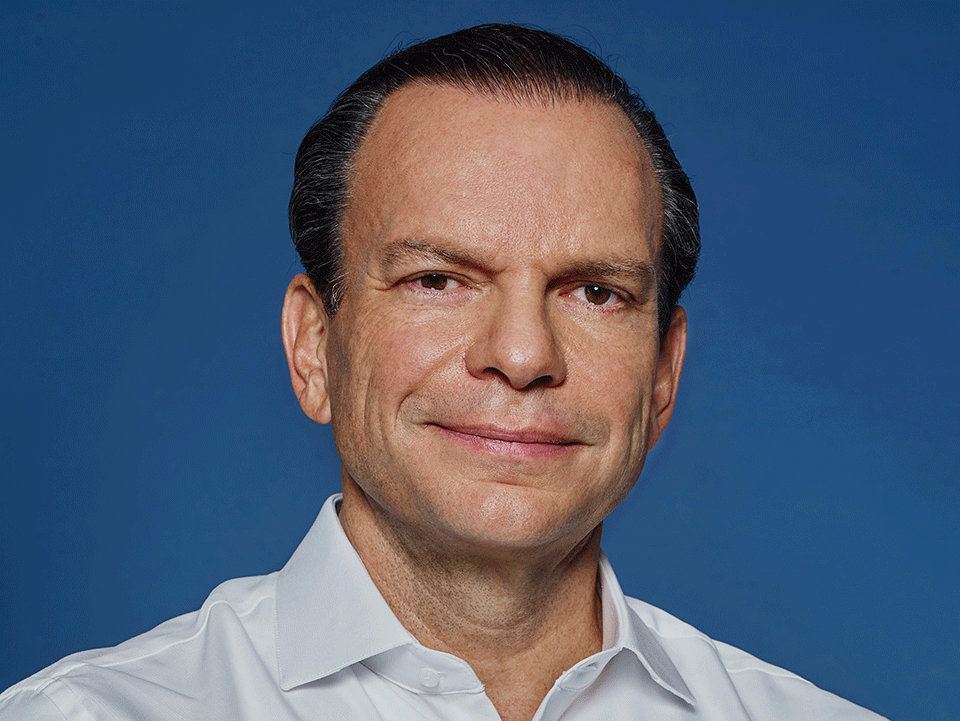
Since 2008, Crédit Agricole has made a virtue of being more cautious than peers in its corporate and investment banking capital markets businesses, especially equity derivatives. It is therefore ironic that the chief executive of Crédit Agricole CIB, Jacques Ripoll, first came to prominence in the equity derivatives department at Societe Generale in the mid 2000s – when that business, and that bank, were enjoying success.
Despite this, Ripoll’s background has given him an appreciation of just how much things have changed in capital markets because of conduct and prudential regulations.
“Compared to 10 years ago, the revenue pool in a business like equity derivatives is much lower,” he tells Euromoney, “the amount of capital required is higher, and the cost of operating those businesses is also higher, so the return on equity of those activities, across the cycle, is completely different.”
Two years ago, when Covid first hit, this recognition of how...
Access this research
Enter your work email address to sign in or check whether your organisation already has access to Euromoney.