
The $4 billion bond from the Airport Authority Hong Kong (AAHK) was quite the curtain-raiser for Asian debt capital markets (DCM) in 2022. It had a bit of everything: record-breaking scale; pointers on investor sentiment in a strikingly unpredictable new year environment; and a greenwashing debate.
The multi-tranche 144a/RegS senior unsecured notes offering was made up of a $600 million 40-year tranche, 30- and 10-year tranches at $1.2 billion apiece, and a $1 billion five-year green tranche. It priced on January 5 at spreads ranging from 42.6 basis points over Treasuries at the short end to 140 over old long bond (OLB) at the long.
Viewed as a whole, it is a notable deal: the largest US dollar bond from a Hong Kong issuer since Hutchison Whampoa in 2003; the largest bond from an airport operator since 2017 when nobody had ever heard of Covid; and the longest tenor achieved by a Hong Kong issuer.
The success of this transaction shows, perhaps, the confidence in society that we are going to crack this Covid thing
Jonathan Drew, HSBC
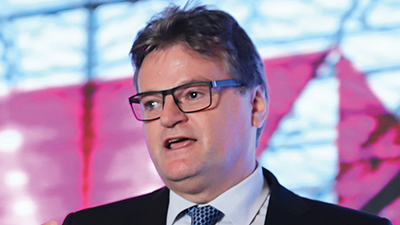
“In the context of historical issuance from this part of the world, the deal’s size is remarkable,” says Alvin Yeo, head of green and sustainable finance, leveraged DCM at UBS.
It is all the more so because the deal is fundamentally about financing a third runway at an airport where, right now, even the first runway is barely being used. Hong Kong – that centre of global trade and finance for a century and more – is now among the most isolated places in the world, with blanket bans on arrivals from many countries, and a mandatory three-week quarantine for those who are permitted to get in.
In fact, it got worse as the deal was being priced: the government announced further curbs on access including a two-week ban on flights from eight countries, the US and UK among them. The deal seemed to shrug it off.
“I was having price discussions with investors through the day [January 5],” says Terry Schmassmann, head of Asia DCM syndicate at UBS. “I didn’t feel a majority asking for different pricing expectations, because investors are confident on the underlying credit strength and outlook.”
In that context, an $11 billion book of demand that led to each individual tranche attracting more than 100 individual accounts looks like a strong vote of confidence in a brighter future, which tells us something about investor sentiment for an interesting year. Investors today must juggle the pandemic and its likely outcome, inflation and rates, geopolitics and the unpredictable behaviour of other asset classes. Momentum from this big, early deal is therefore quite welcome.
“The success of this transaction shows, perhaps, the confidence in society that we are going to crack this Covid thing and that life can eventually move back to a situation where we are able to travel more,” says Jonathan Drew, head of ESG solutions at HSBC. “Clearly, there’s a sentiment of optimism.”
Set against that, AAHK is an airport authority but it is fundamentally about an investment in Hong Kong state-backed credit. The authority is a statutory body corporate wholly owned by the government, and it carries an AA+ rating from the sovereign. Still, even a vote of long-term confidence in Hong Kong is notable right now.
Green debate
However, the deal mainly caught the attention for its green tranche. It is, on the face of it, an incongruous situation: how is it appropriate for a member of the aviation sector, that most obtuse of polluters, to call any part of itself green?
Activists certainly weren’t convinced. Reclaim Finance, an NGO think tank, put out a strongly worded statement reminding people that the third runway will “raise serious climate and biodiversity-related risks, especially for the threatened Chinese white dolphin”. It cited Airport Tracker data showing that the airport already emits as much annually as three coal plants combined, and said the expansion was equivalent to building a whole new airport with the associated carbon footprint.
It called out the banks involved through the top two tiers. Joint global coordinators are BofA Securities, BNP Paribas, HSBC, JPMorgan, Standard Chartered and UBS. “When banks, such as BNP Paribas, HSBC and UBS, go through the looking glass to paint an airport green, the basic credibility of their climate pledges is thrown into doubt,” Reclaim Finance said in a statement attributed to director Lucie Pinson.
Financial institutions must publicly commit not to take part in any project that supports the growth of air traffic
Lucie Pinson, Reclaim Finance
“Financial institutions must publicly commit not to take part in any project that supports the growth of air traffic.”
The other side of this is an argument long made by many of the bookrunners, HSBC and BNP Paribas in particular, that assisting polluters to transition in a way that makes them less harmful is every bit as important, if not more so, than getting green businesses to be even greener.
“I think it’s just window dressing if we only use green bonds or sustainable finance to fund the greenest activities and forget about the brown industries,” says one specialist in green financing. “The brown industries are the areas where you can bring significant delta in terms of environmental impact. I think it’s hypocritical if we don’t address that.”
The green tranche has a quite specific use of proceeds distinct to the other three tranches that support the development of the third runway system. The net proceeds from the green tranche are linked to specific eligible green projects within the issuer’s sustainable finance framework, which include green buildings such as the Terminal 2 concourse, clean transportation – mass passenger transit trains between the terminals – and energy-efficiency projects.
So, the question is: is it inappropriate to invest in any green facility if it is linked to a polluting industry? Is it just encouraging the expansion of a polluting sector when the green tranche backs energy-efficient infrastructure, but infrastructure that would not exist without a new runway that will cater for expanded aviation volumes and their consequent emissions? Or is it better to encourage greening within aviation by backing a ring-fenced green bond?
In terms of the feedback we had from investors, people are happy to see the green tranche
Carla Goudge, HSBC
Judging by demand, investors took the latter course. Those close to the deal say that the green tranche, at four times covered, was in the greatest demand, and that buyers included dark green investors.
“In terms of the feedback we had from investors, people are happy to see the green tranche,” says Carla Goudge, head of DCM syndicate at HSBC. “We had the typical questions around the use-of-proceeds framework, but investors are comfortable with how it is structured and the order book speaks to that.”
There was $3.3 billion of demand for the $1 billion five-year green tranche, and it tightened further – by 32.5bp – through the deal than any other tranche, she says.
The AAHK does have extremely ambitious targets for decarbonization. It has pledged to be net carbon neutral by 2050 and to reduce emissions by 55% by 2035.
Bold claims, but is it realistically possible for an airport ever to be carbon neutral?
“We have to achieve it,” says HSBC’s Drew. “We shouldn’t underestimate the capabilities of us humans. No one’s saying it’s easy, and in the case of the Airport Authority they’ve set the ambitions and they have the plans that take them most of the way.
“But it will need a collective effort. We won’t get to zero-carbon aviation unless a solution for the flying machines is also found, and airports can have a certain amount of influence on that.”


