
Some things change, some stay the same. The Davos World Economic Forum may have taken place in cyberspace this year instead of Switzerland, but the question of how to meet the UN’s Sustainable Development Goals (SDGs) was once again a key theme.
Set by the UN General Assembly in 2015, the SDGs cover three broad areas – economic, social and environmental development – and comprise 17 goals, further refined to 169 targets.
There has long been agreement that achieving them by the target date of 2030 will require action from both the public and private sectors, and the emerging consensus over the past year has been that policymakers need to do much more.
But what about the private sector?
At first glance the picture looks encouraging. The past few years have seen a proliferation of investment strategies referencing the SDGs, from thematic exchange-traded funds to early-stage impact investment funds. The goals have been used as reference points for sustainability-linked bonds and loans, and even in an FX forward structured last June by Deutsche Bank.
As investor attention has started to shift from ESG risks to assessing impact and outcomes, the SDGs have provided an appealing framework
Meanwhile on the corporate side, the latest annual Survey of Sustainable Reporting released by KPMG in December showed a big rise in the number of companies connecting their business activities to the SDGs.
In 2017 just 43% of the world’s 250 largest companies included SDGs in their reporting. By last year that had jumped to 72%.
KPMG also surveys the 100 leading corporates in 52 countries. Again, of the 3,983 firms that report on sustainability – itself an impressive figure – the proportion referencing the SDGs rose from 39% to 69% in the three years to 2020.
(Interestingly, the leading jurisdictions for SDG reporting throw up some surprises. Japan tops the table with 94% compliance, while Mexico, Thailand, Taiwan and Colombia are also in the top 10. The UK, US and Germany are among the big economies further down the rankings.)
Yet, as the report notes, this does not tell the whole story. More than 85% of the companies surveyed focused solely on positive contributions made towards achieving the SDGs. Negative impacts were ignored.
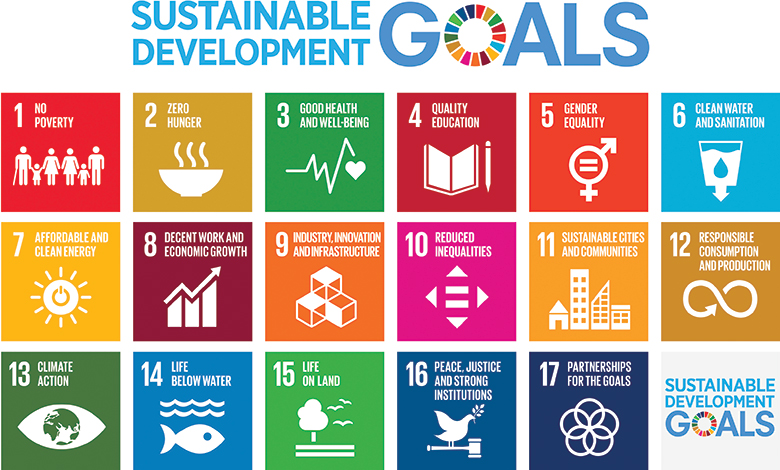
What’s more, the SDGs highlighted by firms as relevant to their activities were heavily skewed towards those that are covered either by regulation or fairly standard business best practice: decent work and economic growth (SDG 8); climate action (SDG 13); and responsible consumption and production (SDG 12).
Goals that failed to win support from more than a third of companies included reduced inequalities (SDG 10), clean water and sanitation (SDG 6), and life on land (a stunningly low 9%).
This in turn adds to the challenges for asset managers looking to respond to increasing pressure to integrate the SDGs into their strategies and portfolios.
As investor attention has started to shift from environmental, social and governance (ESG) risks to assessing impact and outcomes, the SDGs have provided an appealing framework.
As the Principles for Responsible Investing put it in 2017 in its SDG Investment Case: “The SDGs are a powerful, visible and colourful set of flags around which investors can gather to learn a common language.”
Crux of the problem
Yet despite the best efforts of a plethora of ESG standard setters, data providers and industry bodies to help asset managers quantify the SDG materiality and impact of their portfolios, many in the industry admit that it is still a challenge.
Critics say the crux of the problem is that the SDGs are essentially policy guidelines and as such inherently unsuited to the corporate world. “They were created for countries, not companies,” says one ESG data provider. “Now people are trying to massage them so that investors can have an SDG score. It’s borderline ridiculous.”
He cites the example of a company selling diapers and sanitary products in Germany, which according to some models can count its revenues as a contribution to SDG3 (health and wellbeing).
Others note that the lack of granularity and hard targets in the SDGs can make it tough to demonstrate meaningful impact.
“They’re so broad it’s hard to get your head around them,” says another ESG data provider. “It’s like motherhood and apple pie. Of course, these are things we want to improve, but how do you measure that improvement?”
Some see the challenge as more existential. One economist argues that integrating the SDGs across the private sector requires a radical restructuring of economies, along the lines proposed by advocates of stakeholder capitalism.
“At their very heart, the SDGs imply some kind of rewiring of the economic system from profit towards a greater focus on people and the planet,” he says.
Covid recovery
Whether it is reasonable to expect the private sector to take on such a burden is open to question. For many, such radical reform clearly comes under the purview of policymakers.
From that perspective, the good news is that the pandemic looks to have made action more likely. Even if hopes that “build back better” rhetoric will result in a drastic social and economic overhaul prove unrealistic, it seems fairly certain that more governments will follow the European Union’s lead in linking hefty Covid recovery programmes to the SDGs. This in turn will provide a further incentive for the private sector to find effective ways of working with them.
That would make for some good talking points for Davos 2022, whether the backdrop is the traditional snow and chalets or the increasingly tedious contents of delegates’ bookshelves.


